
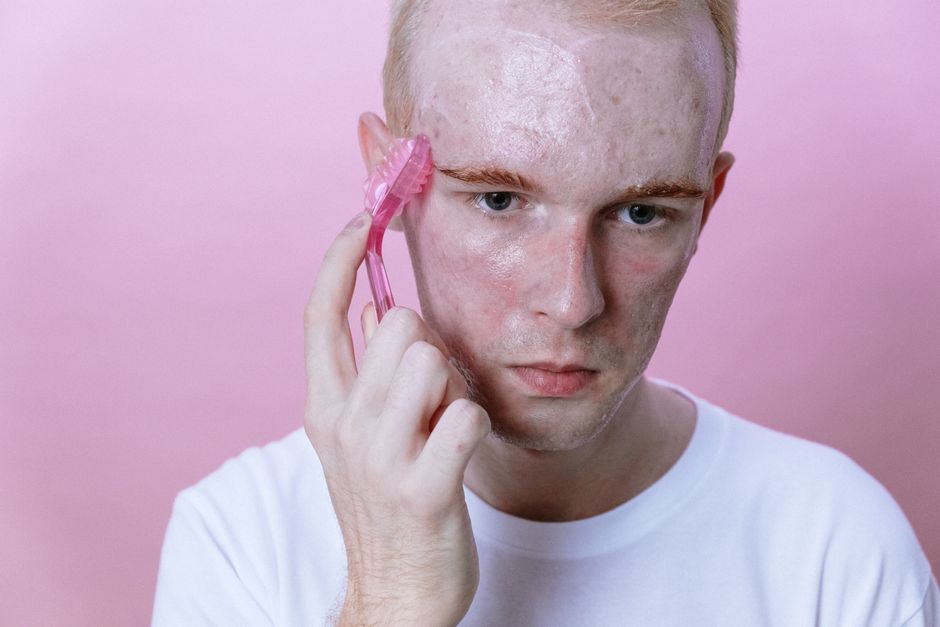
Chin acne keeps coming back because of where those pimples sit on your face. Chin breakouts are concentrated in the lower third of the face, a zone where oil glands are dense and where hormone-driven flare-ups tend to show up first. That pattern is not random. The skin on your chin responds strongly to hormonal shifts, friction from hands and helmets, and inflammation that lingers longer than it does elsewhere on the face.
If you keep finding deep, tender bumps along your jawline and chin, the cause is usually a mix of factors working at the same time — not one single thing you are doing wrong.
Why Do I Keep Getting So Much Acne On My Chin?
The chin and jawline are among the most hormone-sensitive areas of the face. Sebaceous glands — the oil-producing glands inside hair follicles — are densely packed there, and they respond to androgens like testosterone and dihydrotestosterone (DHT).
When androgen levels rise, or when your follicles become more sensitive to normal androgen levels, those glands produce more oil. More oil plus sticky dead skin cells equals a blocked pore. Bacteria that normally live on the skin, particularly Cutibacterium acnes, can then multiply inside the blocked follicle and trigger inflammation.
This is why chin acne is so persistent. It is not just surface dirt. The process starts deeper in the follicle, which is also why picking at it makes things worse and why it can leave marks.
Hormonal acne on the chin is common in:
- Teenagers going through puberty
- Women in the days before their period
- Women with polycystic ovary syndrome (PCOS)
- Adults under chronic stress
- Anyone starting or stopping hormonal medications
What Is The Link Between Hormones And Chin Acne?
Hormones drive chin acne more than any other single factor. The relationship is well established in dermatology.
Androgens stimulate sebum production. In women, a rise in androgens relative to estrogen — which happens in the second half of the menstrual cycle — can trigger a flare about a week before a period starts. This is why so many women notice chin pimples on a predictable schedule.
Estrogen generally works in the opposite direction. It tends to reduce oil production and calm inflammation. When estrogen drops and androgens stay steady, the balance shifts toward breakouts.
Conditions that raise androgen levels, such as PCOS, can cause more stubborn chin acne along with other signs like irregular periods, excess facial hair, or thinning scalp hair. If several of those are happening together, it is worth talking to a doctor about hormone testing.
Stress matters here too. The body responds to stress by releasing cortisol and other hormones that can push oil glands into overdrive. This is not a vague idea — it is a measurable physiological response.
Does Touching Your Chin Or Resting Your Face Cause Breakouts?
Mechanical acne — sometimes called acne mechanica — is real and often overlooked. Pressure, friction, and heat on the skin can block follicles and worsen existing breakouts.
Common triggers on the chin include:
- Resting your chin in your hands while at a desk
- Holding a phone against your jaw
- Helmet straps or chin guards
- Tight masks worn for long stretches
- Pillowcases that are not washed often
None of these cause acne on their own. But if you are already prone to chin breakouts, they can make the area worse and slow healing.
The fix is not complicated. Keep your hands off your face. Clean your phone screen. Change your pillowcase regularly — once or twice a week is reasonable. If you wear a helmet or mask for work or sport, clean the parts that touch your chin.
What About Diet And Chin Acne?
The evidence on diet and acne is mixed, but it is not empty. Some studies suggest that high-glycemic diets — those heavy in refined sugars and white starches — may worsen acne by raising insulin levels, which in turn can increase androgen activity and oil production.
Dairy has also been studied. Some research indicates a possible link between skim milk and acne, though the findings are not consistent across all studies and the effect, if real, appears modest.
What the evidence does not support is the old idea that chocolate or greasy food directly causes pimples. That claim has been tested and largely not confirmed.
If you want to test whether diet affects your skin, the sensible approach is to change one thing at a time for several weeks and watch what happens. There is no single diet proven to clear chin acne for everyone.
Why Do Chin Pimples Seem Deeper And More Painful?
Chin breakouts often show up as deep, tender lumps rather than small whiteheads. These are called nodules or cysts, and they form when inflammation happens deep in the follicle instead of at the surface.
Because the inflammation is deeper, it takes longer to resolve and is more likely to leave marks. Post-inflammatory hyperpigmentation — the dark spots left behind — is common on the chin, especially in people with darker skin tones.
Squeezing these deep bumps is one of the worst things you can do. It pushes bacteria and inflammatory material further into the skin and increases the risk of scarring. A dermatologist can treat deep chin acne with prescription options, but the earlier it is addressed, the less likely it is to leave permanent marks.
When Should You See A Doctor About Chin Acne?
Chin acne that is mild and occasional usually responds to over-the-counter care. But some situations call for a medical evaluation.
See a doctor or dermatologist if:
- You have deep, painful nodules or cysts
- Over-the-counter treatments have not helped after a few months of consistent use
- You have signs of a hormonal disorder, such as irregular periods or excess facial hair
- Acne is leaving scars or dark marks
- Breakouts are affecting your confidence or daily life
A doctor can look at whether an underlying hormonal condition is involved and discuss prescription treatments. This is not a sign of failure on your part — some chin acne simply does not respond to drugstore products.
What Actually Helps Chin Acne?
What helps depends on what is driving your breakouts. There is no single product that works for everyone.
For mild chin acne, a consistent routine with a gentle cleanser and a non-comedogenic moisturizer is a reasonable starting point. Ingredients like benzoyl peroxide and salicylic acid have evidence behind them for mild acne, though they can be drying and should be introduced slowly.
For hormonal chin acne, topical treatments alone often are not enough. Prescription options — including certain oral contraceptives and anti-androgen medications — are used by clinicians for hormone-driven acne. These require a doctor’s oversight because they carry real risks and are not appropriate for everyone.
Isotretinoin is a powerful prescription treatment for severe acne, including deep chin breakouts. It is effective but has significant side effects and strict monitoring requirements. It is not a casual option.
What does not have strong evidence: detoxes, supplements marketed for clear skin, and most “acne diets.” Be cautious with any product that promises to cure acne. No treatment works for everyone, and no treatment works overnight.
Frequently Asked Questions
Why do I only get acne on my chin and not my face?
The chin has a high concentration of oil glands that are especially responsive to hormones. That makes it a common site for hormone-driven breakouts even when the rest of your face stays clear.
Is chin acne a sign of a hormonal imbalance?
Sometimes. Chin acne can happen with normal hormones, but persistent breakouts along the jawline — especially with irregular periods or excess facial hair — may point to a hormonal condition like PCOS that is worth evaluating.
Does drinking water clear up chin acne?
No. Staying hydrated supports overall skin health, but there is no evidence that drinking more water clears acne or prevents chin breakouts.
How long does chin acne take to go away with treatment?
Most acne treatments take several weeks to show real improvement, and some take two to three months. Consistency matters more than speed, and stopping early usually means the breakouts return.
