
If you keep finding blackheads on your chin, the location is not a coincidence. The chin has a high concentration of oil glands, and it sits in the middle of a “T-zone” that produces more sebum than most other parts of the face. Add friction from resting your chin in your hands, and you have a spot that clogs easily.
Blackheads are open comedones. That means a pore has filled with a plug of oil and dead skin cells, and the plug has stayed open to the air. The dark color is not dirt. It is the result of oxidation and melanin in the plug itself. Scrubbing harder will not fix a chin full of them, and that is the part most people get wrong.
The real reasons so many appear on your chin come down to how much oil your skin makes, how fast your pores shed dead cells, and what your hormones are doing. Let’s walk through each one.
What Actually Causes Blackheads On The Chin?
A blackhead forms when a hair follicle gets blocked by a mix of sebum and dead skin cells. Sebum is the oil your sebaceous glands produce to keep skin waterproof. When that oil cannot drain freely, it builds up inside the pore and hardens into a plug.
Two things decide whether that plug becomes a blackhead. The first is how much oil your glands produce. The second is how well your skin sheds dead cells, a process called desquamation. When shedding is uneven, cells stick together and block the pore opening.
The plug stays open at the surface. Air reaches it, and the oil and skin cells oxidize and darken. That color is the only real difference between a blackhead and a whitehead, which is a closed pore.
The chin is a natural target for three reasons:
- It has a dense cluster of oil glands, more than the cheeks or jawline.
- It sits in the T-zone, the oilier central band of the face.
- It gets constant friction from hands, phones, and clothing.
Friction matters more than most people realize. It can press oil and debris deeper into pores and irritate the follicle wall. That is why people who rest a hand on their chin often see more clogs in that exact spot.
Why Do I Have So Many Blackheads On My Chin And Not Elsewhere?
Oil production is not evenly spread across your face. The forehead, nose, and chin form the T-zone, and these areas have the highest density of sebaceous glands. The chin also curves inward, which means it collects oil and sweat more than a flat surface like the cheek.
Then there is the outside world. Your chin touches more things than any other part of your face. A phone pressed to it during calls. A hand propped under it while you read. A scarf, a helmet strap, or a thick winter collar.
Each of these adds friction, heat, and pressure. Heat can increase oil flow. Pressure can push debris into pores. Repeated contact can also irritate the follicle, which may make the plugging worse over time.
If your blackheads are mostly on the chin and almost nowhere else, the cause is often mechanical and hormonal rather than a general skin problem. That matters, because it changes what will actually help.
Can Hormones Cause Chin Blackheads?
Yes. Hormones are a major driver of sebum production, and the chin is especially sensitive to hormonal shifts. This is why acne tends to cluster along the jawline and chin during certain phases of the menstrual cycle.
Androgens are the key hormones here. These include testosterone and DHEA. Both men and women produce them. Androgens signal the sebaceous glands to make more oil. More oil means a higher chance of a clogged pore.
This is also why chin breakouts often show up in the week before a period. Estrogen and progesterone shift, and the relative effect of androgens can rise. Oil output goes up. Pores clog more easily.
Several other things can shift hormones too. Polycystic ovary syndrome, or PCOS, raises androgen levels in some women and often shows up as jawline and chin acne. Stopping or starting hormonal birth control can trigger a flare. So can the hormonal swings of perimenopause.
If chin blackheads come with irregular periods, excess facial hair, or sudden worsening, it is worth talking to a clinician. That pattern can point to an underlying hormonal issue that deserves a proper look.





Do Skincare Products Make Chin Blackheads Worse?
Sometimes they do. Certain ingredients and habits can encourage clogs rather than clear them. If you have tried everything and your chin keeps breaking out, your routine may be part of the problem.
Heavy, occlusive products are a common culprit. Thick creams, balms, and some sunscreens can trap oil against the skin. Ingredients are rated on a comedogenic scale based on how likely they are to clog pores, though this scale comes from lab testing and does not always predict real-world results.
Over-washing is another trap. Stripping your skin with harsh cleansers can damage the skin barrier. The skin may respond by producing more oil, which can worsen the very problem you are trying to fix.
Scrubbing is the third issue. Rough exfoliants and aggressive extraction can irritate the follicle and push debris deeper. It can also cause inflammation, turning a simple blackhead into a red, tender bump.
Common habits that can worsen chin blackheads include:
- Sleeping in makeup or not cleansing at night.
- Using thick, heavy moisturizers on oily areas.
- Scrubbing with rough grains or brushes.
- Squeezing or picking at blackheads.
- Touching or resting your chin on your hands.
None of these are moral failures. They are just mechanics. Change the mechanics and the clogs often improve.
How Are Chin Blackheads Actually Treated?
The most reliable approach targets both oil and the shedding of dead skin cells. That is why dermatologists often start with ingredients that do one or both. The goal is to keep pores from plugging in the first place.
Several over-the-counter options have solid evidence behind them:
- Salicylic acid. A beta-hydroxy acid that dissolves into oil and helps loosen the plug. It is widely used for blackheads and mild acne.
- Retinoids. Adapalene is available over the counter. It helps normalize how skin cells shed and can prevent new clogs. It often takes several weeks to show results and can cause dryness at first.
- Benzoyl peroxide. It reduces acne-causing bacteria and can help with inflamed breakouts. It is not a direct blackhead dissolver but can help overall.
Prescription options exist for stubborn cases. These include stronger retinoids like tretinoin and topical or oral medications a clinician may recommend. Some clinicians also use comedone extraction in a clinic setting.
Two things are worth being honest about. First, results take time. Most topical treatments need consistent use for weeks before you see a clear change. Second, blackheads can come back. This is a condition you manage, not one you finish.
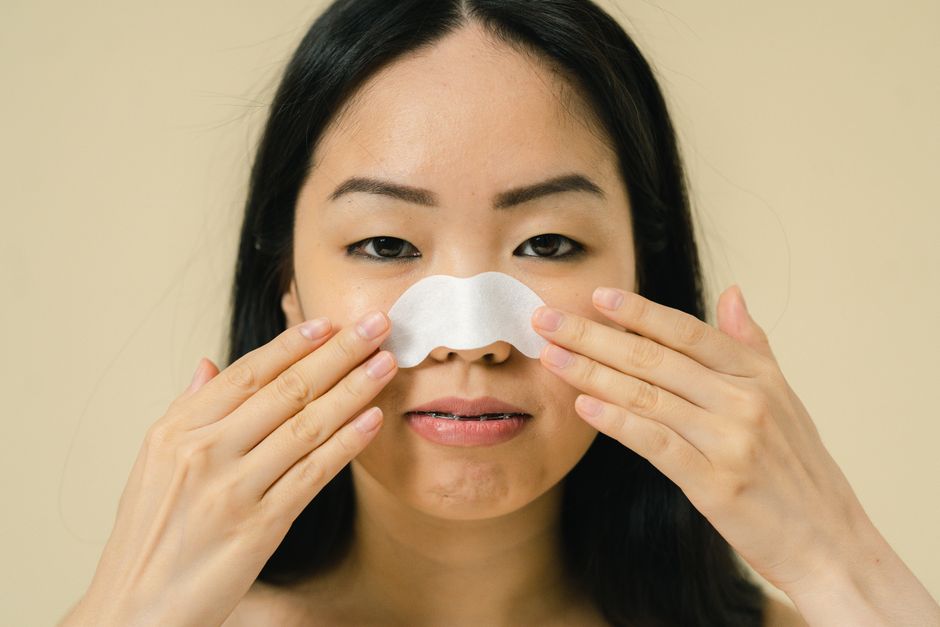
There is no evidence that pore strips remove the cause of blackheads. They can pull out the top of a plug and give a short-term visual result, but they do not change oil production or cell shedding. The blackhead often returns.
What Helps Prevent Blackheads From Coming Back?
Prevention is mostly about consistency and reducing friction. Small daily habits tend to matter more than any single product. Here is what the evidence supports.
Cleanse gently twice a day with a mild, non-comedogenic cleanser. Follow with a light moisturizer suited to oily skin. Heavy creams are not required for oily areas and can make clogs worse.
Use a product with salicylic acid or a retinoid regularly, not just when blackheads appear. These ingredients work by preventing clogs, so stopping them often brings the blackheads back.
Protect your chin from unnecessary contact. Clean your phone screen. Try not to rest your chin on your hands. Keep hats, helmets, and scarves clean if they touch your face.
Be patient with any new routine. Skin cell turnover takes time, and most treatments need several weeks of steady use before you can judge them. If you see no change after a few months, or if blackheads come with deep, painful bumps or scarring, a dermatologist can offer stronger options.
One honest note: everyone has some blackheads. They are a normal part of having oil glands. The goal is not a poreless chin. It is fewer clogs and calmer skin.
Frequently Asked Questions
Are blackheads on the chin a sign of poor hygiene?
No. Blackheads come from oil and dead skin cells plugging a pore, not from being dirty. The dark color is oxidized oil and pigment, not trapped dirt.
Why do my chin blackheads keep coming back?
Because the underlying oil production and cell shedding have not changed. Blackheads are a condition you manage over time, not one you clear permanently.
Does squeezing blackheads on my chin make them worse?
It often does. Squeezing can irritate the follicle, push debris deeper, and turn a simple blackhead into an inflamed bump or leave a mark.
Can changing my diet get rid of chin blackheads?
The evidence is mixed and no single diet reliably clears blackheads. Some studies suggest high-glycemic diets may affect acne, but results vary and diet is not a proven stand-alone fix.
