
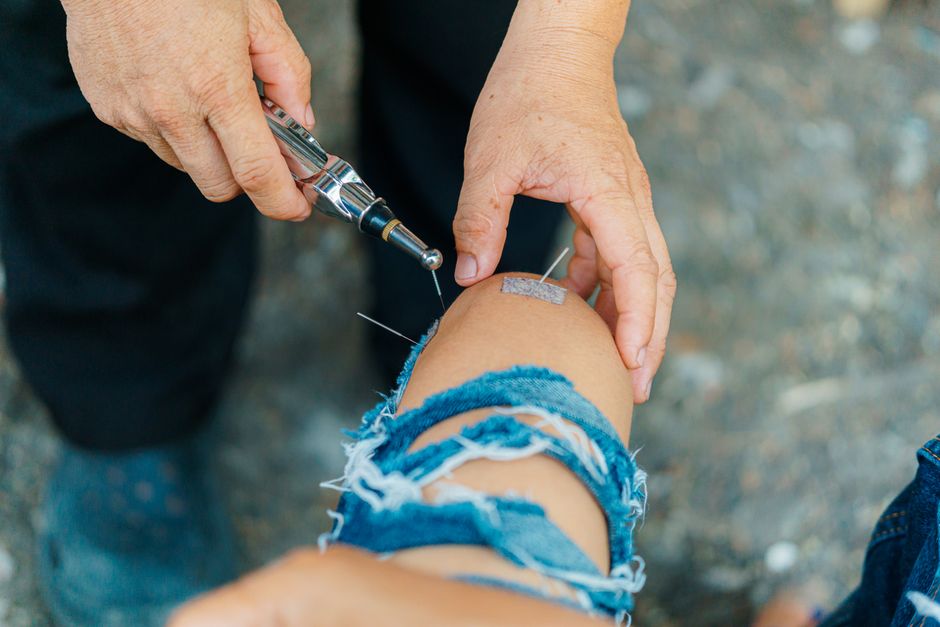
Knee pain during lunges and squats is one of the most common complaints in any gym or living room workout. The pain usually means the kneecap is being pulled sideways against the thigh bone, or the joint is taking on load it is not properly aligned to handle. Most cases are not from a single injury but from movement patterns, muscle imbalances, or technique issues that put repeated stress on the joint.
Why Do I Have Knee Pain When Lunging And Squatting?
The most frequent cause is patellofemoral pain syndrome. That is a medical term for pain around or behind the kneecap. During a squat or lunge, the kneecap glides up and down a groove in the thigh bone. If the thigh muscles, especially the inner quadriceps, are weak or the hip muscles do not stabilize the leg, the kneecap tracks unevenly. That uneven tracking irritates the cartilage and soft tissue under the kneecap.
Another common cause is tendinitis. The patellar tendon connects the kneecap to the shin bone. It takes heavy load during squats and lunges. If you increase your training volume or weight too quickly, that tendon can become inflamed and painful. The pain usually sits right below the kneecap.
Less common but more serious causes include meniscus tears, ligament sprains, and early arthritis. These conditions produce pain deeper inside the joint, often with swelling, catching, or a feeling that the knee will give out. If your knee swells or locks, that points away from simple tracking issues and toward structural damage inside the joint.
What Does the Location of the Pain Tell You?
Pain location is one of the best clues for figuring out what is wrong. Pain on the front of the knee, around or under the kneecap, most often points to patellofemoral pain or quadriceps tendinitis. This is the classic squat and lunge pain location.
Pain below the kneecap, right where the tendon attaches to the shin bone, points to patellar tendinitis. This is common in people who do a lot of jumping or heavy squatting. Pain on the inside or outside of the knee joint line suggests a meniscus issue or collateral ligament strain. Pain in the back of the knee during lunges can come from hamstring tightness or a popliteal cyst, though both are less common.
Sharp pain during a specific moment of the movement is different from dull aching after exercise. Sharp pain during the bottom of a squat often means a structure is being pinched or compressed. Dull aching after a workout more often means overuse and inflammation.
Muscle Imbalances That Cause Knee Pain
The knee sits between the hip and the ankle. Problems in either joint can show up as knee pain. Weak hip abductors and external rotators are a major contributor. These muscles, especially the gluteus medius, keep the thigh from caving inward during a squat. When they are weak, the knee collapses inward, which twists the kneecap and overloads the outer structures of the joint.
Tight calves and ankle stiffness also matter. If the ankle cannot dorsiflex — meaning the shin cannot move far enough forward over the foot — the knee compensates. The knee shifts forward or the heel lifts off the ground. Both changes alter how the kneecap tracks and increase stress on the joint.
The quadriceps themselves play a role. The vastus medialis obliquus, or VMO, is the teardrop-shaped muscle on the inner thigh. It helps keep the kneecap centered. When it is weak compared to the outer quadriceps, the kneecap gets pulled outward. This imbalance is common after long periods of inactivity or in people who do heavy leg extensions but skip other quad work.





Technique Errors That Increase Knee Stress
Several specific technique problems reliably produce knee pain. The most common is letting the knees cave inward during the lowering phase of a squat or lunge. This is called knee valgus. It happens when the hip muscles cannot control the thigh. Fixing this means actively pushing the knees outward, in line with the toes, throughout the movement.
Another common error is placing the knees too far forward of the toes. Some forward movement is normal and necessary. But if the knees travel excessively forward, the load shifts onto the patellar tendon and the joint surface behind the kneecap. Sitting the hips back, rather than straight down, keeps more load in the glutes and reduces kneecap compression.
Depth matters too. Squatting or lunging too deep, before you have the mobility to do so safely, compresses the back of the kneecap against the thigh bone at high angles of knee flexion. If you feel pain at the bottom of a squat, reduce your depth until you find a pain-free range. Then gradually work deeper as your strength and mobility improve.
Foot position is frequently overlooked. Turning the feet out excessively or pointing them too straight changes the rotation at the knee. Your feet should generally point in the same direction as your knees. If your feet point forward but your knees track outward, the joint experiences rotational stress with every rep.
How to Fix Knee Pain From Squats and Lunges
Addressing the underlying cause is the first step. If you have been training through pain, stop doing the specific movement that hurts. Pain during exercise is a signal that tissue is being irritated. Continuing to push through sharp pain usually makes the problem worse.
Reduce the load and range of motion. If full squats hurt, do partial squats to a box or bench. If lunges hurt, shorten your stride. A shorter lunge stride keeps the knee more aligned over the ankle and reduces stress on the kneecap. These modifications let you keep training while the irritated tissue recovers.
Strengthen the muscles that stabilize the knee. Hip strengthening is often the highest-impact change. Glute bridges, side-lying leg raises, and clamshells target the gluteus medius. These exercises are simple, require no equipment, and address the weakness that allows the knee to cave inward.
Quadriceps strengthening matters as well. Straight leg raises and wall sits build the quadriceps without the deep knee bending that provokes pain. If your VMO is weak, exercises that work the quadriceps through the last few degrees of knee extension, such as short-arc leg extensions, can help balance the pull on the kneecap.
Stretching the structures that limit your movement is also important. Calf stretches and quadriceps stretches address the two most common flexibility deficits. Foam rolling the outer thigh and glutes can reduce tension in the iliotibial band, which attaches near the knee and can contribute to outer knee pain when tight.
When to See a Doctor for Knee Pain
Not all knee pain requires a doctor visit. Mild pain that improves with rest and modified training can often be managed at home. But certain signs warrant professional evaluation.
Seek medical attention if your knee swells significantly, if you cannot bear weight on the leg, or if the knee locks or catches. These symptoms suggest a meniscus tear or ligament injury. Pain that persists for more than a few weeks despite modifying your activity also deserves evaluation. And if the knee feels unstable, like it will buckle or give out, that is a red flag for ligament damage.
A physical therapist is often the right first stop for persistent knee pain. They can assess your movement patterns, identify specific weaknesses, and design a rehabilitation program. Many people recover fully with structured physical therapy and never need imaging or surgery.
An X-ray or MRI is not always necessary. Imaging is most useful when the physical exam suggests structural damage. If your doctor suspects arthritis, an X-ray can confirm it. If a meniscus or ligament tear is suspected, an MRI provides the clearest picture. But for typical patellofemoral pain, imaging often shows nothing abnormal even though the knee hurts.
How Long Does Recovery Take?
Recovery time depends on the cause and how consistently you address it. Patellofemoral pain from muscle imbalance typically improves over 4 to 12 weeks with regular strengthening. Patellar tendinitis can take longer, especially if you continue heavy training. Tendons heal slowly because they have limited blood supply.
Returning to squats and lunges should be gradual. Start with bodyweight only. Increase repetitions before adding weight. When you do add weight, increase it in small increments. Stop if pain returns. The goal is to find a training load that builds strength without re-irritating the tissue.
Some people find that certain squat variations are simply more comfortable. Front squats place the torso more upright and may reduce stress on the knees compared to back squats. Goblet squats hold the weight in front and naturally encourage better posture. Box squats control depth and reduce the load on the knees at the bottom position. Experimenting with variations can help you find a movement pattern that works for your body.
Frequently Asked Questions
Should I stop squatting if my knee hurts?
Yes, stop the specific movement that causes sharp pain. Modify the exercise by reducing depth or load, and work on strengthening the supporting muscles before returning to full range.
Can weak glutes cause knee pain when squatting?
Yes, weak gluteus medius muscles allow the knee to cave inward during squats and lunges. This inward collapse increases stress on the kneecap and the outer knee structures.
Is it better to ice or heat knee pain after exercise?
Ice is more appropriate for acute pain and inflammation after exercise. Use ice for 15 to 20 minutes at a time on the painful area, especially in the first few days after pain begins.
Will knee pain go away on its own?
Mild knee pain from overuse often improves with rest and activity modification. Pain that persists for more than a few weeks or is accompanied by swelling or instability should be evaluated by a healthcare professional.
