
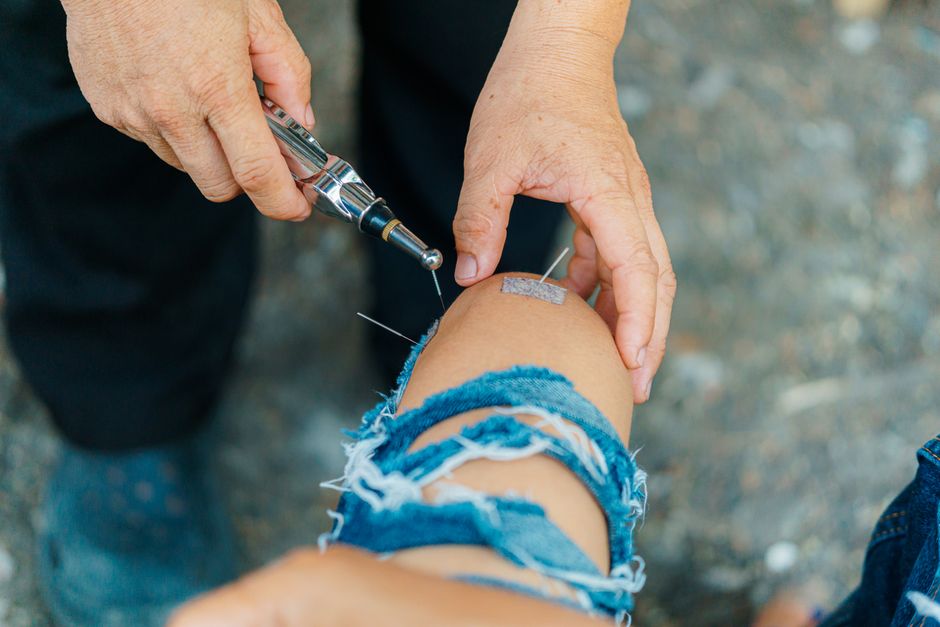
Kneeling on a hard floor puts your body weight onto a small area directly over your kneecap, and for many people, that pressure is simply more than the tissues there can comfortably handle. The pain you feel is usually the result of mechanical pressure on the bursa, the tendons, or the kneecap itself, and sometimes it signals an underlying condition that needs attention. Understanding which structure is complaining is the first step toward knowing whether you can fix it with a cushion or whether you should see a doctor.
What Is Actually Hurting When You Kneel?
The front of your knee is not just bone. Between your skin and your kneecap sits a fluid-filled sac called the prepatellar bursa. Its job is to reduce friction between your skin and the bone. When you kneel on a hard surface, that sac gets compressed. If the pressure is brief, it may just feel uncomfortable. If you kneel often — for gardening, tiling, or church services — that repeated pressure can irritate the bursa and cause it to become inflamed.
Tendons also play a role. The patellar tendon connects your kneecap to your shinbone. The quadriceps tendon connects your thigh muscle to the top of your kneecap. Kneeling stretches these tendons and presses them against bone. If they are already irritated from activity, kneeling can make them hurt more.
Sometimes the pain is from the kneecap itself. The back of the kneecap has a layer of cartilage that can wear down over time. Kneeling compresses that cartilage against the thigh bone, and if the cartilage is thin, the pressure translates directly into pain.
In some cases, the pain is not from the knee joint at all. It can come from a nerve that runs near the knee, or from a problem in your lower back that refers pain down into the knee area. If the pain is sharp, shoots down your leg, or is accompanied by numbness or tingling, that points toward a nerve issue rather than a local knee problem.
Why Do I Have Knee Pain When Kneeling On The Floor? Common Causes
The most common cause is simple mechanical pressure. Your kneecap is not designed to bear your full body weight on a hard surface. The skin, the bursa, and the bone all take the load, and if any of those structures are sensitive, you feel pain.
Prepatellar bursitis is the medical term for inflammation of the bursa in front of the kneecap. It is common in people who kneel for work or religious practices. The knee may look swollen, feel warm, and hurt when you press on it. The swelling is often soft and fluid-filled, like a water balloon over the kneecap.
Patellofemoral pain syndrome is another common cause. This is a broad term for pain around the kneecap, often felt when you squat, climb stairs, or kneel. The cartilage under the kneecap becomes irritated, and the pressure of kneeling makes it worse. It is not always accompanied by visible swelling.
Osteoarthritis can also cause kneeling pain. When the cartilage in the knee joint wears down, kneeling compresses bone against bone. This pain is often accompanied by stiffness in the morning and pain with other weight-bearing activities.
Less common but important causes include gout, where uric acid crystals deposit in the knee joint and cause intense pain and swelling, and infection, which is rare but serious. If your knee is red, hot, and very swollen, and you have a fever, that is a medical emergency.
Why Does It Hurt More On Hard Floors?
The hardness of the surface matters because pressure is force divided by area. When you kneel, your body weight is concentrated onto the small area of your kneecaps. On a soft surface, the area of contact spreads out slightly, reducing the pressure per square inch. On a hard floor, the contact area stays small, so the pressure stays high.
This is why a simple cushion or knee pad often solves the problem. It increases the surface area over which your weight is distributed and adds a layer of padding that absorbs some of the force. If kneeling on a hard floor is painful but kneeling on a padded surface is fine, the issue is likely mechanical pressure rather than an underlying disease.
If kneeling on a soft surface also hurts, that is a different story. That suggests the tissues themselves are inflamed or damaged, and the pressure is aggravating them regardless of the surface. In that case, padding may help a little but will not solve the underlying problem.



When To See A Doctor
Occasional discomfort from kneeling on a hard floor is common and often harmless. But certain signs should prompt a medical evaluation.
See a doctor if your knee is visibly swollen, especially if the swelling appeared suddenly. See a doctor if the pain persists after you stop kneeling. See a doctor if the knee feels unstable, locks, or gives way. See a doctor if you cannot bear weight on that leg.
Seek urgent care if the knee is red, hot to the touch, and accompanied by a fever. This combination can indicate a joint infection, which requires prompt treatment. Also seek urgent care if the pain came on suddenly after an injury and you cannot straighten your leg.
If the pain is from a nerve — sharp, shooting, or accompanied by numbness or tingling — that also warrants a medical evaluation. Nerve pain does not usually respond to padding or rest, and it may require a different treatment approach.
How To Kneel With Less Pain
If you need to kneel and your knees are sensitive, the first line of defense is padding. A thick foam pad, a gardening kneeler, or even a folded towel can make a significant difference. The goal is to distribute your weight over a larger area and add a compressible layer between your knee and the floor.
Change your position frequently. Do not stay in a kneeling position for long stretches. Shift your weight from one knee to the other, or take breaks to stand and walk around. This gives the compressed tissues time to recover.
Consider kneeling on one knee instead of both. This reduces the load on each knee, though it does put more weight on the kneeling knee. Alternating which knee is down can help spread the load over the session.
Use a kneeling stool or a low bench if you are gardening or doing floor work. This transfers the weight from your knees to your shins and feet, which are better suited to bearing weight.
If kneeling is consistently painful even with padding, consider whether you can avoid the position altogether. Squatting, sitting on a low stool, or using long-handled tools may allow you to do the same task without putting pressure on your knees.
What Helps And What Does Not
For occasional pain from kneeling, rest and ice can help. Icing the front of the knee for 15 to 20 minutes after kneeling can reduce any inflammation that developed. Over-the-counter anti-inflammatory medications like ibuprofen or naproxen can help if the pain is significant, but they should be used for short periods and according to the label instructions.
Strengthening the muscles around the knee can reduce pain over the long term. The quadriceps, hamstrings, and glutes all support the knee joint. Stronger muscles mean less load on the kneecap and its surrounding tissues. Physical therapy can be helpful for designing a program specific to your needs.
What does not help is ignoring the pain and continuing to kneel on hard surfaces without protection. Repeated compression of an already irritated bursa can turn a minor problem into a chronic one. If your knee hurts when you kneel, that is a signal. The signal may simply mean “use a cushion,” but it is worth listening to.
There is no evidence that knee braces or straps reliably prevent kneeling pain. They can provide a sense of support, but they do not change the fundamental issue of pressure on the kneecap. If a brace helps you, there is no harm in using it, but do not expect it to fix the underlying problem.
Can You Prevent Kneeling Pain?
Prevention starts with not kneeling on hard surfaces without protection. If you know you will be kneeling, bring a pad with you. Keep a kneeling pad near your garden tools, in your car, or wherever you tend to do floor work.
Maintaining good strength in your legs and core can reduce the strain on your knees over time. Regular walking, cycling, or swimming can keep the knee joint mobile and the surrounding muscles strong without putting excessive load on the kneecap.
If you are overweight, weight loss can reduce the load on your knees. Every pound of body weight puts additional force through the knee joint during weight-bearing activities. This is not a quick fix, but it is a meaningful long-term strategy for knee health.
Stretching the quadriceps, hamstrings, and calf muscles can help maintain flexibility around the knee. Tight muscles can pull on the kneecap and alter how it tracks in its groove, which can contribute to pain.
Frequently Asked Questions
Can kneeling on the floor cause permanent knee damage?
Occasional kneeling on a hard floor is unlikely to cause permanent damage in a healthy knee. Repeated kneeling without protection can lead to chronic bursitis or aggravate existing arthritis, which can be long-lasting problems.
Is knee pain when kneeling a sign of arthritis?
It can be, but it is not always. Osteoarthritis is one possible cause of kneeling pain, especially in people over 50, but bursitis, tendon irritation, and patellofemoral pain syndrome are also common causes.
What is the best position to kneel without knee pain?
Using a thick pad and kneeling on one knee while keeping the other foot on the floor reduces pressure on each knee. Changing position frequently and taking breaks also helps.
Should I ice my knee after kneeling if it hurts?
Yes, icing the front of the knee for 15 to 20 minutes after kneeling can reduce inflammation and ease pain. If the pain is severe or persistent, see a doctor.
