
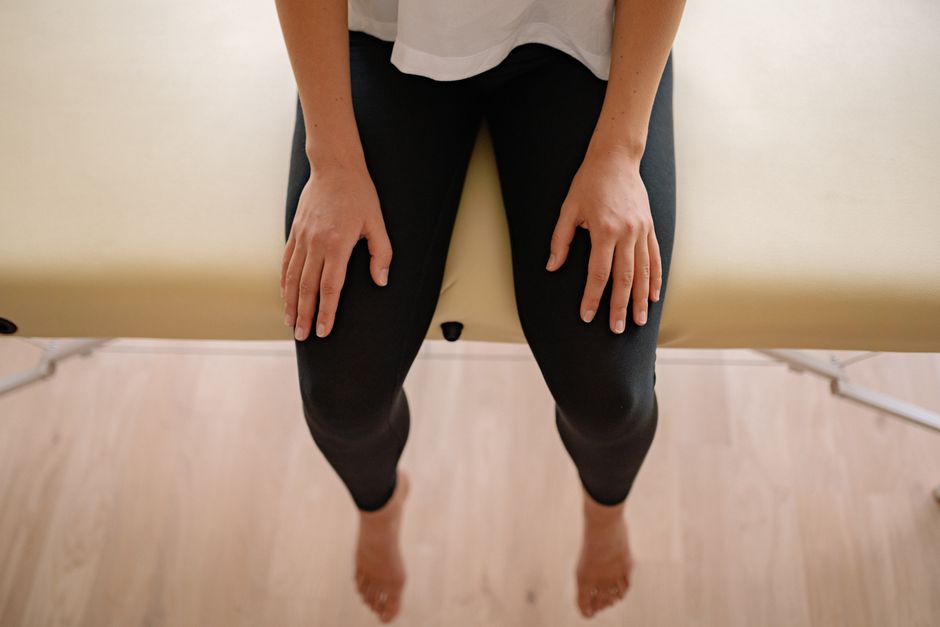
If you feel a deep, focused ache or sharp pain right in the bone at the bottom of your buttock when you sit, you are likely feeling your ischial tuberosity. That is the proper name for the pair of bony knobs you can feel under each buttock — the “sit bones.” They are the part of the pelvis designed to carry your weight when you are seated. Pain there usually comes from one of a small number of causes: the fluid-filled sac that cushions the bone (the bursa) becomes inflamed, the hamstring tendons that attach to that bone get irritated, or pressure and shear forces on the area build up faster than the tissue can recover. The location is the key clue, because the ischial tuberosity is a specific spot where several structures meet.
Why Do I Have Ischial Tuberosity Pain When Sitting?
The pain happens because the ischial tuberosity is a pressure point and an attachment site at the same time. When you sit, much of your body weight transfers through these two bones. Direct pressure squeezes the tissue between the bone and whatever you are sitting on. At the same time, the hamstring muscles pull on the same bone every time you move your leg.
Two structures sit in that vulnerable spot. The first is the ischial bursa, a small sac that normally reduces friction where tendon and skin move over bone. The second is the hamstring origin, where the hamstring tendons anchor to the tuberosity. Either can become irritated, and the two problems often overlap.
This is why the pain is so positional. Standing up takes the pressure off the bone, so the pain often eases quickly when you rise. That same relief can be misleading — it makes people think the problem is minor when the underlying irritation is still there.
What Causes Pain in the Sit Bones?
Most cases trace back to mechanical load rather than a single dramatic injury. The tissue gets more demand than it can handle, and it becomes inflamed or irritated.
Common contributors include:
- Sitting for long stretches on hard surfaces, which concentrates pressure on the tuberosities.
- Activities that load the hamstrings heavily, such as running, sprinting, or hill work.
- Cycling, rowing, or other sports that combine a seated position with repetitive leg motion.
- A sudden increase in training volume or intensity without enough recovery time.
- Prolonged sitting on a bike saddle or a hard chair with no cushioning.
Two named problems account for a large share of cases. Ischial bursitis is inflammation of the bursa over the tuberosity. Proximal hamstring tendinopathy is irritation and degeneration at the hamstring attachment. These are different tissues, but they sit so close together that the symptoms can be hard to tell apart without an exam.
Less common causes exist and should not be ignored. A stress injury to the bone itself, a partial hamstring tear near the attachment, or referred pain from the lower back or sciatic nerve can all produce pain in this region. That is one reason a persistent problem deserves a proper evaluation rather than a guess.
Ischial Bursitis vs. Hamstring Tendinopathy: What Is the Difference?
The two conditions feel similar but involve different tissue, and the distinction matters for treatment. The table below summarizes the general differences clinicians look for. These are tendencies, not rules — overlap is common and only an exam can confirm which tissue is involved.
| Feature | Ischial Bursitis | Proximal Hamstring Tendinopathy |
|---|---|---|
| Main tissue | Bursa (fluid sac over the bone) | Hamstring tendon at its attachment |
| Typical trigger | Direct pressure on the bone | Load on the hamstring, especially stretching |
| Pain with sitting | Often prominent | Common, especially on hard seats |
| Pain with activity | Less tied to hamstring use | Worse with running, sprinting, or deep forward bending |
| Pain location | Right over the bony point | At or just below the bony point |
One detail that surprises many people: with hamstring tendinopathy, stretching the hamstring often makes it worse, not better. The tendon is already being pulled at its attachment, and a deep stretch adds more load to the irritated spot. This is the opposite of what people expect, and it is a common reason home stretching routines backfire.




What Does Ischial Tuberosity Pain Feel Like?
The hallmark is a deep, localized pain right at the bone at the bottom of the buttock. It is usually easy to point to with one finger, which separates it from the broader, harder-to-locate ache of many low back problems.
People commonly describe:
- A dull ache or a sharp, pinpoint pain when seated.
- Pain that builds the longer you sit and eases soon after you stand.
- Discomfort when moving from sitting to standing.
- Pain that flares during or after running, sprinting, or climbing stairs.
- Tenderness directly over the bony point when pressed.
Pain that travels down the back of the leg, causes numbness or tingling, or comes with weakness may point to nerve involvement rather than a purely local problem. That pattern deserves medical attention.
How Is Ischial Tuberosity Pain Diagnosed?
Diagnosis starts with a history and a physical exam. A clinician will ask when the pain started, what makes it better or worse, and how much you sit or train. They will press on the tuberosity and test the hamstring against resistance to see whether the tendon reproduces the pain.
Imaging is not always needed. When the picture is unclear, or when symptoms are severe or not improving, imaging may help. Ultrasound can show the bursa and the tendon surface. MRI can reveal tendon changes, bursa inflammation, and, if relevant, bone or muscle injury. Imaging findings do not always match symptoms, so results are read alongside the exam rather than on their own.
What Helps Ischial Tuberosity Pain?
The first step is reducing the load that keeps irritating the area. For many people that means changing how and how long they sit, and adjusting activity rather than stopping it completely.
Approaches that are commonly used include:
- Offloading pressure. A softer seat, a cushion with a cutout under the sit bones, or simply standing and moving more often can reduce direct pressure.
- Activity modification. Cutting back on the specific activities that flare the pain, rather than eliminating all movement, is generally preferred.
- Gradual loading. For hamstring tendinopathy, a structured program that builds the tendon’s tolerance over time is a mainstay. This is best guided by a clinician or physical therapist.
- Pain relief. Over-the-counter pain medications may help short term. Persistent use should be discussed with a clinician, and this is not a substitute for addressing the cause.
What does not usually help is aggressive stretching of the hamstring, which tends to aggravate the tendon. Deep tissue massage directly on the painful point can also flare symptoms in some people.
When pain is severe, persistent, or not responding to these steps, other options such as injections or, in rare cases, surgery may be considered. These are decisions for a clinician, and the evidence for injections in this area is not as strong as it is for some other tendon problems. They are not a guaranteed fix.
How Long Does It Take to Get Better?
Recovery time varies widely and depends on the cause and how long the problem has been present. Bursitis that is caught early and offloaded often settles over a period of weeks. Hamstring tendinopathy tends to be slower, because tendons heal gradually and respond to load over time rather than to rest alone.
Honest expectations matter here. Tendon problems frequently take longer than people hope, and setbacks during recovery are common. Steady, progressive loading usually works better than rushing back to full activity. If pain is worsening, not improving after several weeks of sensible management, or comes with leg weakness or numbness, it is time to see a clinician rather than push through.
Frequently Asked Questions
Why does my ischial tuberosity hurt when I sit?
It hurts because the ischial tuberosity carries much of your body weight when seated, and the bursa or hamstring tendon over that bone can become irritated. Direct pressure on the bone then reproduces the pain.
Is ischial tuberosity pain the same as sciatica?
No, they are different. Ischial tuberosity pain is usually localized to the bone at the bottom of the buttock, while sciatica typically causes pain, numbness, or tingling that travels down the leg.
Should I stretch my hamstring if it hurts to sit?
Often no, especially if the problem is hamstring tendinopathy. Stretching pulls on the irritated tendon attachment and can make symptoms worse, so a guided loading program is usually preferred over stretching.
When should I see a doctor for sit bone pain?
See a clinician if the pain is severe, keeps getting worse, does not improve after a few weeks of sensible management, or comes with leg weakness or numbness. Those features suggest something beyond simple irritation.
