
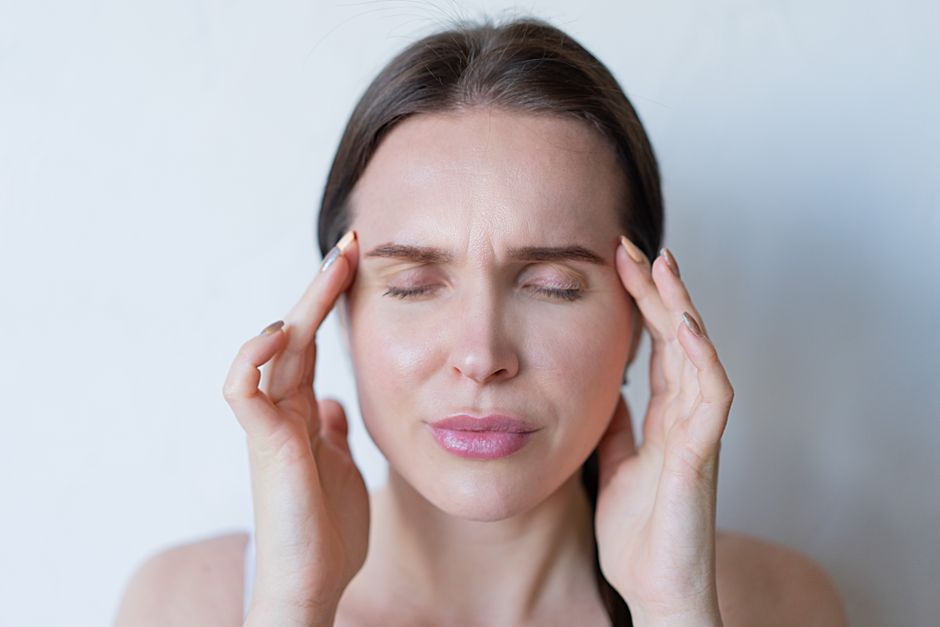
Pressing on your eyebrow hurts because the tissue there is packed with nerve endings, small muscles, and the frontal sinus — a hollow space in the forehead bone that sits directly behind the eyebrow ridge. When any of those structures become inflamed, congested, or irritated, pressure on the surface sends a sharp or aching signal. The most common causes are sinus inflammation, tension-type headache, and skin or nerve conditions in the area. Less often, it points to something that needs medical attention.
Why Do I Have Eyebrow Pain When Pressed?
The eyebrow ridge sits over the frontal sinus, one of four pairs of paranasal sinuses. These are air-filled cavities lined with mucous membranes. When that lining swells — from a cold, allergies, or infection — the sinus fills with fluid and pressure builds. Pressing the eyebrow pushes directly against that inflamed area.
But the sinus is not the only structure involved. The supraorbital nerve runs along the upper rim of the eye socket and exits through a small notch right at the eyebrow. That nerve supplies sensation to the forehead and scalp. Anything that irritates it — inflammation, compression, or nerve dysfunction — can make light pressure feel painful.
There is also a layer of muscle in the forehead called the frontalis. It lifts the eyebrows and creates forehead wrinkles. Like any muscle, it can become tight, fatigued, or tender from sustained contraction. That tenderness can be reproduced by pressing on the brow.
So eyebrow pain on pressure is not one condition. It is a symptom with several possible sources, and the location and quality of the pain often point toward which one is involved.
What Does Sinusitis Have to Do With Eyebrow Pain?
Sinusitis — inflammation of the sinus lining — is one of the most frequent reasons people feel pain when pressing their eyebrow. The frontal sinus drains through a narrow channel into the nasal cavity. When that channel swells shut, mucus cannot escape, pressure rises, and the area becomes tender.
Acute sinusitis often follows a cold. Symptoms typically include nasal congestion, thick discharge, facial pressure, and sometimes a reduced sense of smell. The pain tends to be worse when bending forward or lying down, because gravity shifts fluid within the sinus.
Frontal sinus pain is usually felt above the eyes and can radiate to the forehead. Pressing or tapping over the brow may reproduce it. This is sometimes called the “tenderness to percussion” sign, though it is not specific to sinusitis alone.
Chronic sinusitis lasts longer and can be caused by ongoing inflammation, nasal polyps, or structural narrowing. In chronic cases, pain may be less sharp and more of a persistent dull pressure.
One clarification worth making: not all sinus pain means infection. Allergic rhinitis, irritants like smoke, and even dry air can inflame the sinus lining without any bacteria involved. That distinction matters because antibiotics do not help non-infectious sinus inflammation.
Can Tension Headaches Cause Eyebrow Tenderness?
Tension-type headache is the most common headache disorder, and it frequently produces tenderness around the brow and temples. The pain is typically described as a tight band or pressure across the forehead. Pressing on the eyebrow muscles can reproduce or worsen it.
The mechanism involves sustained contraction of muscles in the scalp, neck, and forehead. The frontalis muscle, which sits over the brow, is often involved. When it stays contracted — from stress, poor posture, eye strain, or jaw clenching — it becomes sore to touch.
Tension headaches usually affect both sides and are not typically accompanied by nausea or light sensitivity. That helps distinguish them from migraine, though the two can overlap.
Some people also develop myofascial trigger points in the forehead muscles. These are small, tight knots that refer pain to specific areas. Pressing on a trigger point can reproduce the exact pain a person has been feeling.





What Nerve Conditions Cause Pain When Pressing the Eyebrow?
The supraorbital nerve exits the skull through a notch at the top of the eye socket, right where the eyebrow begins. Several conditions can irritate or damage this nerve.
Supraorbital neuralgia is a pain condition involving this nerve. It causes sharp, shooting, or burning pain along the forehead and brow. Light touch or pressure can trigger it. The cause is not always identified, though prior trauma, infection, or compression have been linked to it.
Trigeminal neuralgia affects the trigeminal nerve, which has three branches. The first branch — the ophthalmic division — supplies the forehead, eyebrow, and upper eye area. When this branch is involved, even light pressure on the brow can cause intense, electric-shock-like pain. This is less common than sinus or tension-related causes, but it is important to recognize because the pain is severe and the condition is treatable.
Nerve-related eyebrow pain often has a different quality than sinus pain. It is more likely to be sharp, stabbing, or burning rather than dull and pressure-like. It may also come in brief episodes rather than being constant.
Skin and Local Causes of Eyebrow Pain
Sometimes the source is right on the surface. The skin around the eyebrow is thin and sensitive, and several local conditions can make it tender.
- Folliculitis — inflammation of hair follicles, often from tweezing, waxing, or infection. It causes small red bumps that hurt when touched.
- Sebaceous cysts — small fluid-filled sacs under the skin that can become inflamed or infected.
- Contact dermatitis — a reaction to makeup, brow pencils, or skincare products. It causes redness, swelling, and tenderness.
- Cellulitis — a bacterial skin infection that causes warmth, redness, swelling, and pain. This needs medical treatment.
- Herpes zoster (shingles) — can affect the forehead and eyebrow area, causing burning pain that may precede a rash by several days.
These conditions are usually visible on inspection. If the skin looks normal but pressing still hurts, the source is more likely deeper — sinus, muscle, or nerve.
When Should Eyebrow Pain Concern You?
Most eyebrow tenderness is not dangerous. It often improves on its own or with simple care. But certain signs suggest something more serious that needs prompt evaluation.
- Vision changes, double vision, or swelling around the eye
- High fever with severe facial pain
- Pain that is sudden and severe, unlike anything experienced before
- Swelling or redness that spreads rapidly
- Numbness or weakness in the face
- Pain that follows a head injury
- No improvement after several weeks of home care
These symptoms could indicate a serious sinus infection, nerve problem, or other condition that requires medical attention. They are not common, but they matter.
How Is Eyebrow Pain Evaluated?
A doctor typically starts with a history and physical exam. They will ask about the location, quality, and duration of the pain. They may press on the brow and sinuses to check for tenderness. They may also look inside the nose for signs of swelling or discharge.
If sinusitis is suspected, imaging such as a CT scan may be used, though it is not always necessary for uncomplicated cases. For suspected nerve conditions, a neurological exam helps identify which branch is involved.
Blood tests are not routine unless infection or an inflammatory condition is suspected. In most cases, the diagnosis is made clinically — based on symptoms and exam findings.
| Cause | Typical Pain Quality | Common Triggers |
|---|---|---|
| Sinusitis | Dull, pressure-like, worse when bending forward | Cold, allergies, infection |
| Tension headache | Tight, band-like, both sides | Stress, posture, eye strain |
| Supraorbital neuralgia | Sharp, shooting, burning | Light touch, pressure |
| Trigeminal neuralgia | Electric-shock, brief episodes | Touch, chewing, wind |
| Skin conditions | Tender, sometimes itchy or burning | Products, infection, shaving |
What Helps Eyebrow Pain?
Treatment depends on the cause. For sinus-related pain, saline nasal rinses and steam may help loosen congestion. Over-the-counter pain relievers can reduce discomfort. If a bacterial infection is confirmed, antibiotics may be prescribed — but most acute sinusitis is viral and does not require them.
For tension-type headache, addressing triggers helps. That may include improving posture, taking breaks from screens, managing stress, and gentle stretching of the neck and shoulders. Some clinicians recommend warm compresses or massage of the forehead muscles.
Nerve-related pain often requires different treatment. Medications used for nerve pain — such as certain anticonvulsants or tricyclic antidepressants — may be prescribed. These are not general painkillers. They work on nerve signaling and should be managed by a doctor.
Skin conditions are treated based on the specific diagnosis. Bacterial infections need antibiotics. Contact dermatitis improves when the irritant is removed. Folliculitis often resolves with gentle care and keeping the area clean.
No single home remedy works for all causes. What helps depends entirely on what is driving the pain.
Frequently Asked Questions
Why does pressing on my eyebrow hurt?
Pressing on the eyebrow can hurt because the area contains the frontal sinus, the supraorbital nerve, and forehead muscles — all of which can become inflamed or irritated. The most common causes are sinus congestion, tension headache, and local skin or nerve conditions.
Can sinus infection cause eyebrow pain?
Yes. The frontal sinus sits directly behind the eyebrow ridge, and when its lining swells, pressure builds and the area becomes tender. This pain is often worse when bending forward or lying down.
How long does eyebrow pain usually last?
Duration depends on the cause. Tension-related pain may ease within hours to days, while sinus-related pain often lasts as long as the congestion does. Pain lasting more than a few weeks without improvement should be evaluated by a doctor.
When should I see a doctor for eyebrow pain?
See a doctor if you have vision changes, swelling around the eye, high fever, sudden severe pain, or pain that does not improve after several weeks. These signs may indicate a condition that needs medical treatment.
