
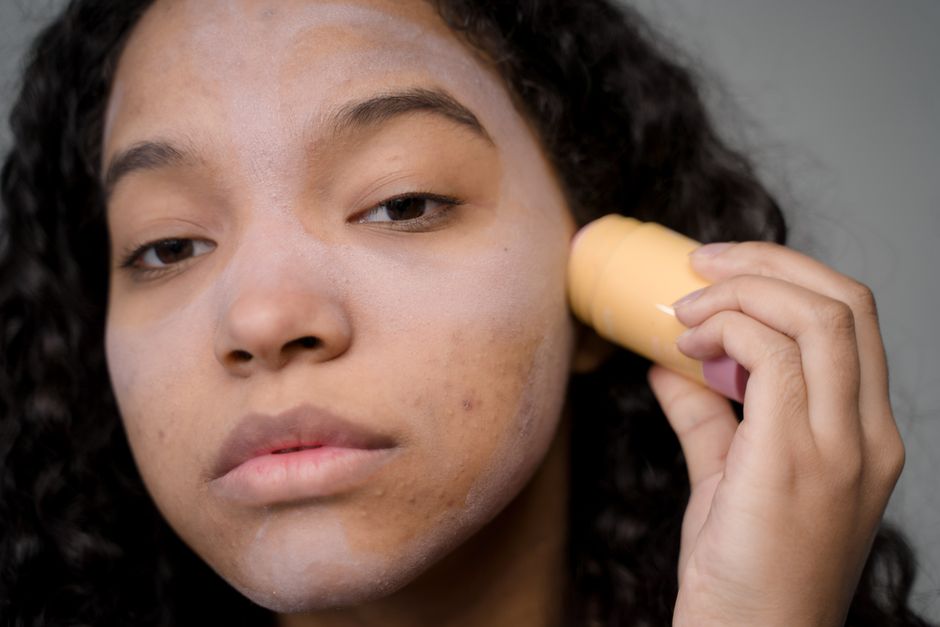
Dry spots on your skin are rarely a single condition with one cause. They usually result from a disruption in the skin’s outer barrier, which loses moisture faster than it can replace it. The most common causes include environmental dryness, irritant contact with soaps or fabrics, and chronic conditions like eczema or psoriasis, which require distinct management approaches.
Why Do I Have Dry Spots On My Skin Causes Explained
Your skin stays hydrated through a complex outer layer called the stratum corneum. This layer acts like a brick wall. Skin cells are the bricks, and natural oils called lipids are the mortar. When that mortar breaks down, water escapes from deeper layers and dry patches form.
Several everyday factors strip those lipids. Hot showers dissolve oils quickly. Harsh soaps do the same. Low humidity, especially in winter or in air-conditioned rooms, pulls moisture from the skin surface. Even rough clothing can physically abrade the barrier and accelerate water loss.
Age matters too. Oil production naturally declines after age 40, which is why dry patches become more common in middle age. But age alone does not explain persistent or itchy spots. When a dry area does not improve with regular moisturizing, a specific skin condition is often involved.
What Are the Most Common Skin Conditions Behind Dry Patches?
Atopic dermatitis, commonly called eczema, is one of the most frequent causes. It typically appears as red, scaly, intensely itchy patches on the elbows, knees, hands, and face. The skin barrier in people with eczema is genetically weaker, meaning it loses water faster than normal skin. Flare-ups often follow exposure to irritants, allergens, stress, or weather changes.
Psoriasis is another common condition. It produces thicker, well-defined plaques with silvery scales, most often on the elbows, knees, scalp, and lower back. Unlike eczema, psoriasis involves an accelerated skin cell turnover. Cells build up faster than they shed, creating those characteristic raised patches.
Contact dermatitis occurs when your skin directly reacts to something it touches. Common triggers include nickel in jewelry, fragrances in lotions, poison ivy, and certain preservatives in skincare products. The reaction can appear as a dry, red, sometimes blistering patch limited to the contact area.
Less common but worth knowing about is nummular dermatitis, which creates coin-shaped dry spots, usually on the arms and legs. It often appears in adults over 50 and is frequently triggered by very dry skin or irritants like wool.
When Could a Dry Spot Be Something More Serious?
Most dry spots are benign and treatable. But certain features warrant medical attention. A spot that bleeds, fails to heal, changes color, or grows rapidly should be examined by a dermatologist. These features can indicate skin cancer, including basal cell carcinoma, squamous cell carcinoma, or melanoma.
Actinic keratosis is a precancerous condition that appears as rough, scaly patches on sun-exposed areas like the face, scalp, ears, and backs of hands. It feels like sandpaper. Dermatologists often recommend treating actinic keratosis because a small percentage can progress to squamous cell carcinoma.
Dry patches on the lower legs that do not respond to moisturizer can sometimes signal poor circulation or thyroid conditions. Hypothyroidism, in particular, causes generalized dry skin because reduced thyroid hormone slows oil production. If you have widespread dryness along with fatigue, weight gain, or cold intolerance, a thyroid check is reasonable.
Fungal infections can also masquerade as dry spots. Tinea corporis, or ringworm, creates ring-shaped patches with a clearer center. It is often mistaken for eczema but requires antifungal treatment, not steroid creams. Steroids can actually make fungal infections worse by suppressing the local immune response.





How Do I Tell Eczema Apart From Psoriasis at Home?
Distinguishing these conditions matters because treatments differ. Eczema patches are usually thinner, less defined, and intensely itchy. They often appear in the creases of elbows and knees. Psoriasis plaques are thicker, have sharper borders, and carry a silvery scale. They commonly appear on extensor surfaces like the outside of the elbow or front of the shin.
There is overlap. Some people have both conditions. And a dermatologist may need to examine the skin closely or even biopsy it to confirm. If you are unsure, treat the dryness first with a thick fragrance-free moisturizer for two weeks. If the patch persists or worsens, seek professional diagnosis.
A useful clue: psoriasis often responds to sunlight exposure, while eczema can improve or worsen with sun depending on the person. This is not a reliable test, but it can offer a hint about what you are dealing with.
What Actually Works to Treat Dry Skin Spots?
Treatment depends on the underlying cause. For simple dryness, the approach is straightforward: restore the barrier and reduce water loss. Dermatologists consistently recommend thick creams or ointments over lotions. Lotions contain more water and evaporate quickly. Ointments like petroleum jelly trap moisture most effectively.
Apply moisturizer within three minutes of bathing while skin is still damp. This locks water into the outer layer. Look for products containing ceramides, glycerin, or hyaluronic acid. These ingredients mimic or attract the skin’s natural moisture factors.
For eczema, daily moisturizing is the foundation, but it is often not enough during flare-ups. Topical corticosteroids reduce inflammation and are the standard first-line treatment. Low-potency versions like hydrocortisone 1% are available over the counter. Stronger versions require a prescription. Use steroids only on active patches and only for the duration your doctor recommends, because prolonged use thins the skin.
Newer non-steroidal options exist as well. Topical calcineurin inhibitors like tacrolimus and pimecrolimus are prescription ointments that treat eczema without steroid side effects. They are particularly useful on the face and eyelids, where steroids are used cautiously.
For psoriasis, treatment ranges from topical vitamin D analogs and corticosteroids to phototherapy and systemic medications for moderate to severe cases. Mild psoriasis may respond to over-the-counter salicylic acid products that help shed scales, followed by moisturizer.
What Daily Habits Prevent Dry Patches From Returning?
Prevention is largely about avoiding barrier damage. Keep showers warm rather than hot, and limit them to 10 minutes or less. Use gentle cleansers labeled “fragrance-free” and “for sensitive skin.” Fragrance is one of the most common irritants in skincare products, even in products marketed as natural.
Humidifiers help in dry climates and during winter months. Maintaining indoor humidity around 40-50% reduces transepidermal water loss. This is particularly helpful in bedrooms, where you spend hours at a time.
Choose laundry detergents without dyes or perfumes. Residue left on clothing can irritate sensitive skin. Double-rinsing laundry removes more detergent residue. Cotton and other breathable fabrics are generally better tolerated than wool or synthetic materials that trap heat and sweat.
Dietary changes are not proven to cure dry skin. Some research suggests omega-3 fatty acids may support skin barrier function, but evidence is not strong enough to recommend specific supplements for this purpose. Staying well hydrated is sensible for overall health, but drinking extra water does not directly hydrate the stratum corneum.
When Should I See a Dermatologist?
See a dermatologist if a dry spot persists for more than two weeks despite consistent moisturizing. Seek sooner if the spot is painful, bleeding, rapidly growing, or changing in appearance. Any spot that does not heal within four weeks warrants examination.
You should also seek medical advice if dry patches cover large areas of your body, interfere with sleep due to itching, or appear alongside other symptoms like fever or unexplained weight loss. Widespread dryness can indicate an internal condition that topical treatments will not address.
Dermatologists have tools that you do not. A dermatoscope magnifies skin structures and helps distinguish benign spots from concerning ones. A skin biopsy can provide a definitive diagnosis when visual examination is unclear. These tools matter because eczema, psoriasis, fungal infections, and skin cancer can look similar to the untrained eye.
Frequently Asked Questions
Can dry spots on skin be a sign of diabetes?
Yes, diabetes can cause dry skin, particularly on the lower legs, due to poor circulation and nerve damage that reduces sweating. Diabetes also increases the risk of fungal and bacterial skin infections that can appear as patches.
Why do I get dry patches on my face that won’t go away?
Persistent facial dry patches are often seborrheic dermatitis, which affects oily areas and produces flaky scales, or perioral dermatitis around the mouth. A dermatologist can distinguish these from simple dryness, which typically responds to moisturizer within two weeks.
Is it safe to put hydrocortisone cream on any dry spot?
No. Hydrocortisone treats inflammation but will not help fungal infections, and it can worsen them. Do not use it on spots that are blistering, oozing, or have a ring-shaped appearance without a medical diagnosis.
Can stress cause dry patches on the skin?
Stress does not directly cause dry skin, but it can trigger or worsen flare-ups of eczema and psoriasis. Stress hormones influence immune function and inflammation, which are central to both conditions.
