
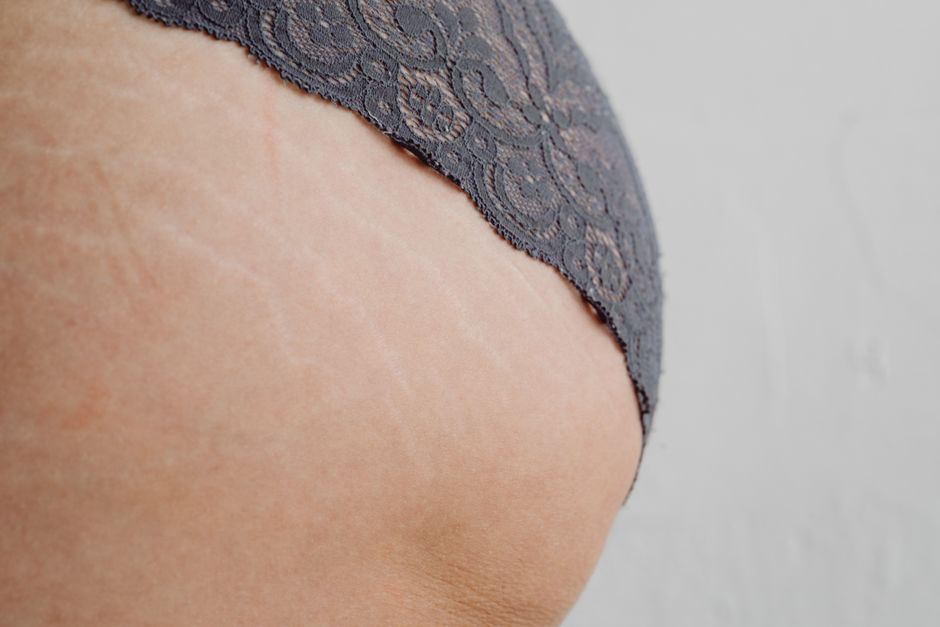
Cellulite on the buttocks is extremely common. Some estimates suggest it affects the majority of women at some point after puberty, though exact figures vary by how it is measured and which population is studied. It happens because of how fat, fibrous tissue, and skin are arranged under the surface — not because of anything you are doing wrong.
The dimpled, uneven texture people call cellulite is a structural issue, not a disease. It forms when fat cells push upward against connective tissue bands that pull downward, creating the characteristic bumps. This is why it shows up on the buttocks and thighs more than almost anywhere else: those areas have more fat and a specific band pattern that makes the tug-of-war visible at the skin’s surface.
What helps is less dramatic than most products suggest. Some treatments show modest, temporary improvement in studies. Others have no real evidence behind them. Understanding what is actually happening under your skin makes it easier to sort one from the other.
Why Do I Have Cellulite On My Butt And What Helps?
Women get cellulite far more often than men because of differences in connective tissue structure. In women, the fibrous bands that tether skin to deeper tissue run vertically. In men, they tend to run in a crisscross pattern that holds fat in more tightly. That single anatomical difference explains most of the sex gap.
Hormones also play a role. Estrogen, insulin, thyroid hormones, and catecholamines all influence fat storage and the breakdown of connective tissue. This is one reason cellulite often first appears or worsens during periods of hormonal change — puberty, pregnancy, and menopause among them.
Genetics matter too. If your mother and grandmother had cellulite, you are more likely to have it. Skin thickness, fat distribution, and the strength of those fibrous bands are all inherited traits to some degree.
What does not cause cellulite, despite widespread belief: toxins, poor circulation alone, or “trapped” fluid that some product claims to release. There is no evidence that detoxes or lymphatic drainage products remove cellulite permanently. Some may temporarily reduce puffiness, which can make skin look smoother for a short time, but the underlying structure is unchanged.
Is Cellulite a Sign of Poor Health or Being Overweight?
No. Cellulite appears in people of all body weights, including athletes and people who are very lean. Body fat percentage can influence how visible it is, but it is not the cause.
That said, weight gain can make existing cellulite more noticeable because fat cells enlarge and push more forcefully against the skin. Weight loss can reduce its appearance in some people, but it does not remove the fibrous bands that create the dimpling. Many people find that cellulite is still visible after significant weight loss.
It is also worth separating cellulite from other conditions that can cause skin changes on the buttocks and thighs. Lipodystrophy involves abnormal fat distribution and is a distinct medical condition. Lipedema is a chronic condition involving disproportionate fat accumulation, usually in the legs, that is often mistaken for obesity or cellulite. If you notice swelling, pain, easy bruising, or fat accumulation that seems disproportionate to the rest of your body, that is worth discussing with a clinician — it is not the same as cellulite.
What Actually Helps Reduce the Appearance of Cellulite?
The honest answer is that no treatment has been shown to permanently eliminate cellulite. Some produce modest, temporary improvement. Results vary, and most studies are small or short-term.
Here is what the evidence looks like for common approaches:
- Weight management: Losing excess weight may reduce the appearance of cellulite in some people. It does not remove the structural bands, so results vary.
- Resistance training: Building muscle in the buttocks and thighs can improve the underlying shape and firmness of the area. It does not remove cellulite, but it can change how the area looks overall.
- Topical retinoids: Some prescription-strength retinoids have shown modest improvement in skin texture in small studies. Results are limited and take months. Over-the-counter creams are far less likely to produce visible change.
- Laser and radiofrequency devices: Some devices have shown measurable improvement in clinical studies, typically for several months. These are performed in a clinic, require multiple sessions, and are not permanent.
- Subcision: A procedure that uses a needle to break the fibrous bands. It has shown some benefit in studies, but it is invasive and results are not permanent.
- Caffeine-based creams: These can temporarily tighten skin by drawing out fluid. The effect is short-lived — hours to days at most.
- Dry brushing, massage, and foam rolling: These may temporarily smooth the appearance of skin by moving fluid. No evidence supports lasting change.
What does not have credible evidence: cellulite creams marketed as “cures,” detox teas, body wraps, and most at-home devices. Some of these carry real risks — skin irritation, burns, or allergic reactions — with no proven benefit.
Does Exercise Get Rid of Cellulite?
Exercise improves muscle tone and can change the overall shape of the buttocks and thighs. It does not remove cellulite, because cellulite is a structural issue involving fibrous bands and fat distribution, not a fitness issue.
That said, consistent resistance training and cardiovascular exercise support healthy body composition. For some people, this reduces how noticeable cellulite is. For others, it makes no visible difference to the dimpling itself. Both outcomes are normal.
There is no exercise that specifically targets cellulite. Claims about “cellulite-blasting” workouts are marketing, not physiology. Movement is good for you regardless — it just does not dissolve fibrous bands.
Does Diet Affect Cellulite?
No diet has been shown to cure or eliminate cellulite. Some general dietary patterns may influence skin health and body composition, which can affect how cellulite looks.
A diet high in processed foods, refined sugar, and excess sodium may contribute to fluid retention, which can make skin look puffier and cellulite more noticeable temporarily. Reducing sodium and staying hydrated may help with that short-term appearance.
There is no evidence that specific foods — or avoiding specific foods — remove cellulite. Collagen supplements, for example, have not been shown in clinical trials to reduce cellulite. They may support skin elasticity in some contexts, but that is a different claim from cellulite reduction.
The most reliable dietary approach for cellulite is the same one that supports overall health: adequate protein, plenty of vegetables and fruit, healthy fats, and limited ultra-processed food. This will not erase cellulite. It may improve how your skin looks and feels overall.
When Should You See a Doctor About Cellulite?
Cellulite itself is not a medical concern and does not require treatment. See a clinician if you notice:
- Pain, tenderness, or warmth in the affected area
- Swelling that is new, one-sided, or getting worse
- Skin changes like redness, dimpling that appeared suddenly, or a change in skin texture
- Fat accumulation in the legs or buttocks that seems disproportionate to the rest of your body
- Easy bruising along with the above
These can point to conditions other than cellulite, such as lipedema, lymphedema, or other medical issues. They are worth evaluating.
If you are considering a procedure for cellulite, ask the clinician for the evidence behind it, how long results typically last, and what the risks are. Be cautious of anyone who promises permanent removal. No treatment currently available can make that claim with support.
Can You Prevent Cellulite?
You cannot prevent cellulite entirely, because genetics, hormones, and connective tissue structure are largely outside your control. If you are predisposed, it will likely appear regardless of what you do.
What you can do is support overall skin and body health. That means maintaining a healthy weight for your body, staying active, not smoking, protecting your skin from sun damage, and staying hydrated. None of these will guarantee you avoid cellulite. They may influence how soon it appears or how noticeable it is.
It is also worth questioning the assumption that cellulite needs to be fixed at all. It is a near-universal feature of female anatomy. The pressure to eliminate it comes largely from marketing, not medicine.
Frequently Asked Questions
Why do I have cellulite on my butt and not my thighs?
Cellulite can appear on the buttocks alone because fat distribution and fibrous band patterns vary from person to person. The buttocks have a high concentration of fat and vertical bands that make dimpling more likely to show there first.
Does cellulite ever go away on its own?
No. Cellulite is a structural feature of how fat and connective tissue interact under the skin, so it does not resolve without intervention. Some treatments reduce its appearance temporarily, but none remove it permanently.
Is cellulite worse after weight loss?
It can look more noticeable after weight loss because skin may loosen as fat volume decreases, making the underlying bands more visible. This varies widely between people and is not a reason to avoid weight loss if it is otherwise appropriate for your health.
Do cellulite creams actually work?
Most over-the-counter cellulite creams have no strong evidence behind them. Caffeine-based creams may temporarily tighten skin by reducing fluid, but the effect lasts hours to days at most and does not change the underlying structure.
