
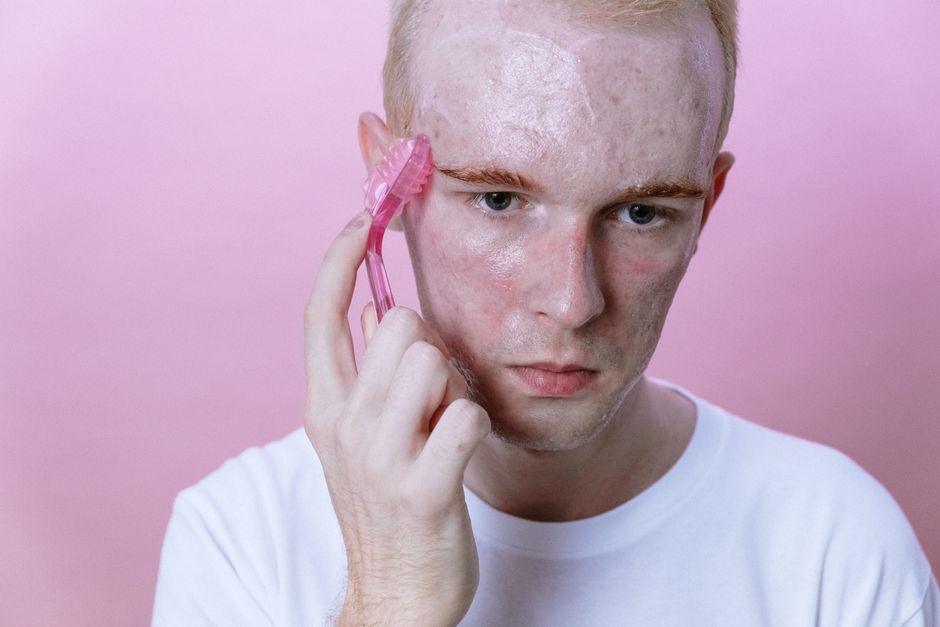
Acne on your face is annoying. Acne on your back, chest, shoulders, and arms can feel like a different problem entirely. When breakouts show up all over the body, it usually means one of two things: either the same acne process that affects the face is also active on other skin, or something else is mimicking acne and needs a different explanation. The most common cause is ordinary acne that has spread across oil-producing areas of the body. But body-wide breakouts can also point to a condition called folliculitis, a drug reaction, or a hormonal shift — and telling these apart matters, because the treatment for each is different.
Why Do I Have Acne All Over My Body Causes?
Acne is a disease of the pilosebaceous unit — the hair follicle plus its attached oil gland. Anywhere you have these units in high density, you can get acne. That includes the face, chest, upper back, and shoulders. The upper back and chest actually have more oil glands per square inch than most of the face, which is why “backne” is so common.
Four things have to happen together for a pimple to form:
- Extra oil (sebum) production
- Dead skin cells that shed abnormally and plug the follicle opening
- Overgrowth of Cutibacterium acnes, a bacterium that normally lives on skin
- Inflammation that follows
When this process is active over a large area, you get acne “all over” rather than in one spot. The trigger is usually hormonal, because hormones are the main switch for oil production. That is why acne flares at puberty, around menstrual cycles, and sometimes during pregnancy or perimenopause.
If your breakouts are truly widespread and started suddenly, though, the cause may not be acne at all. The next sections cover the main look-alikes and the situations that make body-wide breakouts more likely.
What Is the Difference Between Acne and Folliculitis?
Folliculitis is inflammation or infection of the hair follicle, and it looks a lot like acne. The key difference is what is happening inside the follicle. Acne is driven by oil and plugged pores. Folliculitis is usually driven by irritation, friction, or an infection — often bacterial or fungal.
Clues that point toward folliculitis rather than acne:
- Bumps appear mostly where clothing rubs or sweat collects — buttocks, thighs, back of the neck
- They show up after shaving, waxing, or wearing tight synthetic clothing
- They itch more than they hurt
- They cluster in a pattern rather than spreading evenly
One form, sometimes called “hot tub folliculitis,” comes from Pseudomonas bacteria in poorly maintained water. Another, Malassezia folliculitis, is fungal and tends to be itchy with uniform small bumps on the chest and back. These need different treatment than standard acne. Antifungal or antibacterial therapy may be required, and regular acne products often do not help.
Can a Medication Cause Acne All Over the Body?
Yes. Drug-induced acne is a real and often missed cause of sudden, widespread breakouts. It tends to appear quickly, look uniform, and affect areas that were previously clear.
Medications that can trigger acne-like eruptions include:
- Corticosteroids, especially oral or injected forms
- Testosterone and other anabolic steroids
- Lithium
- Some anticonvulsants
- Certain targeted cancer therapies
- Iodides and bromides
Drug-induced acne often lacks the blackheads and whiteheads seen in ordinary acne. It may be monomorphic — meaning every bump looks the same. If a breakout started within weeks of beginning a new medication, that timing is a genuine clue. Do not stop a prescribed medication on your own; talk to the prescriber about whether the drug could be responsible.
How Do Hormones Cause Body Acne?
Androgens — hormones like testosterone and DHEA — drive sebum production. When androgen levels rise or when the oil glands become more sensitive to them, oil output increases across all sebaceous areas at once. That is the mechanism behind body-wide acne.
This is why acne so often appears on the back and chest, not just the face. Those areas respond to the same hormonal signal.
Situations where hormones are the likely driver:
- Puberty, when androgen levels rise sharply
- Polycystic ovary syndrome (PCOS), which can raise androgen levels in women
- Starting or stopping hormonal birth control
- Pregnancy
- Perimenopause, when hormone levels fluctuate
In PCOS specifically, acne often comes with irregular periods or excess facial or body hair. If those signs are present, it is worth discussing with a clinician, because the underlying hormone issue may need its own treatment.
When Should Widespread Breakouts Worry You?
Most body acne is not dangerous. But some patterns deserve a medical evaluation rather than another over-the-counter product.
See a clinician if:
- Breakouts started suddenly and spread quickly
- You have deep, painful nodules or cysts rather than surface pimples
- You have a fever, joint pain, or feeling unwell along with the rash
- The rash appeared after a new medication
- You have signs of hormonal imbalance, such as irregular periods or unusual hair growth
- Over-the-counter treatments have not helped after a reasonable trial
One clarification worth making: acne is not caused by poor hygiene. Washing more aggressively usually makes it worse by irritating the skin barrier. Scrubbing does not clear pores and can drive more inflammation.
What Actually Helps Body Acne?
The ingredients that work on facial acne generally work on the body too, but body skin is thicker and the surface area is larger, which changes how you use them.
Ingredients with the strongest evidence:
- Benzoyl peroxide — kills C. acnes and reduces inflammation. Available over the counter.
- Salicylic acid — helps unclog pores. Common in body washes.
- Topical retinoids — prescription forms are well supported for acne; they help prevent new plugged follicles.
- Oral antibiotics — sometimes prescribed for moderate to severe acne, usually for a limited course.
- Isotretinoin — reserved for severe or treatment-resistant cases, with close medical supervision.
For fungal folliculitis, none of the above is the right answer. Antifungal treatment is needed instead. This is exactly why getting the diagnosis right matters before you buy anything.
Practical steps that support treatment:
- Shower after sweating, since sweat and friction worsen body breakouts
- Choose loose, breathable clothing, especially for the back and chest
- Change out of workout clothes promptly
- Use a gentle cleanser rather than harsh scrubs
There is no evidence that a specific diet cures body acne. Some research suggests high-glycemic diets and certain dairy products may be associated with acne in some people, but the findings are not consistent enough to present diet as a treatment. If you notice a personal trigger, that is reasonable to discuss with a clinician — not to treat as a universal rule.
Why Body Acne Can Be Harder to Treat Than Facial Acne
Several practical factors make body acne more stubborn. The skin is thicker, so products penetrate less easily. The area is larger, so topical treatment takes more product and more time. And the back and shoulders are hard to reach and easy to forget.
There is also a mechanical issue. Backpacks, sports bras, tight shirts, and helmets create friction and trap sweat against the skin. That physical irritation can keep follicles inflamed even when the acne itself is being treated. Reducing friction is not a cure, but it removes a factor that works against treatment.
Scarring is a bigger concern with body acne than many people realize. Deep nodules on the back and chest can leave permanent marks. That is one reason severe or cystic body acne is worth treating earlier rather than waiting to see if it clears on its own.
Frequently Asked Questions
Why do I suddenly have acne all over my body?
A sudden, widespread breakout is often caused by a medication, a hormonal shift, or folliculitis rather than ordinary acne. If it started within weeks of a new drug or came with itching, that timing and pattern are important clues to bring to a clinician.
Can body acne be a sign of an underlying condition?
Yes. Widespread acne can be associated with hormonal conditions such as polycystic ovary syndrome, especially when it comes with irregular periods or excess hair growth. It can also reflect a drug reaction or an infection of the hair follicles.
Is body acne caused by not showering enough?
No. Acne is not caused by poor hygiene, and scrubbing harder tends to irritate the skin and make inflammation worse. Showering after sweating helps, but it is not the root cause.
Does body acne go away on its own?
Mild body acne sometimes improves over time, but deep or widespread acne can persist and leave scars. There is no reliable way to predict who will clear without treatment, so persistent or painful breakouts are worth evaluating.
