
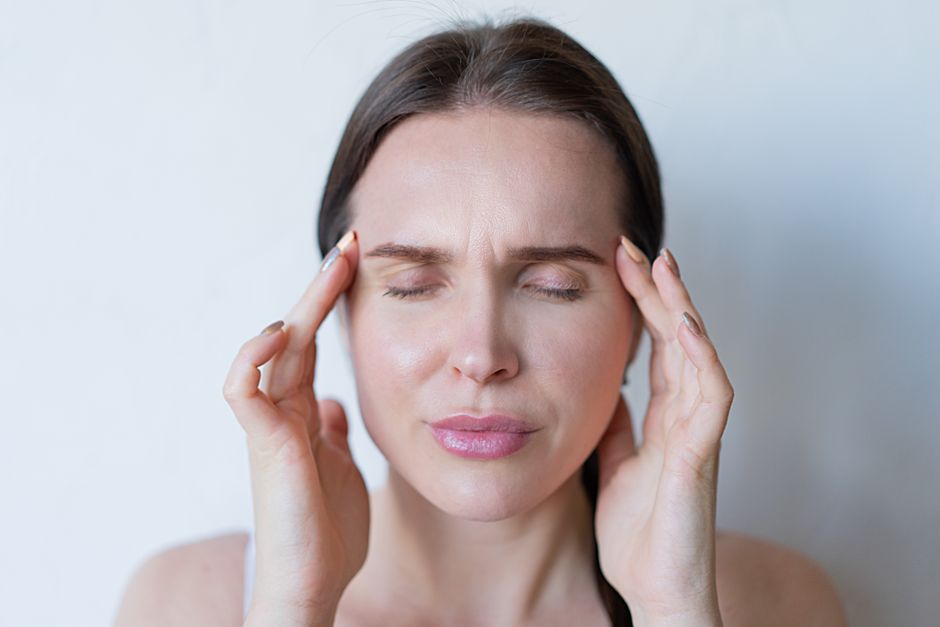
A headache right above your eyebrow usually comes from one of a few specific sources: the frontal sinuses, the muscles and nerves of the forehead and eye area, or a nerve condition called trigeminal neuralgia. Where the pain sits and how it behaves — throbbing versus pressure, brief versus constant — is often the fastest way to tell which one you are dealing with. The location is a clue, not a diagnosis, so the pattern matters as much as the spot.
The frontal sinus is the air-filled cavity that sits directly behind the lower forehead, right where you are pointing. When that cavity gets inflamed or blocked, pain tends to localize there. But sinus headache is diagnosed far more often than it is actually confirmed, and many people who assume their forehead pain is sinus-related turn out to have migraine or a tension-type headache instead. Getting the source right changes what actually helps.
What Causes Pain Right Above The Eyebrow?
Four main categories account for most forehead pain in this location, and they produce noticeably different sensations.
Frontal sinus inflammation. The frontal sinuses sit in the bone just above each eyebrow. When the drainage pathway narrows — from a cold, allergies, or swelling — pressure builds inside the cavity. The pain is typically a dull, steady pressure or fullness rather than a throb, and it often gets worse when you bend forward or first wake up. You may also notice tenderness when you press on the bone above the eyebrow.
Migraine. Migraine pain is often one-sided and throbbing, and it can settle in the forehead or around the eye. It usually comes with at least one of these: nausea, sensitivity to light, or sensitivity to sound. Movement tends to make it worse. A migraine that sits right over one eyebrow is common and frequently mistaken for a sinus problem.
Tension-type headache. This produces a pressing or tightening band of pain, often on both sides. It is not usually throbbing and does not typically worsen with activity. Forehead involvement is common.
Nerve-related pain. The supraorbital nerve runs from the brow bone up across the forehead. Irritation or compression of that nerve can cause sharp, brief, electric-shock-like pain in a very specific line above one eyebrow. This is different from the dull pressure of a sinus issue and different from the throbbing of migraine.
Less common causes exist, including eye strain, problems with the eye itself, and in rare cases more serious conditions. That is why a headache that is new, severe, or changing deserves a medical evaluation rather than a guess.
Why Do I Have A Headache Right Above My Eyebrow And Around My Eye?
When the pain wraps from the forehead down around or behind the eye, the list of likely causes narrows.
Migraine is a strong candidate here. Pain around the eye is a hallmark of migraine for many people, and it often comes with tearing, a droopy eyelid, or nasal congestion on the same side. That combination is why migraine is so often mislabeled as sinus headache.
Cluster headache is another possibility, though it is far less common. It causes severe pain on one side, centered around or behind the eye, and it typically comes in attacks that last a relatively short time and can occur in clusters over weeks. It often brings redness or tearing of the eye and a runny or stuffy nose on the same side. Cluster headache is much more common in men than women, though it affects both.
A problem with the eye itself — such as acute angle-closure glaucoma — can also cause severe eye and forehead pain. This is a medical emergency. Warning signs include a red eye, blurred vision, halos around lights, and sometimes nausea. If those appear together with the headache, get care immediately.
Is It A Sinus Headache Or Something Else?
Most people who believe they have sinus headaches do not have them. That is one of the more useful things to know about forehead pain, because it redirects treatment toward what actually works.
Research comparing people who were told they had sinus headaches found that a large share actually met criteria for migraine. The confusion happens because migraine can cause nasal congestion, facial pressure, and tearing — the same symptoms people associate with sinuses.
A few features point more toward sinus involvement:
- Pain that is clearly worse when you lean forward or bend over
- Thick, colored nasal discharge
- Reduced sense of smell
- A recent cold or allergy flare that came first
- Tenderness when pressing directly on the brow bone
Features that point more toward migraine include throbbing quality, nausea, light or sound sensitivity, and pain that worsens with normal activity. If your “sinus headaches” keep returning without a cold or allergy trigger, migraine is worth discussing with a clinician.





When Should A Headache Above The Eyebrow Worry You?
Most forehead headaches are not dangerous. A small number of patterns are, and they need urgent attention.
Seek emergency care if the headache:
- Comes on suddenly and reaches severe intensity within seconds to minutes
- Is the worst headache of your life
- Comes with fever and a stiff neck
- Comes with confusion, weakness, numbness, or trouble speaking
- Follows a head injury
- Comes with vision loss, a red eye, or halos around lights
- Gets steadily worse over days rather than coming and going
These signs can indicate bleeding around the brain, infection, or a serious eye problem. They are uncommon, but they are the reason a new severe headache should never be dismissed. When in doubt, get evaluated.
How Is Forehead Headache Treated?
Treatment depends entirely on the cause, which is why identifying it matters more than reaching for a painkiller.
For migraine, the most reliable approach combines avoiding known triggers with medications — some taken at the start of an attack and some taken regularly to reduce how often attacks occur. Which medications and whether they are appropriate for you is a decision for a clinician. Overusing acute pain relievers can itself cause a rebound headache pattern, so frequency of use matters.
For tension-type headache, stress management, sleep, hydration, and attention to posture can reduce frequency. Simple pain relievers help some people but are not a long-term answer if headaches are frequent.
For sinus-related pain, addressing the underlying congestion is the goal. Saline nasal rinses and, in some cases, medications to reduce swelling are commonly used. Antibiotics are not appropriate for viral causes, and most sinus symptoms are viral. Some clinicians recommend these approaches; the evidence for any single remedy varies, and persistent symptoms should be evaluated.
For nerve-related pain above the eyebrow, treatment depends on what is irritating the nerve. This is a situation where a proper diagnosis matters, because the treatments differ from those for migraine or sinus problems.
No single remedy works for all forehead headaches. Matching the treatment to the cause is the whole point.
Can You Prevent Headaches In This Area?
Prevention depends on the trigger, and the honest answer is that not all forehead headaches are preventable.
For migraine, identifying and managing personal triggers — which vary widely and can include sleep changes, skipped meals, certain foods, alcohol, and stress — can reduce how often attacks happen for some people. Keeping a headache diary is a practical way to spot patterns. Preventive medications are available for people whose attacks are frequent enough to interfere with daily life.
For tension-type headache, regular sleep, physical activity, and stress reduction are reasonable steps, though the evidence that any single habit prevents headaches is limited.
For sinus-related pain, managing allergies and treating colds sensibly may reduce episodes. There is no reliable way to prevent every sinus flare.
Avoiding overuse of acute pain medications is one of the more important preventive steps, because medication overuse can transform an occasional headache into a frequent one.
Does The Exact Spot Tell You The Cause?
Not on its own. Location is one clue among several, and the same spot can come from different causes in different people.
That said, a few location patterns are worth knowing. Pain directly over the brow bone that worsens with bending leans toward the frontal sinus. Pain centered around or behind the eye that comes with tearing or a droopy lid leans toward migraine or, less often, cluster headache. Sharp, brief, electric pain in a line above one eyebrow leans toward a nerve issue.
The pattern over time — how often it happens, how long it lasts, what makes it better or worse — usually tells you more than the spot alone.
Frequently Asked Questions
Why do I have a headache right above my eyebrow?
The most common causes are frontal sinus pressure, migraine, tension-type headache, or irritation of the supraorbital nerve. The quality of the pain — pressure, throbbing, or sharp and brief — helps point to which one it is.
Is a headache above the eyebrow a sign of a sinus infection?
Sometimes, but most people who assume their forehead pain is sinus-related actually have migraine. Signs that point more toward sinuses include thick nasal discharge, reduced smell, and pain that clearly worsens when bending forward.
When should I worry about a headache above my eyebrow?
Get urgent care if it comes on suddenly and severely, is the worst headache of your life, or comes with fever and a stiff neck, confusion, weakness, vision loss, or a red eye. These signs are uncommon but serious.
Can eye strain cause pain right above the eyebrow?
Yes, prolonged focusing or uncorrected vision problems can contribute to forehead discomfort. If the pain comes with blurred vision, halos around lights, or a red eye, get evaluated promptly rather than assuming it is strain.
