
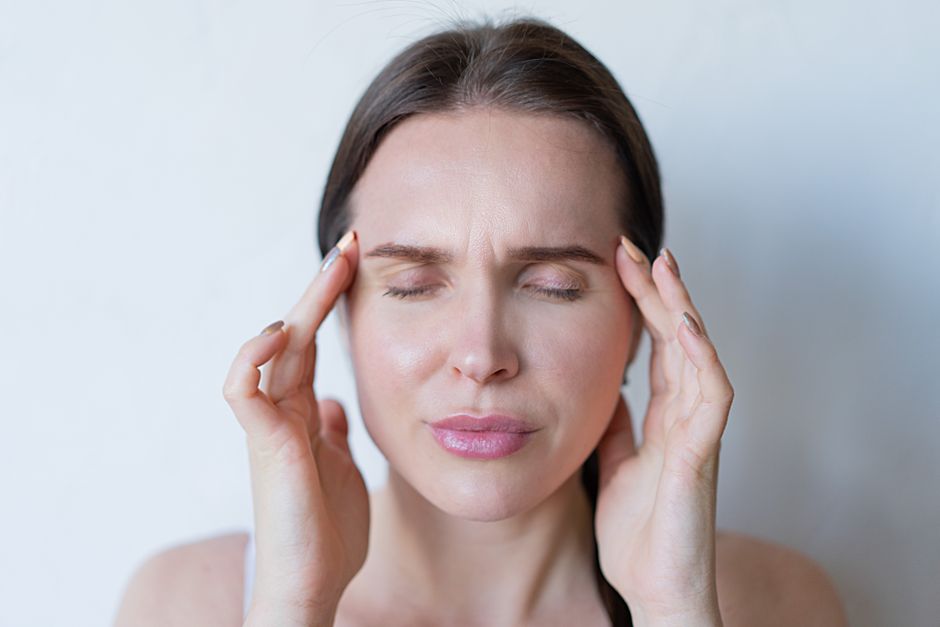
A headache at the base of your skull usually comes from the muscles and joints where your neck meets your head, not from your brain itself. The brain has no pain receptors. The pain you feel is generated by surrounding structures — muscles, nerves, blood vessels, and the joints of the upper cervical spine. When that area hurts, the most common explanation is a cervicogenic headache, meaning a headache that originates in the neck. Other possibilities include tension-type headache, occipital neuralgia, and, less often, more serious conditions.
What Causes Pain at the Base of the Skull?
The upper neck is a busy junction. Three small joints sit between your skull and the top two vertebrae. Several muscles attach there, including the trapezius, the suboccipitals, and the semispinalis capitis. The greater and lesser occipital nerves pass through this region on their way to the back of the scalp.
When any of these structures are irritated, they can refer pain into the back of the head. This is called referred pain, and it is well documented in clinical literature. The brain interprets signals from the neck as coming from the head because the nerve pathways overlap.
Common triggers include:
- Poor posture, especially holding your head forward for long periods
- Muscle tension from stress or lack of sleep
- Whiplash or other neck injury
- Arthritis in the upper cervical joints
- Prolonged screen time without breaks
These causes are mechanical. They involve muscles, joints, and nerves. That is why the pain tends to be felt in a specific spot rather than all over the head.
Why Do I Have a Headache at the Base of My Skull When I Wake Up?
Morning headaches at the base of the skull often point to one of two things: sleep position or sleep-related breathing problems.
Sleeping on your stomach forces your neck into rotation for hours. Sleeping with too many pillows can push your neck into flexion. Both positions strain the upper cervical joints and muscles. If you wake with pain that eases as you move around, this is a likely contributor.
Obstructive sleep apnea is a separate and more serious possibility. When breathing repeatedly stops during sleep, carbon dioxide builds up in the blood. This can trigger headaches upon waking. Research published in the journal Neurology has found an association between sleep apnea and morning headaches, though the exact mechanism is still being studied. If you snore heavily, feel unrested after a full night’s sleep, or have been told you stop breathing at night, this is worth discussing with a doctor.
Do not assume your morning headache is just from your pillow. If it happens most days, get it checked.
What Is a Cervicogenic Headache?
A cervicogenic headache is a secondary headache, meaning it is caused by another condition — in this case, a problem in the cervical spine. It is not a primary headache like migraine or tension-type headache.
Key features that distinguish it from other headaches:
- Pain starts in the neck and spreads to the back of the head
- Usually one-sided, though it can be bilateral
- Triggered or worsened by neck movement or sustained positions
- Reduced range of motion in the neck
- Pain is often steady rather than throbbing
The International Headache Society recognizes cervicogenic headache as a distinct diagnosis with specific criteria. These include evidence of a cervical spine disorder and improvement after diagnostic nerve block. That last point matters: the diagnosis is not made by symptom description alone.
Many people self-diagnose cervicogenic headache based on location. But location alone does not confirm the cause. Migraines can also be felt at the back of the head. So can tension-type headaches.





What Is Occipital Neuralgia?
Occipital neuralgia is irritation or injury to the occipital nerves. It produces a sharp, stabbing, or electric shock-like pain that starts at the base of the skull and shoots up the back of the head.
The pain is typically brief but intense. It may be triggered by pressing on the back of the head or by neck movement. Some people describe it as a burning or aching between attacks.
Causes include neck injury, tight muscles compressing the nerve, and, in rare cases, nerve compression from a tumor or blood vessel. Many cases have no identifiable cause.
Occipital neuralgia is uncommon. It is also frequently confused with migraine and cervicogenic headache. A doctor can often distinguish them through examination and, when needed, a diagnostic nerve block.
When Is a Headache at the Base of the Skull Serious?
Most headaches in this area are not dangerous. But certain signs require urgent medical attention.
Seek emergency care if you have:
- A sudden, severe headache that peaks within seconds to minutes — often called a thunderclap headache
- Headache with fever and stiff neck
- Headache after a head or neck injury
- Weakness, numbness, confusion, or trouble speaking
- Vision changes or loss of consciousness
- A headache that is progressively worsening over days or weeks
These signs can indicate bleeding in the brain, meningitis, or another serious condition. They are not common, but they cannot be ruled out without evaluation.
There is one more distinction worth making. A headache that comes from the neck is not the same as a headache that causes neck stiffness. Meningitis causes neck stiffness because of inflammation around the brain and spinal cord. That is a different mechanism entirely and a medical emergency.
How Are These Headaches Treated?
Treatment depends on the cause. For cervicogenic headache and tension-related pain, the evidence supports a combination of approaches.
Physical therapy is among the better-studied options for cervicogenic headache. It focuses on strengthening deep neck flexors, improving posture, and mobilizing the upper cervical joints.
Manual therapy, including spinal manipulation, has been studied for neck-related headaches. Some trials show benefit, but results vary and the quality of evidence is mixed. It should be performed by a qualified practitioner.
Over-the-counter pain relievers such as ibuprofen or acetaminophen can help short-term. Using them more than a few days per week can lead to medication-overuse headache, which makes the problem worse.
Nerve blocks are used both to diagnose and treat occipital neuralgia. A local anesthetic is injected near the affected nerve. Relief can last from days to months, and repeat injections are sometimes needed.
Sleep apnea treatment, when apnea is the cause, can resolve morning headaches. This typically involves CPAP therapy or other interventions prescribed by a sleep specialist.
What does not have strong evidence: most supplements marketed for headaches, chiropractic adjustments claimed to “realign” the spine permanently, and devices sold for “posture correction” at the base of the skull. No large trials confirm these work for this specific problem.
Can I Prevent Headaches at the Base of My Skull?
If your headaches are related to posture or muscle tension, some practical steps may reduce how often they happen. The evidence for these is strongest when the cause is mechanical.
- Adjust your screen height so your eyes look straight ahead, not down
- Take breaks every 30 to 45 minutes to move your neck through its full range
- Check your pillow — it should support the natural curve of your neck without pushing your head forward
- Sleep on your back or side rather than your stomach
- Manage stress, since muscle tension often increases with stress
These steps are reasonable and low-risk. But they are not proven to prevent all headaches. If your headaches are frequent or worsening, lifestyle changes alone may not be enough.
Frequently Asked Questions
What does a headache at the base of the skull mean?
It usually means the pain is coming from muscles, joints, or nerves in the upper neck rather than from the brain. The most common type is a cervicogenic headache.
How do I know if it’s occipital neuralgia or a tension headache?
Occipital neuralgia causes sharp, stabbing, or electric shock-like pain that shoots up the back of the head, while tension headaches are usually dull and pressing. A doctor can tell them apart through examination and sometimes a nerve block.
When should I worry about a headache at the base of my skull?
Seek emergency care if the headache came on suddenly and severely, followed a head or neck injury, or comes with fever, stiff neck, weakness, confusion, or vision changes. These signs can indicate a serious condition.
Can poor posture cause headaches at the base of the skull?
Yes, sustained forward head posture strains the upper cervical joints and muscles, which can refer pain to the base of the skull. Taking regular breaks and adjusting your workstation may help reduce frequency.
