
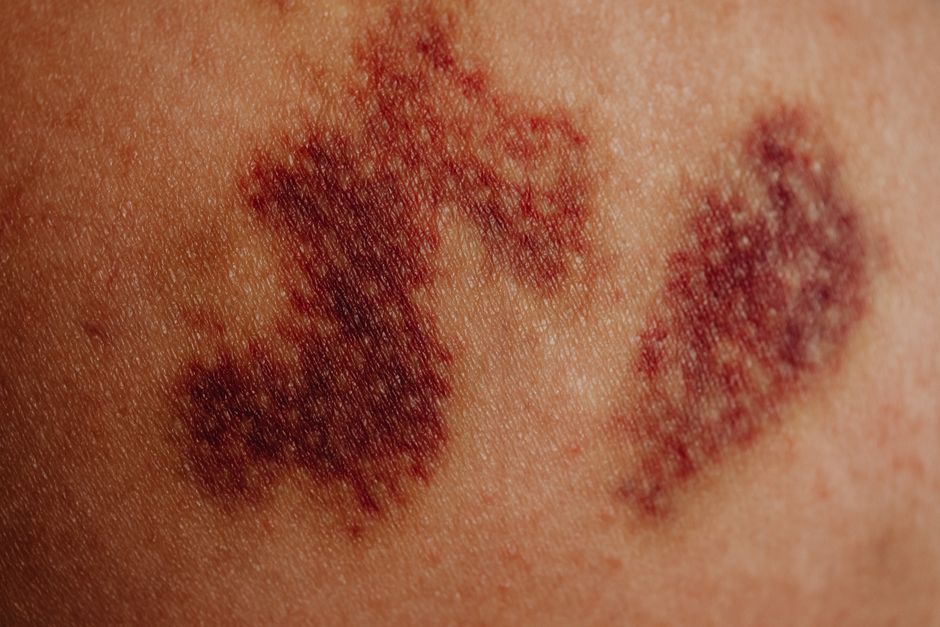
Getting blood drawn is one of the most common medical procedures in the world, and a bruise afterward is one of the most common things that can happen. The medical term for it is a hematoma or bruise at the puncture site. When the needle withdraws, a small amount of blood can leak from the vein into the tissue just under the skin. That pooled blood shows up as a bruise — usually a small dark patch that fades over several days.
Why Do I Have A Bruise After Getting Blood Drawn?
A bruise forms because blood escaped from the vein and collected in the tissue around it. Veins are thin-walled and sit close to the surface. When a needle passes through the vein wall, the puncture doesn’t always seal instantly. Blood seeps into the surrounding tissue before clotting closes the opening.
Once that blood is outside the vein, your body treats it as something to clean up. Hemoglobin — the protein that carries oxygen in red blood cells — breaks down in stages. That breakdown is why bruises change color over time. The pooled blood also triggers a mild local inflammatory response, which is why the area may feel tender or slightly warm for a day or two.
This is a mechanical event, not a sign that something went wrong with your health. It’s a sign that a small amount of blood ended up where it shouldn’t be. For most people, it’s harmless and resolves on its own.
What Makes A Bruise More Likely After A Blood Draw?
The most common cause is a vein that’s hard to access. If the phlebotomist has to adjust the needle or try more than once, the vein wall gets more trauma and bleeds more readily. Thin or fragile veins — which become more common with age — are also easier to puncture through.
Some medications and supplements increase bleeding risk. Blood thinners like warfarin, heparin, apixaban, and rivaroxaban are the most significant. Antiplatelet drugs like aspirin and clopidogrel also make bruising more likely. So do some supplements, particularly high-dose fish oil, ginkgo, and vitamin E. If you take any of these, tell the person drawing your blood.
Other factors that raise the odds:
- Not applying enough pressure after the needle comes out
- Bending your arm immediately instead of keeping it straight
- Lifting something heavy or exercising the arm soon after
- Having veins that roll or are difficult to stabilize
- Being dehydrated, which makes veins flatter and harder to hit
One thing worth knowing: bruising after a blood draw is not a reliable sign of the phlebotomist’s skill. Even experienced professionals cause bruises. Vein anatomy varies a lot between people, and some veins are simply more prone to leaking.
What Does A Normal Bruise After A Blood Draw Look Like?
A typical bruise is a small, flat, discolored area near the puncture site. It may start red or purple, shift to blue or black within a day or two, then fade to greenish-yellow before disappearing. The whole process usually takes about one to two weeks.
Some tenderness when you press on it is normal. A slight bump under the skin is also common — that’s the pooled blood itself. Mild swelling around the site can happen too.
What’s not typical: spreading redness, significant warmth, streaks running up the arm, or a bruise that keeps growing larger over several hours. Those suggest something beyond a simple hematoma and warrant a call to your doctor.
When Should I Worry About A Bruise After A Blood Draw?
Most post-draw bruises are not a medical concern. But certain signs mean you should get checked. Contact a healthcare provider if you notice:
- Redness, warmth, or swelling that worsens after the first day
- Red streaks spreading away from the puncture site
- Fever or chills
- Pain that’s severe or getting worse instead of better
- Numbness or tingling in the hand or fingers
- A bruise that continues to expand hours after the draw
- Swelling that makes the arm feel tight or hard
These can point to a few different problems. A spreading infection at the puncture site is one possibility, though it’s uncommon with a standard blood draw. Nerve irritation from the needle is another. In rare cases, a large hematoma can press on structures in the arm and cause numbness or weakness.
If you bruise very easily from minor knocks in general — not just from blood draws — that’s a separate issue worth discussing with your doctor. It can relate to how well your blood clots.
How Do You Treat A Bruise From A Blood Draw?
For the first day or two, cold is your main tool. A cold pack wrapped in a thin cloth, applied for short periods, can reduce swelling and slow the bleeding under the skin. Don’t put ice directly on bare skin.
After the first day or two, some clinicians suggest switching to gentle warmth to help the body reabsorb the pooled blood. The evidence for this specific timing is not strong, and it’s a common practice rather than a firmly established recommendation. Either way, the bruise will clear on its own.
What actually helps most:
- Keep the arm relaxed and avoid heavy lifting for a day
- Avoid aspirin or NSAIDs for pain unless your doctor says it’s fine — these can slow clotting
- Don’t massage the bruise aggressively
- Give it time — most bruises fade within one to two weeks
Avoid alcohol-based products or harsh creams on the site. There’s no evidence that topical bruise creams speed healing meaningfully, despite what the packaging claims.
How Can You Prevent Bruising Before Your Next Blood Draw?
You can lower your odds, though you can’t eliminate them. Hydration matters. Drinking water in the hours before your appointment plumps up your veins and makes them easier to access, which means fewer needle adjustments.
Tell the person drawing your blood about any blood thinners, aspirin, or supplements you take. Wear short sleeves or a shirt with sleeves that roll up easily. If you’ve had bad bruising before, mention that too — it helps them choose a different vein or technique.
After the needle comes out, keep your arm straight and apply firm pressure to the site for a few minutes. Don’t bend your elbow to hold the cotton ball. Bending can actually increase bleeding under the skin. Keep the arm relaxed for the rest of the day and skip the gym session on that arm.
If you bruise heavily every single time despite doing all of this, bring it up with your doctor. It may be worth checking how your blood clots.
Does Bruising Mean Something Is Wrong With My Blood?
Usually, no. A bruise after a blood draw is a local event — it says something about that vein on that day, not about your overall health. The vast majority of people who bruise after a draw have completely normal clotting.
That said, a pattern of bruising from minimal trauma across your body is different. If you bruise easily from things that shouldn’t cause bruises, or if you get large bruises without any clear cause, that’s worth a medical evaluation. Conditions that affect platelets or clotting factors can cause this. So can some liver conditions and certain nutritional deficiencies.
The distinction matters: a bruise at the needle site is expected. Bruising everywhere is a reason to check in with a doctor.
Frequently Asked Questions
How long does a bruise after a blood draw last?
Most bruises from a blood draw fade within one to two weeks. The color shifts from red or purple to greenish-yellow as your body breaks down the pooled blood.
Is it normal to bruise after every blood draw?
It can be normal if your veins are thin or fragile, or if you take blood thinners. If bruising is severe or happens with minimal trauma elsewhere on your body, mention it to your doctor.
Should I put ice or heat on a bruise from a blood draw?
Cold packs are typically used for the first day or two to reduce swelling. Some clinicians suggest gentle warmth after that, though the evidence for this specific timing is not strong.
Can a bruise after a blood draw be a sign of infection?
A simple bruise is not a sign of infection. Watch for spreading redness, warmth, red streaks, or fever — those are signs that need medical attention.
