
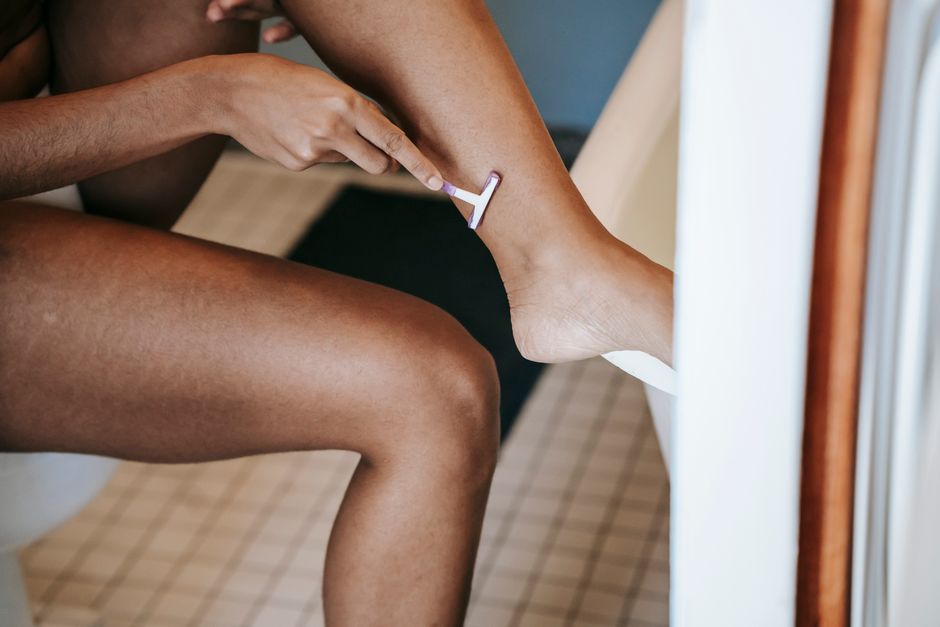
Razor bumps happen because your hair is cut too short and curls back into the skin before it can grow out. The body treats that trapped hair like a foreign object and triggers inflammation. This is not poor hygiene and it is not an infection in most cases. It is a mechanical problem caused by how the hair is cut and how your skin reacts to it.
What Exactly Is a Razor Bump?
A razor bump is not a pimple, though it can look like one. The medical name is pseudofolliculitis barbae. That translates to “false inflammation of the hair follicles.” It is false because the problem is not a bacterial infection of the follicle. The problem is the hair itself.
When you shave, the razor cuts the hair at an angle. If the hair is cut below the surface of the skin, or if the hair is naturally curly, the sharp tip can pierce the skin next to the follicle as it tries to grow. The immune system sees this as an injury. White blood cells move in. The area becomes red, swollen, and tender.
The bump forms around the trapped hair. Some bumps fill with pus. That pus is not always bacteria. It is often just dead white blood cells responding to the ingrown hair.
Why Do I Get Razor Bumps Every Time I Shave? The Reason
You get razor bumps every time you shave because your hair is likely curly or coarse and your shaving method cuts it too short. Curly hair has a natural tendency to curve. When the cut end of that curved hair is sharp, it easily re-enters the skin as it grows.
Several factors make this worse. Shaving against the direction of hair growth cuts the hair at a sharper angle. Stretching the skin tight while shaving causes the hair to retract below the surface before it is cut. Using a dull blade pulls the hair before cutting it, which can leave a jagged edge. A jagged edge is more likely to pierce the skin than a clean cut.
The location matters too. The neck and the jawline are common trouble spots because the hair grows in multiple directions in these areas. The skin there is also looser, which makes it easier for hair to curl back under.
Who Gets Razor Bumps Most Often?
Razor bumps are most common in people with naturally curly or coarse hair. This includes many people of African, Mediterranean, and Middle Eastern descent. The condition is so common in Black men that studies estimate a large percentage of them experience it at some point.
But anyone with curly hair can get razor bumps. People with straight hair rarely get them because straight hair grows out of the follicle and away from the skin without curving back. The shape of the hair follicle also plays a role. Curved follicles produce curved hairs. Straight follicles produce straight hairs.





What Makes Razor Bumps Worse
Some habits increase your risk of razor bumps. Knowing these can help you avoid the problem before it starts.
- Shaving too closely: Multi-blade razors pull the hair up before cutting it. The hair then retracts below the skin surface. This is a major cause of razor bumps.
- Shaving against the grain: This produces the closest shave but also the sharpest angle on the hair tip.
- Tight skin: Pulling the skin taut while shaving causes the hair to spring back below the surface after the blade passes.
- Dull blades: A dull blade does not cut cleanly. It tugs and tears the hair, leaving a rough edge.
- Daily shaving: Shaving every day does not give the hair enough time to grow out from under the skin.
Each of these habits contributes to the same outcome. The hair ends up too short, with a sharp edge, positioned under or against the skin. That is the recipe for razor bumps.
How to Prevent Razor Bumps
Prevention focuses on one goal: never cut the hair below the surface of the skin. If the hair stays above the surface, it cannot curl back in.
Use a single-blade razor or an electric razor. Single-blade razors do not pull the hair up before cutting. Electric razors do not cut as close, which is actually a benefit here. A slightly longer hair is harder to trap under the skin.
Shave in the direction of hair growth. This does not give the closest shave, but it leaves the hair tip less sharp. You may need to shave in different directions on different parts of your face or neck because hair growth patterns vary.
Do not stretch the skin while shaving. Let the skin stay relaxed so the hair is not pulled out of the follicle before the blade reaches it.
Use a sharp blade every time. Replace blades frequently. A clean cut is less likely to cause problems than a torn one.
Shave less often if possible. Giving the hair 48 to 72 hours to grow out reduces the chance that a short hair will re-enter the skin.
What to Do When You Already Have Razor Bumps
If you already have razor bumps, stop shaving the affected area. Let the hair grow out for several days. This gives trapped hairs time to emerge from the skin on their own.
Do not pick at the bumps. Picking increases inflammation and can introduce real bacteria into the area. What starts as a mechanical problem can become a true infection if you break the skin with dirty fingers.
Warm compresses can help. Apply a clean cloth soaked in warm water to the area for several minutes. This softens the skin and can help release trapped hairs.
Some people use a sterile needle to gently lift the trapped hair tip. This is only appropriate if the hair is visible just under the skin surface. Do not dig for hairs that are deep. Do not pull the hair out. The goal is only to free the tip so it can grow out.
Over-the-counter products containing salicylic acid or glycolic acid can help exfoliate the skin and reduce inflammation. These are chemical exfoliants. They help remove dead skin cells that can trap hairs.
When Razor Bumps Need Medical Attention
Most razor bumps resolve on their own with time and better shaving habits. But there are situations where you should see a doctor.
If the bumps become painful, ooze yellow or green fluid, or spread beyond the shaved area, you may have a secondary bacterial infection. This is not common, but it happens when the skin barrier is broken.
If you have dark skin, razor bumps can leave dark spots called post-inflammatory hyperpigmentation. These spots are not permanent in most cases, but they can take months to fade. A dermatologist can recommend treatments such as hydroquinone or laser therapy if the dark spots persist.
For severe or chronic cases, a dermatologist may prescribe topical antibiotics, retinoids, or steroid creams. Some people benefit from laser hair removal, which reduces hair growth over time. Electrolysis is another option for permanent hair removal.
In very resistant cases, some clinicians recommend completely stopping shaving and growing a beard. This is not a medical treatment, but it eliminates the cause. The bumps resolve within a few weeks once shaving stops.
Does Shaving Cream Matter?
Shaving cream matters more than most people think, but not for the reason you might expect. The main job of shaving cream is to soften the hair and lubricate the skin. Soft hair is easier to cut cleanly. Lubricated skin allows the blade to glide without pulling.
Do not shave dry. Dry shaving produces rough cuts and increases skin irritation. If you do not have shaving cream, use a gentle conditioner or a fragrance-free soap. The goal is simply to soften the hair and reduce friction.
Shaving after a warm shower is ideal. The warm water softens the hair and opens the pores. This does not prevent razor bumps directly, but it makes the shave cleaner and less traumatic to the skin.
Does Aftershave Help or Hurt?
Aftershave with alcohol can make razor bumps worse. Alcohol dries the skin and increases irritation. It does not prevent ingrown hairs.
If you use an aftershave, choose one that is alcohol-free. Look for products with soothing ingredients like aloe vera or witch hazel. These reduce inflammation without stripping the skin.
Some people find that a gentle moisturizer after shaving helps. Moisturized skin is more flexible. Flexible skin is less likely to trap hairs as they grow out.
Frequently Asked Questions
Can razor bumps turn into permanent scars?
Yes, severe or repeatedly picked razor bumps can leave permanent scars or dark spots. Treating bumps early and avoiding picking reduces this risk.
Is it better to shave with or against the grain to avoid razor bumps?
Shave with the grain to avoid razor bumps. Shaving against the grain cuts the hair at a sharper angle, which makes it more likely to curl back into the skin.
How long does it take for razor bumps to go away?
Mild razor bumps usually clear within a few days to a week if you stop shaving the area. Severe bumps may take several weeks and often require treatment.
Do electric razors cause fewer razor bumps than manual razors?
Yes, electric razors generally cause fewer razor bumps because they do not cut the hair as close to the skin. A slightly longer hair is less likely to become ingrown.
