
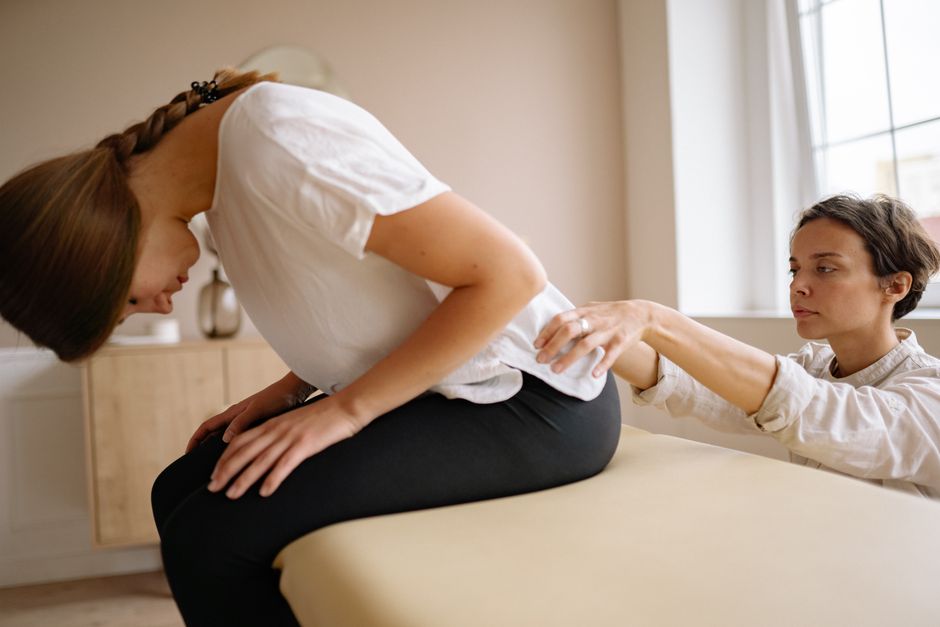
Lower back pain during your period is one of the most common complaints in gynecology. The pain comes from the uterus contracting to shed its lining, and those contractions often radiate to the lower back. Hormones called prostaglandins trigger these contractions, and higher levels of prostaglandins usually mean more intense pain.
What Actually Causes Lower Back Pain During Menstruation?
The uterus is a muscle. When your period starts, it contracts to push out the endometrial lining. These contractions are driven by prostaglandins, which are hormone-like chemicals that act on the uterus. The same chemicals that cause the contractions also increase pain sensitivity.
Your lower back shares nerve pathways with your pelvic organs. When the uterus contracts strongly, the pain signals travel along these shared nerves. That is why the pain is often felt in the lower back, hips, and thighs rather than only in the abdomen. The medical term for this is referred pain.
Blood flow also plays a role. During menstruation, the uterus swells and reduces blood flow to the surrounding pelvic tissues. Reduced oxygen in these tissues can cause cramping that spreads to the back. This is a normal physiological response, not a sign that something is wrong.
Why Is My Period Back Pain Worse Some Months Than Others?
Pain intensity varies from cycle to cycle for several reasons. Stress raises cortisol levels, which can amplify pain perception. Sleep quality affects how your body processes pain signals. Diet and exercise habits change the balance of prostaglandins in your body.
There is also a natural variation in prostaglandin levels between cycles. Some months your body produces more of these chemicals, leading to stronger contractions and more pain. This variation is completely normal and does not indicate an underlying problem.
Age matters too. Many women find their period pain peaks in their late teens and twenties, then gradually improves. This is likely because hormone levels stabilize as you age. If your pain is suddenly much worse than your usual pattern, that is worth discussing with a doctor.
When Is Period Back Pain Something More Serious?
Most period back pain is primary dysmenorrhea, which means painful periods without an underlying disease. But sometimes the pain signals a condition that needs treatment. The key difference is the pattern of the pain.
See a doctor if the pain is severe enough to stop you from daily activities despite taking pain relievers. Also seek medical advice if the pain lasts beyond the first two to three days of your period, or if it continues after your period ends. Pain that gets progressively worse over several cycles also warrants a check-up.
Conditions that can cause secondary dysmenorrhea include:
- Endometriosis — tissue similar to the uterine lining grows outside the uterus
- Uterine fibroids — noncancerous growths in the uterine wall
- Adenomyosis — the uterine lining grows into the uterine muscle
- Pelvic inflammatory disease — an infection of the reproductive organs
These conditions are not rare, but they are also not the most common reason for period back pain. Your doctor can distinguish between primary and secondary dysmenorrhea through a physical exam and sometimes imaging tests like ultrasound.





What Actually Helps Relieve Period Back Pain?
Heat therapy is one of the most effective home treatments. A heating pad or warm bath relaxes the uterine muscle and improves blood flow to the area. Studies have found that continuous low-level heat works as well as ibuprofen for some women with period pain.
Nonsteroidal anti-inflammatory drugs (NSAIDs) like ibuprofen and naproxen are the first-line medication for period pain. They work by blocking prostaglandin production, which directly targets the cause of the cramps. For best results, start taking them at the first sign of pain or the day before your period is expected, rather than waiting for the pain to become severe.
Exercise helps more than most people expect. Moderate activity like walking, swimming, or yoga releases endorphins, which are natural pain relievers. Exercise also improves pelvic blood flow. You do not need intense workouts — gentle movement is enough.
Some evidence supports the following approaches, though the research is less robust:
- Magnesium supplements — may reduce cramping severity in some women
- Vitamin B1 (thiamine) — some studies show reduced pain
- Acupuncture — mixed evidence, but some women report significant relief
- Transcutaneous electrical nerve stimulation (TENS) — a small device that uses mild electrical pulses to interrupt pain signals
For supplements, no standard dosing guidelines exist for period pain specifically. If you choose to try them, discuss it with your doctor first, especially if you take other medications.
Does Birth Control Help With Period Back Pain?
Hormonal birth control is a well-established treatment for period pain. The pill, patch, ring, and hormonal IUD all reduce the thickness of the uterine lining. A thinner lining means less prostaglandin production and weaker contractions.
Combined hormonal contraceptives that contain both estrogen and progestin are the most studied for pain relief. Taking the pill continuously — skipping the placebo week — can eliminate periods entirely, which typically eliminates period pain entirely.
The hormonal IUD is also highly effective. It releases a progestin that thins the uterine lining locally. Many women experience lighter periods or no periods at all with the hormonal IUD, and this often resolves period pain within a few months of insertion.
These are prescription options, so you would need to discuss them with your doctor. They are appropriate for women who want contraception as well as pain relief, or for women who have not found relief with NSAIDs and heat.
I Get Lower Back Pain on My Period — Is It Normal?
Yes, lower back pain during your period is a normal part of menstruation for many women. Studies estimate that up to 90% of menstruating women experience some form of period pain, and back pain is a common component of that discomfort.
Normal period back pain has a predictable pattern. It starts just before or at the beginning of your period, peaks during the first two days, and fades as your period progresses. It responds to heat, rest, and NSAIDs. It does not stop you from functioning for more than a day or two.
What is not normal is pain that ignores this pattern. Pain that does not respond to standard treatments, pain that worsens over time, or pain that interferes with school, work, or relationships deserves medical attention. These features suggest a possible underlying condition that needs evaluation.
Can Changing My Diet Reduce Period Back Pain?
Diet can influence period pain, though the evidence is not as strong as for medications or heat. Anti-inflammatory foods may reduce overall inflammation in the body, which could lessen pain intensity.
Some research suggests that diets rich in omega-3 fatty acids — found in fish, walnuts, and flaxseed — are associated with less period pain. Magnesium-rich foods like dark leafy greens, nuts, and whole grains may also help because magnesium relaxes muscle tissue.
Reducing salt intake can help with bloating, which sometimes worsens back discomfort. Caffeine affects blood vessels and may increase pain sensitivity in some women, though the evidence is mixed. Alcohol can disrupt sleep and increase inflammation, so limiting it during your period is reasonable.
The evidence for specific diets is limited, but the general principle is sound: an anti-inflammatory diet is unlikely to hurt and may help. It is not a substitute for proven treatments like NSAIDs or heat therapy.
Frequently Asked Questions
How long does period back pain usually last?
Most period back pain lasts one to three days, starting just before or at the beginning of your period. Pain that continues beyond your period or is severe for more than two days should be evaluated by a doctor.
Can endometriosis cause lower back pain during periods?
Yes, endometriosis is a common cause of severe period pain that radiates to the lower back. The pain from endometriosis often feels different from typical cramps — it may be sharper, more constant, or present throughout the cycle, not just during menstruation.
Is it safe to take ibuprofen every month for period back pain?
Taking ibuprofen for two to three days each month is generally safe for most healthy adults. Long-term daily use can irritate the stomach and kidneys, so if you need pain relief more than a few days per month, talk to your doctor about other options.
Does pregnancy stop period back pain?
Pregnancy stops periods and therefore stops period-related back pain. However, pregnancy itself often causes new lower back pain due to weight gain and shifting posture.
