
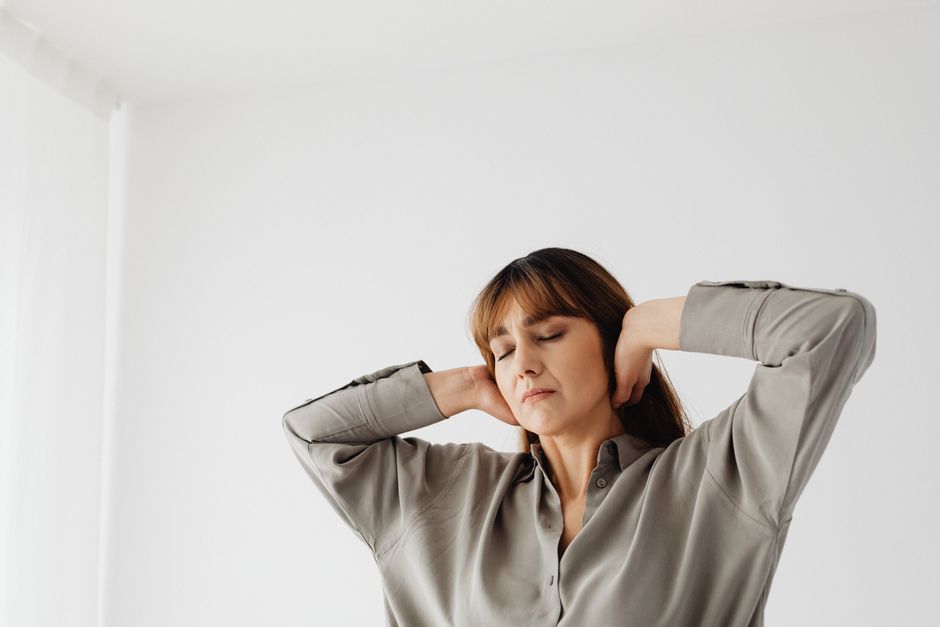
Closing your eyes and feeling the room spin is a specific and unsettling experience. It is not the same as feeling faint or lightheaded. When dizziness happens only with your eyes shut, it often points to how your brain balances conflicting signals from your inner ear, your eyes, and your body’s position sensors. The most common root cause is a problem in the inner ear, but other conditions can also trigger this response.
Why does closing my eyes make dizziness worse?
Your brain keeps you balanced by combining three sources of information. Your inner ear detects motion and gravity. Your eyes tell your brain where your head is relative to the world. And sensors in your muscles and joints report your body’s position.
When all three systems agree, you feel steady. When one system sends a faulty signal, your brain tries to fix the mismatch using the other two. Closing your eyes removes one of those correcting systems. If your inner ear is sending wrong signals, your brain can no longer use vision to override them. The result is a sudden wave of dizziness or spinning.
This is why many people with inner ear disorders feel worse in the dark or with their eyes closed. The faulty signal from the balance organ has nowhere to be corrected.
What inner ear conditions cause dizziness with eyes closed?
Benign paroxysmal positional vertigo (BPPV) is the most common cause. Small calcium crystals become dislodged and float into the semicircular canals of the inner ear. These canals detect rotation. When the crystals move, they trigger false signals of motion. BPPV typically causes brief spinning episodes that last under a minute and are triggered by head position changes. Lying down, rolling over in bed, or tilting your head back are common triggers.
Vestibular neuritis is another possibility. This is inflammation of the vestibular nerve, often after a viral infection. It causes sudden, severe vertigo that can last for days. The spinning is constant rather than brief, and it often improves when you keep your head still.
Meniere’s disease involves fluid buildup in the inner ear. It causes episodes of vertigo lasting 20 minutes to several hours, often with ringing in the ear and hearing loss. The dizziness can be severe enough that opening your eyes does little to help.
These three conditions behave differently. BPPV is brief and position-triggered. Vestibular neuritis is prolonged and often follows an illness. Meniere’s disease comes in episodes with ear symptoms. If you are unsure which pattern matches your experience, that distinction matters for your doctor.
Could the cause be something other than the inner ear?
Yes. Some people experience dizziness with eyes closed because of how their brain processes balance information. This is sometimes called visual dependence or a functional balance disorder. In these cases, the inner ear works normally, but the brain relies heavily on vision to stay oriented. Removing vision exposes the weakness.
Migraine is another common cause. Vestibular migraine can cause dizziness without a headache. Some people with migraine report that closing their eyes makes spinning worse, particularly during an attack.
Anxiety and hyperventilation can also produce dizziness that worsens when you close your eyes. When you close your eyes, you lose visual distractions, and your awareness of internal sensations increases. This can amplify the feeling of unsteadiness even when no physical balance disorder exists.
Certain medications can cause dizziness, especially those that affect blood pressure or the nervous system. Low blood pressure when changing positions, called orthostatic hypotension, can cause lightheadedness, though this is usually not worse with eyes closed specifically.





When should dizziness with closed eyes be a medical emergency?
Most causes of dizziness are not life-threatening. But some are. Seek emergency care if dizziness comes with any of the following:
- Sudden severe headache
- Slurred speech or trouble speaking
- Weakness or numbness on one side of the body
- Double vision or sudden vision loss
- Trouble walking or loss of coordination
- Chest pain or irregular heartbeat
These symptoms can indicate a stroke, a heart problem, or another serious condition. Dizziness alone rarely signals an emergency, but dizziness combined with neurological symptoms requires immediate evaluation.
If you are older, have diabetes, or take blood thinners, you should have any new dizziness evaluated promptly. Falls from dizziness can cause serious injury, especially in older adults.
What tests will a doctor run for this type of dizziness?
A doctor will start by asking about your symptoms in detail. When did the dizziness start? How long does each episode last? Does it happen when you move your head a certain way? Do you have hearing loss, ringing in your ears, or a recent illness?
The physical exam often includes the Dix-Hallpike test. Your doctor will move your head and body into specific positions while watching your eyes for involuntary movements called nystagmus. This test can confirm BPPV and identify which ear is affected.
Other tests may include a hearing test, an MRI if a neurological cause is suspected, or videonystagmography which measures eye movements to assess inner ear function. Blood tests can check for anemia, thyroid problems, or vitamin deficiencies that might contribute to dizziness.
How is dizziness with eyes closed treated?
Treatment depends entirely on the cause. For BPPV, the Epley maneuver is highly effective. This is a series of specific head and body movements performed by a clinician that guide the displaced crystals out of the semicircular canals. Studies consistently show this maneuver resolves BPPV in most people, often after one or two sessions. Your doctor can teach you to perform it at home if needed.
Vestibular neuritis is treated with medications to reduce nausea and dizziness during the acute phase, followed by vestibular rehabilitation therapy. This is a form of physical therapy that trains your brain to compensate for the damaged balance nerve. It is one of the most evidence-supported treatments for chronic dizziness.
Meniere’s disease is managed with dietary changes, particularly reducing salt, and medications to reduce fluid retention. Migraine-associated dizziness often improves with migraine prevention strategies, including dietary triggers, sleep hygiene, and preventive medications.
For anxiety-related dizziness, treatment focuses on the underlying anxiety. Cognitive behavioral therapy and sometimes medication can reduce the heightened awareness of bodily sensations that amplifies dizziness.
Vestibular rehabilitation therapy deserves special attention. Many people with dizziness benefit from this approach regardless of the exact cause. It involves exercises that provoke mild dizziness in a controlled way, helping your brain adapt and reduce its overreaction to balance signals. A physical therapist trained in vestibular rehabilitation can design a program specific to your situation.
Can I prevent dizziness when closing my eyes?
Prevention depends on the cause. For BPPV, avoiding sudden head movements and sleeping with your head slightly elevated may reduce episodes, though the Epley maneuver remains the primary treatment.
For general balance health, staying physically active helps. Regular exercise that challenges your balance, like walking on uneven surfaces or tai chi, can improve how your brain processes balance information. Staying hydrated and avoiding sudden position changes can help with lightheadedness.
If your dizziness is medication-related, talk to your doctor about alternatives. Never stop a prescribed medication without medical guidance.
For people whose dizziness is triggered by anxiety, breathing exercises and grounding techniques can help. When you close your eyes and feel unsteady, focusing on the physical sensation of your feet on the floor or your body against a chair can provide a stable reference point.
Frequently Asked Questions
Is it normal to feel dizzy when closing your eyes?
No, it is not normal to feel dizzy specifically when your eyes are closed. It usually indicates your brain is relying on vision to compensate for a faulty balance signal from your inner ear or another system.
Can anxiety cause dizziness when closing your eyes?
Yes, anxiety can cause or worsen dizziness when you close your eyes. Closing your eyes removes visual distractions and can increase awareness of internal sensations, which amplifies feelings of unsteadiness in some people.
How long does dizziness from BPPV last?
BPPV episodes typically last less than one minute. The spinning is brief but intense and is triggered by specific head movements like rolling over in bed or looking up.
Should I see a doctor for dizziness when I close my eyes?
Yes, you should see a doctor if this happens repeatedly or interferes with daily life. A doctor can determine whether the cause is an inner ear disorder, a neurological condition, or something else that needs specific treatment.
Dizziness that appears or worsens when you close your eyes is a signal worth investigating. It tells your doctor something useful about how your balance systems interact. With the right diagnosis, most causes are treatable, and many people improve significantly with targeted therapy.
