
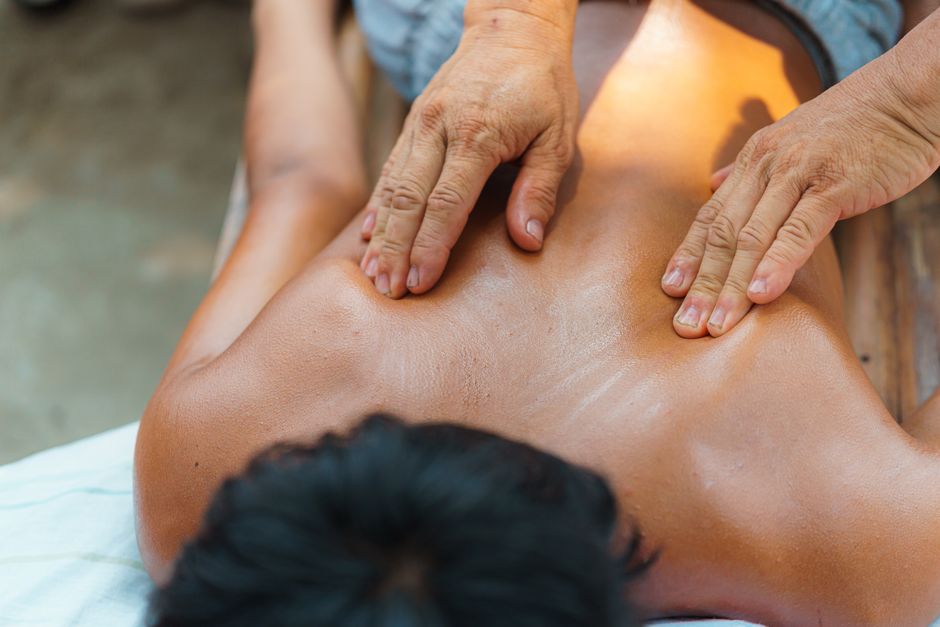
Back acne happens when hair follicles on the back clog with oil and dead skin cells, and the bacteria that normally live on your skin multiply inside that clogged pore. The back has more oil glands than almost anywhere else on the body, which is a big part of why it breaks out so often. Friction from clothing, sweat that sits on the skin, and hormonal shifts all make the problem worse. It is not caused by poor hygiene, and scrubbing harder usually makes it worse, not better.
Why Do I Get Back Acne Heres Whats Causing It?
Acne starts inside the pore, not on the surface of your skin. Each hair follicle is connected to a sebaceous gland that produces oil, called sebum. Sebum normally travels up the follicle and out onto the skin, where it helps keep skin flexible and protected.
When dead skin cells shed faster than normal and stick together, they can form a plug at the opening of the follicle. Sebum builds up behind that plug. This is the beginning of every acne lesion, whether it turns into a blackhead, a whitehead, or an inflamed bump.
A bacterium called Cutibacterium acnes lives on human skin as part of the normal microbiome. It feeds on sebum. When a follicle is plugged and oil-rich, this bacterium can multiply quickly and trigger an immune response. That immune response is what produces the redness, swelling, and pus.
Four things have to come together for acne to form:
- Extra sebum production
- Dead skin cells that shed abnormally and block the pore
- Overgrowth of Cutibacterium acnes
- Inflammation in and around the follicle
The back is especially vulnerable because it has a high density of sebaceous glands and a large surface area that stays covered by clothing for much of the day. That combination of oil, heat, and friction sets up the conditions acne needs.
Why Does Back Acne Happen More Than Face Acne for Some People?
Not everyone breaks out on their back more than their face, but plenty of people do. The reasons come down to anatomy and environment.
The skin on your back is thicker than facial skin and has a dense supply of oil glands. It is also harder to see and reach, so clogged pores may go unnoticed longer. By the time a back pimple is visible, it has often been developing for a while.
Clothing plays a larger role on the back than most people realize. Shirts, sports bras, backpacks, and chair backs create constant friction. Friction damages the top layer of skin and pushes material deeper into follicles. Sweat trapped under fabric adds heat and moisture, which softens the plug and encourages bacterial growth.
This pattern is common enough that it has its own name: acne mechanica. It refers to acne triggered or worsened by friction, pressure, heat, or rubbing on the skin. It is not a separate disease. It is ordinary acne with a clear physical trigger.
Is Back Acne Caused by Poor Hygiene?
No. This is one of the most persistent myths about acne, and it causes real harm because it leads people to scrub aggressively.
Acne is driven by oil production, how skin cells shed, bacteria, and inflammation. None of those are caused by being dirty. Washing more often than your skin tolerates strips the skin barrier, causes irritation, and can actually increase inflammation around existing pimples.
What hygiene habits do matter:
- Shower after sweating heavily, when practical
- Use a gentle cleanser rather than harsh scrubs
- Change out of sweaty clothing instead of sitting in it
- Wash workout clothes and sheets regularly
These steps reduce triggers. They do not “cure” acne, and skipping them does not mean someone caused their own breakouts.
What Role Do Hormones Play in Back Acne?
Hormones are the main driver of acne for most people. Androgens, including testosterone, increase sebum production. Higher sebum output means more fuel for the bacteria that live in follicles and a higher chance of clogged pores.
This is why acne often begins around puberty, when androgen levels rise. It is also why some women notice breakouts tied to their menstrual cycle, pregnancy, or starting or stopping hormonal birth control. The pattern varies a lot from person to person.
Hormonal acne tends to appear in areas with the most oil glands: the face, chest, and back. If back acne is persistent and does not respond to basic skin care, hormones are a reasonable thing to discuss with a clinician.
What Makes Back Acne Worse?
Several everyday factors reliably worsen back acne in people who are already prone to it.
Friction and pressure. Tight clothing, heavy backpacks, and sitting against rough surfaces all irritate follicles. This is the acne mechanica pattern described earlier.
Sweat left on the skin. Sweat itself does not cause acne, but it changes the skin surface in ways that favor clogged pores and bacterial growth. Staying in damp workout gear for hours is a common trigger.
Certain products. Heavy body lotions, oily sunscreens, and some hair products that run down the back can clog pores. Products labeled non-comedogenic are less likely to do this.
Some medications. Certain prescription drugs, including some steroids and lithium, are known to trigger or worsen acne. If acne appeared or worsened after starting a medication, that is worth raising with a doctor rather than guessing.
Picking and squeezing. This pushes inflammation deeper and increases the risk of scarring and dark spots that can last months.
What Actually Helps Back Acne?
Treatment depends on how severe the acne is and whether it is mainly blackheads and whiteheads or inflamed, painful bumps. Mild cases often respond to over-the-counter options. Moderate to severe cases usually need prescription treatment, and seeing a clinician earlier tends to produce better results than waiting.
Common approaches, in general terms:
- Cleansers with salicylic acid help unclog pores. They work best as prevention and for mild breakouts, not as a fix for deep, inflamed acne.
- Benzoyl peroxide reduces Cutibacterium acnes and helps with inflammation. It can bleach towels and clothing, which is worth knowing before you use it.
- Prescription retinoids are among the most effective treatments for clogged pores. They require consistent use and often cause irritation at first.
- Oral antibiotics are sometimes prescribed for inflamed acne, usually alongside other treatments rather than alone.
- Isotretinoin is used for severe acne that has not responded to other treatments. It is effective but carries significant risks and requires close medical monitoring.
One detail people often miss: back skin is thick and tough, so topical treatments that work quickly on the face may take longer to show results on the back. Improvement typically takes weeks, not days. Stopping a treatment after a week because “nothing is happening” is a common reason people conclude nothing works.
This article is informational and is not a substitute for medical advice. If back acne is painful, widespread, leaving scars, or not improving with over-the-counter products, a doctor or dermatologist can assess what is actually going on and recommend treatment.
Frequently Asked Questions
Does back acne mean I am not clean enough?
No. Acne is caused by oil production, how skin cells shed, bacteria, and inflammation, not by poor hygiene. Over-washing and scrubbing can irritate the skin and make breakouts worse.
Why does my back acne get worse after working out?
Sweat, heat, and friction from clothing all worsen acne in people who are prone to it. Showering and changing out of damp workout clothes soon after exercise reduces those triggers.
Can certain foods cause back acne?
The evidence on diet and acne is mixed, and no single food has been confirmed as a direct cause. Some studies suggest high-glycemic diets may be linked to acne, but results vary and more research is needed.
How long does back acne take to improve with treatment?
Most acne treatments take several weeks to show clear improvement, and skin may get worse before it gets better. If there is no change after a few months of consistent use, it is worth seeing a clinician.
