
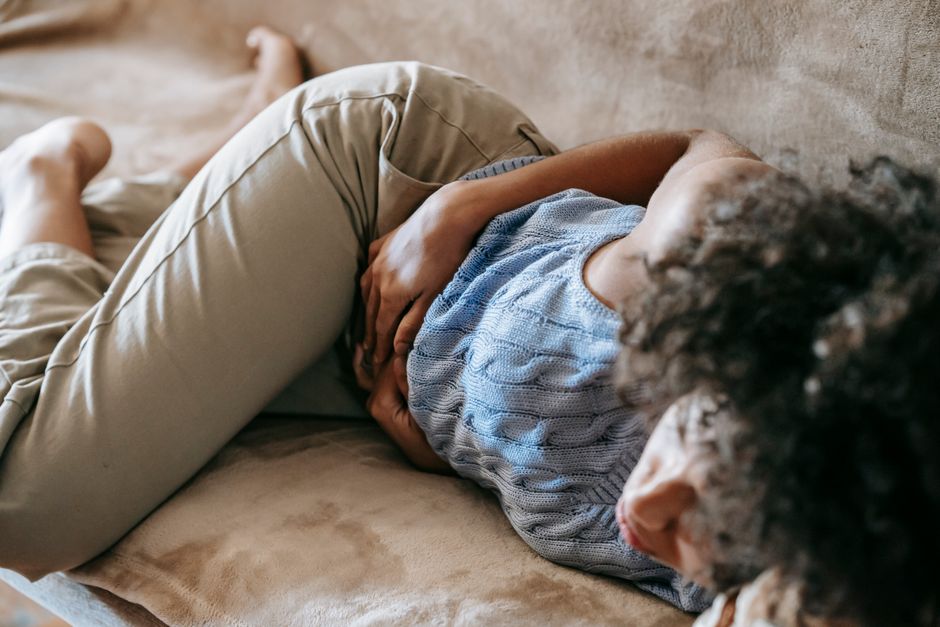
If you feel a deep, pulling cramp near your anus during your period, you are not imagining it. The most common reason is that the same muscle contractions that make your uterus cramp can also affect the rectum, since the two sit close together in the pelvis and share nerve pathways. The medical term for this is proctalgia — pain in the anal or rectal area. For most people it is a temporary, period-linked symptom, not a sign of something dangerous. But because the causes can overlap, it helps to understand what is actually happening and when to get it checked.
Why Do I Get Anus Cramps On My Period?
During menstruation, the uterus contracts to shed its lining. These contractions are driven by hormone-like substances called prostaglandins. Prostaglandins do not stay neatly inside the uterus — they can circulate and trigger contractions in nearby smooth muscle, including the bowel and rectum.
That is the core mechanism. The rectum sits directly behind the uterus and vagina, separated by only a thin layer of tissue. When the uterus and surrounding pelvic muscles tighten, the rectum can feel it. Many people describe the sensation as a cramp, a sharp pull, or a deep ache that radiates from the vagina toward the anus.
There is a second route as well. The nerves that carry pain signals from the uterus, cervix, and upper vagina connect to the same spinal segments that receive signals from the rectum and lower bowel. This shared wiring means pain from one area can be felt in another — a process called referred pain. You feel it in your anus, but the source may be higher up.
Prostaglandin levels are highest in the first day or two of bleeding, which is why these cramps often peak early in the period and ease as the days pass.
What Does a Period-Related Anal Cramp Actually Feel Like?
Most people describe it as a sudden, deep cramp or spasm near the anus, sometimes with a pulling or bearing-down sensation. It can come in waves that match the timing of uterine cramps, or it can be a single sharp jab.
Common features include:
- Pain that lines up with your period and fades when it ends
- A cramping or tightening feeling rather than a constant soreness
- Discomfort that spreads from the lower belly or vagina toward the rectum
- Relief after passing gas or a bowel movement in some cases
The pattern matters. Pain that reliably tracks your cycle and resolves after your period points toward a hormonal and muscular cause. Pain that is constant, worsening, or unrelated to your cycle deserves a closer look.
Is This the Same as Proctalgia Fugax?
Not exactly. Proctalgia fugax is a separate condition defined by sudden, severe rectal pain that lasts seconds to minutes and then disappears completely. It is not tied to the menstrual cycle and can happen to anyone at any time.
Period-related anal cramps are different because they follow a hormonal pattern. That said, the two can overlap. Some people who get proctalgia fugax notice episodes around their period, which suggests hormones may play a role in triggering muscle spasms for them too. The distinction is mainly about timing and triggers, and a clinician can help sort out which pattern fits.





Could It Be Endometriosis or Another Condition?
Sometimes period-linked anal pain is not just referred cramping. Several conditions can cause rectal or anal pain that worsens around menstruation.
Endometriosis is one of the more important ones to know about. In endometriosis, tissue similar to the uterine lining grows outside the uterus. When it implants near the rectum, the bowel, or the ligaments that support the uterus, it can cause deep pain during periods, during bowel movements, or during sex. Research indicates that bowel-related endometriosis can produce cyclical rectal pain, though it is not the most common cause of period anal cramps.
Other possibilities include:
- Pelvic floor muscle tension, which can tighten around the rectum
- Irritable bowel syndrome, which often flares with hormonal shifts
- Hemorrhoids or anal fissures, which can be more sensitive during periods
- Pelvic congestion, where veins in the pelvis become engorged
Because symptoms overlap, the timing and severity of your pain are the best clues. A pattern that is severe, worsening over time, or accompanied by other symptoms is worth evaluating rather than assuming it is normal cramping.
When Should You See a Doctor About Anal Cramps During Your Period?
Most period-linked anal cramps are uncomfortable but not dangerous. Certain signs, however, mean you should get evaluated.
See a clinician if you notice:
- Pain that is severe enough to interrupt your day or sleep
- Pain that is getting worse over months rather than staying stable
- Bleeding from the rectum or blood in your stool
- Pain during bowel movements that persists beyond your period
- Fever, unusual discharge, or a change in bowel habits
- Pain that does not respond to typical period relief measures
These signs do not automatically mean something serious is going on. They mean the cause should be identified rather than assumed. Conditions like endometriosis, bowel issues, and pelvic floor problems are all treatable, and getting the right diagnosis often shortens the path to relief.
What Helps Relieve Period-Related Anal Cramps?
Because the mechanism is largely hormonal and muscular, the approaches that ease period cramps often ease this pain too. The evidence for these measures varies, so it helps to know what is well supported and what is more anecdotal.
Heat is one of the better-supported options. Applying a warm compress or heating pad to the lower belly or lower back can relax the muscles involved. Research on period pain generally supports heat as a low-risk way to reduce cramping.
Nonsteroidal anti-inflammatory drugs (NSAIDs) such as ibuprofen work by reducing prostaglandin production, which targets the underlying driver of period cramps. These are commonly recommended for menstrual pain, though anyone considering them should follow label directions and check with a clinician if they have stomach, kidney, or bleeding concerns.
Other approaches some people find helpful include:
- Gentle movement or stretching to relax the pelvic floor
- Warm baths, which can ease muscle tension
- Pelvic floor physical therapy, which can help if muscle tightness is a factor
- Hormonal birth control, which can reduce prostaglandin-driven cramping over time
Hormonal options and pelvic floor therapy are best discussed with a clinician, since they depend on your specific cause and health history. No single approach works for everyone, and the evidence for some of these is stronger than for others.
Does This Mean Something Is Wrong With My Pelvis?
Usually not. For most people, period-related anal cramps are a normal consequence of how the uterus, bowel, and pelvic nerves are wired together. The pain is real, but it reflects shared anatomy and hormones rather than damage.
The exception is when the pain is severe, persistent, or comes with other symptoms. In those cases, the cramp may be a signal from a condition like endometriosis or a bowel problem that deserves attention. The key is the pattern. Cyclical pain that fades with your period is usually benign. Pain that breaks that pattern is the one to investigate.
It also helps to know that this symptom is common. Many people experience it and never mention it, often because it feels awkward to bring up. If it is affecting your quality of life, it is worth naming out loud to a clinician. There is no reason to manage it silently.
Frequently Asked Questions
Why do I get anus cramps on my period?
The uterus releases prostaglandins during your period, and these can trigger contractions in nearby muscles including the rectum. Shared nerve pathways between the uterus and rectum can also make uterine pain feel like it is coming from the anus.
Are anal cramps during my period normal?
For many people, mild to moderate anal cramping that follows the period and fades afterward is a normal response to hormonal and muscular changes. Pain that is severe, worsening, or unrelated to your cycle is not typical and should be checked.
Can endometriosis cause anal cramps during my period?
Yes. When endometriosis grows near the rectum, bowel, or supporting ligaments, it can cause cyclical rectal or anal pain that worsens during periods. This is one reason persistent or severe period-related anal pain should be evaluated.
How can I relieve anal cramps during my period?
Heat, NSAIDs like ibuprofen, and gentle movement are commonly used and may help by reducing prostaglandin-driven muscle contractions. If pain continues, a clinician can assess whether hormonal treatment or pelvic floor therapy is appropriate.
