
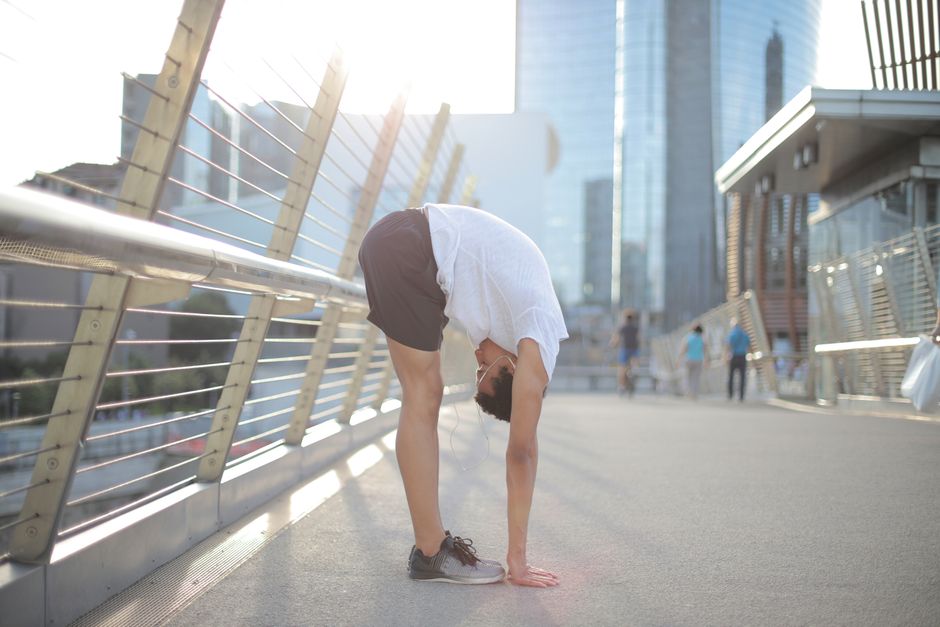
That constant urge to reach for your toes or roll your neck isn’t random. For most people, it is your body’s natural response to muscles that have been held in one position too long. When you sit at a desk, drive, or stand in one spot, your muscle fibers shorten and tighten. Stretching is your nervous system’s way of saying it wants those fibers to return to a normal resting length. It feels good because it briefly resets that tension. However, if the urge is constant, unrelenting, or accompanied by other symptoms, it can point to something deeper than just a stiff back.
Why Do I Feel The Need To Stretch All The Time?
You feel the need to stretch all the time because your muscles are accumulating tension faster than they are releasing it. This is usually a mechanical issue. Prolonged postures, like sitting for eight hours, cause certain muscles—often the hip flexors, hamstrings, and chest—to remain in a shortened state. Your brain registers that prolonged contraction as a problem and prompts you to move or stretch to relieve it.
But there is a neurological layer here too. Stretching activates muscle spindles, which are sensors inside the muscle that detect changes in length. When you stretch, you temporarily reset the firing threshold of these spindles. The relief you feel is real, but it is often short-lived. If you are stretching every hour just to feel normal, the underlying tightness is likely being caused by how you hold your body during the day, not by a lack of flexibility.
What Is the Difference Between Normal Tightness and a Compulsion?
Normal tightness fades after a good stretch and stays away for a while. You might stretch after a long car ride, feel better, and not think about it again until the next ride. That is a healthy mechanical response.
A compulsion is different. If you feel an overwhelming urge to stretch that does not go away after stretching, or if the urge returns within minutes, you are no longer dealing with simple muscle stiffness. You may be dealing with a neurological condition called restless legs syndrome (RLS), or a related movement disorder. People with RLS describe an irresistible urge to move the legs, often accompanied by uncomfortable sensations. Stretching provides temporary relief, but the urge quickly returns, especially at night or when resting.
Another distinction is whether you are stretching to relieve a sensation or stretching because you feel you must. If skipping a stretch causes anxiety or a building internal pressure, that moves beyond typical muscle care. This is where a conversation with a doctor becomes useful, because the treatment for mechanical tightness is very different from the treatment for a neurological urge.
Can Constant Stretching Actually Make Tightness Worse?
Yes, in some cases it can. If you are stretching a muscle that is already overstretched and weak, you are adding instability to the joint. The brain then tightens the muscle further to protect the joint. This creates a loop: you feel tight, you stretch, the muscle becomes slightly less stable, the brain tightens it again, and you feel the need to stretch again.
This is common in people who stretch their hamstrings aggressively every day. The hamstrings feel tight because the pelvis is tilted forward from weak glutes or tight hip flexors. Stretching the hamstrings repeatedly does not fix the pelvic position. It only temporarily relieves the tension while leaving the root cause—muscle imbalance—untouched.
Instead of stretching the tight muscle, the more effective approach is often to strengthen the opposing muscle group. For hamstring tightness, that means strengthening the glutes and core. For lower back tightness, that often means strengthening the deep abdominal muscles. If stretching feels necessary every single day just to function, you are likely treating a symptom rather than the cause.





What Medical Conditions Cause a Constant Urge to Stretch?
Several conditions present with a persistent urge to move or stretch. The most common is restless legs syndrome. It affects roughly 5 to 10 percent of adults in the United States. The hallmark is an urge to move the legs that worsens at rest, improves with movement, and is worse in the evening or at night.
Another condition is periodic limb movement disorder (PLMD). This involves involuntary leg twitches or jerks during sleep. People with PLMD often do not know they are moving, but they wake up unrefreshed and may feel a need to stretch or move their legs during the day to compensate for poor sleep quality.
Neurological conditions like Parkinson’s disease can also cause a feeling of stiffness and an urge to move, though this is less common. Akathisia, a condition often caused by certain psychiatric medications, produces an intense, overwhelming feeling of inner restlessness. People with akathisia feel they need to pace, shift weight, or stretch constantly because sitting still feels unbearable.
Finally, magnesium deficiency is frequently mentioned as a cause of muscle cramps and twitching. While severe deficiency can cause muscle spasms, routine mild deficiency is not strongly linked to a constant urge to stretch. If you are concerned about a deficiency, a blood test is the only reliable way to know.
When Should Stretching Be a Reason to See a Doctor?
You should see a doctor if the urge to stretch is interfering with sleep, work, or daily life. Specific red flags include:
- The urge is worse at night or when you are lying down
- Stretching only relieves the urge for a few minutes
- You feel an uncomfortable crawling, pulling, or aching sensation deep in your limbs
- You have involuntary jerking movements during sleep
- The urge is accompanied by weakness, numbness, or loss of coordination
- You have started a new medication recently
Primary care doctors can screen for restless legs syndrome and related conditions with a simple questionnaire and blood work. They may check your iron levels, because low ferritin—even without anemia—is strongly linked to restless legs syndrome. If iron levels are low, iron supplementation often improves symptoms significantly.
Are There Better Ways to Relieve the Urge Than Passive Stretching?
Yes. Passive stretching—where you hold a position without moving—is only one tool, and often not the best one for a constant urge. Strengthening exercises are frequently more effective because they address muscle imbalances. A simple routine that includes glute bridges, planks, and rows can reduce the need to stretch by stabilizing the joints that keep pulling you into tight positions.
Movement variety is another option. Instead of stretching every hour, stand up and walk for two minutes. Walking changes the length of the hip flexors naturally while also engaging the cardiovascular system. It is often more effective than a static stretch because it resets posture without destabilizing the muscle.
Foam rolling or self-massage can help release trigger points that feel like deep knots. This is not the same as stretching. It applies direct pressure to a specific area, which can reduce muscle tone without lengthening the muscle. Many people find that foam rolling the hips and thighs reduces the urge to stretch the lower back more effectively than bending forward repeatedly.
Heat therapy is underrated. Applying a warm compress or taking a warm bath increases blood flow to the muscles and reduces the sensitivity of nerve endings. For people whose urge to stretch is driven by cold, tight muscles, heat can break the cycle for several hours.
Frequently Asked Questions
Is it bad to stretch every day?
Daily stretching is not harmful for most healthy people. However, if you feel the need to stretch multiple times every hour, the problem is likely muscle imbalance or a neurological condition rather than simple tightness.
Can anxiety cause the need to stretch constantly?
Yes. Anxiety increases muscle tension and can also cause psychomotor agitation, which makes you feel like you need to move or stretch to release nervous energy. If stretching is accompanied by racing thoughts or restlessness, anxiety may be the underlying driver.
What vitamin deficiency causes a constant urge to stretch?
Low iron levels are the most established deficiency linked to an urge to move the legs, particularly in restless legs syndrome. Magnesium deficiency can cause cramps, but it is not strongly proven to cause a constant urge to stretch on its own.
Why do I feel better after stretching but only for a short time?
Short-lived relief usually means you are treating the symptom, not the cause. If a muscle is tight because of weak opposing muscles or poor posture, stretching will not correct the underlying imbalance, so the tightness quickly returns.
