
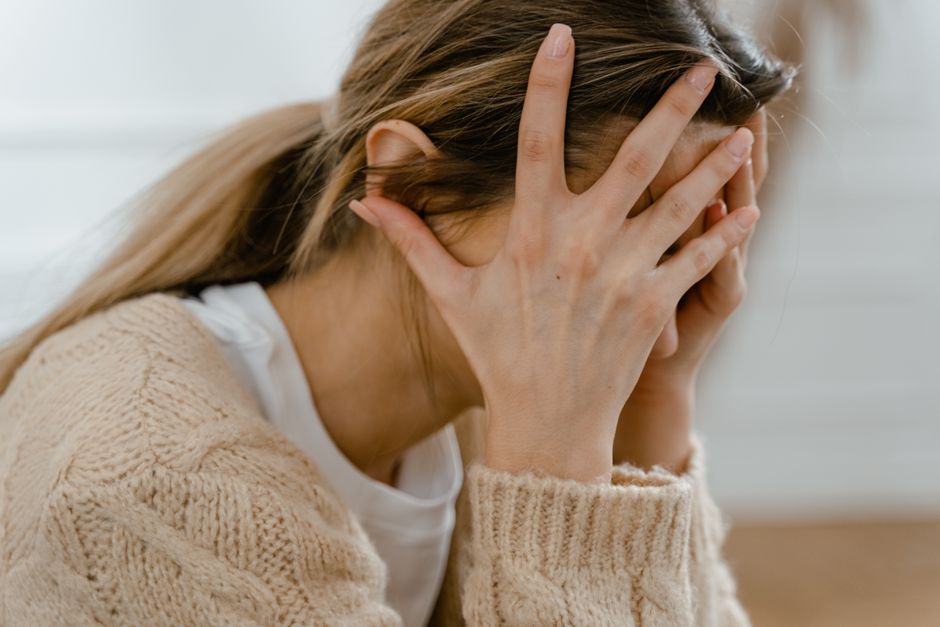
If you feel a dull ache, fullness, or pressure behind your eyes when you bend over to tie your shoes or pick something up, the sensation is real and it has a physical explanation. Bending forward raises the pressure inside the blood vessels of your head, and that pressure is transmitted to the tissues around and inside your eyes. In most people this is a brief, harmless sensation that fades within seconds of standing back up. In some situations, though, it points to an eye condition that deserves a doctor’s attention.
Why Do I Feel Eye Pressure When Bending Over?
When you bend forward, gravity pulls blood toward your head. The veins that drain blood from your face, scalp, and eyes have no valves to stop backflow, so blood pools in them and the pressure inside rises. This is called venous congestion, and it happens to everyone to some degree.
Your eyeball sits in a closed pocket of tissue. When the veins around it swell, that extra fluid pushes against the eye from the outside. At the same time, the fluid inside the eye — the aqueous humor — can shift and press outward. The result is the sensation of pressure or fullness you notice when your head is below your heart.
Two things matter here. First, the feeling is usually about the tissues around and behind the eye, not the eyeball itself. Second, the sensation is temporary. Once you stand up, venous drainage resumes and the pressure normalizes, usually within seconds.
There’s a distinction worth making early: the pressure you feel when bending is not the same thing as the eye pressure measured during a glaucoma exam. Those are different measurements, taken in different positions. More on that below.
What Is the Difference Between Eye Pressure and Sinus Pressure?
The two are easy to confuse because they overlap in the same small area of your face. The sinuses are air-filled cavities in the bones around your nose and eyes. When those cavities are inflamed or blocked, bending forward can make the pressure inside them spike, and you feel it right behind your eyes and cheekbones.
Sinus-related pressure typically comes with other signs. You may notice a stuffy nose, a headache that worsens when you lean forward, tenderness when you press over your cheekbones or brow, or a recent cold. Eye-related pressure tends to be more centered on the eyes themselves and may come with blurring, halos around lights, or a feeling of grittiness.
Neither pattern is a reliable way to tell the two apart on your own. The location and the accompanying symptoms give clues, but the only way to know for sure is an exam. If the sensation is new, one-sided, or getting worse, that’s the point to see a doctor rather than guess.
When Is Eye Pressure When Bending a Sign of Glaucoma?
Glaucoma is a group of eye diseases that damage the optic nerve, often — but not always — in connection with higher pressure inside the eye. The key word is “often.” A significant number of people with glaucoma have eye pressure in the normal range, and many people with higher-than-average eye pressure never develop the disease.
Here’s the part that surprises people. The pressure your eye doctor measures is taken while you’re sitting upright. Your eye pressure is not a fixed number. It changes throughout the day and it changes with your body position. Studies have found that eye pressure is measurably higher when a person is lying flat or face-down compared to sitting up. That means a single reading in the exam chair does not capture the full picture of what your eyes experience over 24 hours.
This is why bending over is not, by itself, a reliable screening test for glaucoma. Some people with glaucoma notice their vision gets blurrier or their eyes ache more when they bend. Others notice nothing at all. Open-angle glaucoma — the most common form — typically causes no early symptoms whatsoever, which is exactly why regular eye exams matter.
What bending over cannot do is diagnose you. If you have concerns about glaucoma, the answer is a dilated eye exam, not a self-test at home.



What Causes a Sudden Spike in Eye Pressure?
A true, rapid rise in eye pressure is a medical emergency, and it looks very different from the mild pressure you feel when bending. The classic example is acute angle-closure glaucoma, which happens when the drainage channel inside the eye suddenly blocks and pressure climbs fast.
Signs that point to something serious rather than ordinary positional pressure include:
- Severe eye pain, often described as deep and throbbing
- Sudden blurred vision or a marked drop in vision
- Seeing halos or colored rings around lights
- Redness in the eye
- Nausea or vomiting alongside the eye pain
- Headache, sometimes on the same side as the affected eye
These symptoms warrant emergency care right away. Acute angle-closure glaucoma can damage vision permanently if it is not treated quickly. Do not wait to see whether it passes.
Other situations can also raise eye pressure, including certain medications (some steroid eye drops among them), eye injuries, and inflammation inside the eye. If you use steroid eye drops, follow your prescribing doctor’s instructions about monitoring, since long-term use can raise eye pressure in some people.
Is Pressure in the Eyes When Bending Over Dangerous?
For most people, no. The brief fullness you feel when you bend to pick something up is a normal response to a change in body position. It resolves when you straighten up. It does not mean your eyes are being damaged.
The evidence is more limited when it comes to whether repeated bending over time matters for people who already have glaucoma. Some research suggests that activities that raise head or eye pressure — including certain yoga poses, weightlifting with breath holding, and prolonged face-down positioning — may be worth discussing with an eye doctor if you have glaucoma. But the studies are not strong enough to say that bending over causes or worsens the disease in a general population.
The honest position: if your eyes are healthy, positional pressure is not a threat. If you have diagnosed glaucoma or are at higher risk, it is a reasonable question to raise with your ophthalmologist rather than something to worry about on your own.
Who Should Be Concerned About Eye Pressure Symptoms?
Some people have a higher baseline risk for glaucoma and should take eye pressure symptoms more seriously. Risk factors that are well established include:
- Age — risk rises notably after 60, and earlier for some groups
- Family history of glaucoma
- African American, Hispanic, and Asian ancestry, depending on the type
- Diabetes and high blood pressure
- Nearsightedness
- Long-term use of corticosteroid medications
- A prior eye injury
For people in these groups, the sensible approach is regular dilated eye exams rather than monitoring symptoms at home. Glaucoma often causes no symptoms until vision loss is already underway, and the damage cannot be reversed. Catching it early is the whole point.
If you are not in a higher-risk group and the pressure only appears when you bend and disappears when you stand, there is generally nothing to act on. Mention it at your next routine eye exam and let the doctor decide whether anything needs checking.
What Can You Do About Eye Pressure When Bending?
The practical advice is simple. If bending triggers the sensation, you can reduce it by changing how you move. Bend at the knees instead of folding at the waist. Rise slowly rather than springing up. If a specific yoga pose or exercise consistently brings it on, modify the position.
None of these changes treat an underlying eye condition. They simply reduce the positional trigger. If the pressure comes with pain, vision changes, redness, or nausea, stop trying to manage it yourself and get medical care.
For everyday reassurance, keep your routine eye exams on schedule. An eye doctor can measure your eye pressure, look at your optic nerve, and check the drainage angle. Those three things tell far more than any symptom you notice when you lean over.
Frequently Asked Questions
Why do I feel pressure behind my eyes when I bend over?
Bending forward sends blood toward your head and raises pressure in the veins around your eyes, which you feel as fullness or pressure. It usually fades within seconds of standing up.
Can bending over cause glaucoma?
No evidence shows that bending over causes glaucoma. It can briefly raise pressure around the eyes, but the disease has other causes, and bending is not considered a trigger for developing it.
Should I worry about eye pressure when bending over?
For most people it is a harmless, temporary sensation and nothing to worry about. See a doctor promptly if it comes with severe pain, vision changes, redness, or nausea.
Does bending over raise eye pressure during a glaucoma test?
Eye pressure is measured while you sit upright, and it does rise when you lie flat or bend forward. That is one reason a single reading does not capture your full 24-hour pressure pattern.
