
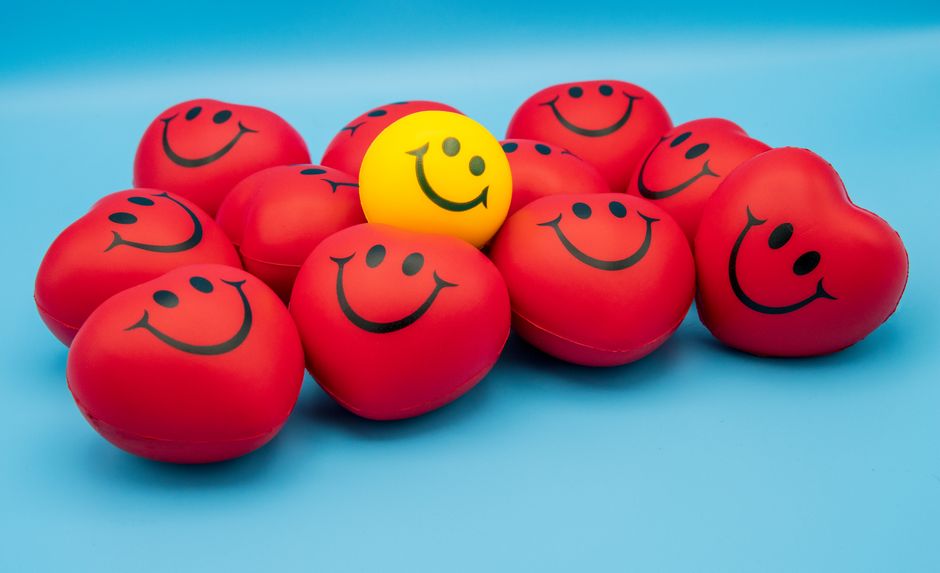
You laugh at your coworker’s joke. You say “I’m fine” when your partner asks how you are. You post a photo of a good day and caption it with a smiley face. Nobody around you seems worried, and that is exactly the point. Faking happiness is a real, common behavior, and it often shows up in people who are struggling with depression or another mental health condition. The gap between how you feel and how you act can grow so wide that even you start to lose track of which one is true.
This is not a character flaw or a sign of dishonesty. It is usually a coping strategy. People fake happiness to protect others, to avoid conflict, to keep a job, or simply because they do not have the energy to explain what is really going on. But when the performance becomes constant, it can quietly make things worse. It can hide symptoms from doctors, isolate you from real support, and deepen the feeling that no one actually knows you.
Why Do I Fake Being Happy It May Signal Depression?
Faking happiness may signal depression because it is often a way of managing symptoms rather than a sign that someone is doing well. A person who is depressed may still smile, joke, and show up to work on time. The effort required to do that can be enormous.
Depression does not always look like sadness. It can look like exhaustion, irritability, numbness, or a flat feeling that never quite lifts. When someone has learned that showing those feelings leads to awkward conversations or worry from others, they may choose to perform the opposite instead. Over time, the performance can become automatic.
This pattern is sometimes described as “smiling depression,” though that is a popular term rather than a formal diagnosis. Clinicians generally recognize the underlying pattern: a person who meets criteria for a depressive disorder but does not appear outwardly depressed. The mask is the behavior. The depression is what sits underneath it.
What Is the Difference Between Faking Happiness and Just Being Private?
Everyone keeps some feelings to themselves. Privacy is a choice about what to share and with whom. Faking happiness is different because it often involves actively presenting an emotion you do not feel, especially to people you are close to.
You might be private if you simply do not discuss your mood with casual acquaintances. You might be masking if you tell your closest friend you are great when you are not, then feel more alone afterward. The tell is not how much you share. It is whether the gap between the inside and the outside feels like a wall you cannot lower.
Some people mask for a specific reason, such as a workplace that punishes any sign of struggle. Others mask out of habit built over years. Both can be understandable. Neither is a sign of weakness.
What Are the Signs That Masking Has Become a Problem?
Masking becomes a problem when it costs more than it protects. A few patterns tend to show up.
- You feel drained after social time instead of restored by it.
- You rehearse conversations or facial expressions before they happen.
- You feel relief when plans are canceled, even plans you wanted.
- You worry that if people saw the real you, they would pull away.
- You cannot remember the last time you told someone how you actually felt.
None of these on its own means you have depression. Together, and especially if they have lasted for weeks or longer, they are worth paying attention to. They are also worth mentioning to a doctor or therapist, because a clinician who only sees the happy version of you may miss what is happening.





How Does Faking Happiness Affect Mental Health Over Time?
Short-term masking can get you through a hard meeting or a family dinner. Long-term masking tends to work against you in a few ways.
First, it hides the problem from the people who could help. If no one knows you are struggling, no one offers support. Second, it can strengthen the belief that your real feelings are unacceptable or burdensome. That belief is common in depression and tends to feed the depression itself. Third, the effort of maintaining the performance uses energy that is already in short supply.
There is also a practical risk. When you finally do reach out, the people around you may be surprised. They may say things like “but you always seemed so happy.” That reaction can feel dismissive, even when it is not meant to be. It is one reason some people delay getting help for years.
When Should You Talk to a Professional?
You should consider talking to a doctor or mental health professional if low mood, loss of interest, or the effort of masking has lasted for more than a couple of weeks, or if it is affecting your sleep, appetite, work, or relationships.
Depression is a recognized medical condition with established diagnostic criteria. It is not a matter of willpower, and it is not something you should have to manage alone. Effective treatments exist, including therapy and medication, and the choice between them is a conversation to have with a qualified clinician who knows your situation.
If you are having thoughts of harming yourself, that is a medical emergency. In the US you can call or text 988 to reach the Suicide and Crisis Lifeline at any time. Please reach out to a crisis line or emergency services rather than waiting.
How Can You Start Lowering the Mask?
You do not have to drop the mask all at once, and you do not have to tell everyone. Most people start with one person and one honest sentence.
Pick someone who has shown they can listen without rushing to fix things. You might say, “I have been pretending to be okay and I am not.” That single sentence often opens more than people expect. If saying it out loud feels impossible, writing it in a message counts too.
It can also help to notice when you are masking and why. Are you protecting a parent from worry? Holding a job? Avoiding a difficult conversation? Naming the reason does not remove it, but it can turn an automatic habit into a choice you can make differently over time.
Some people find that small honesty is easier than big disclosure. Answering “how are you” with “honestly, it has been a rough week” is a low-stakes way to practice. You can decide how much to say after that.
Does Faking Happiness Ever Help?
Sometimes, yes, in the short term. Putting on a calm face during a job interview or a medical appointment is a normal social skill. The problem is not the occasional performance. It is when the performance becomes the default and the real feelings never get air.
There is a difference between choosing when to share and feeling unable to share at all. The first is a skill. The second is a trap. If you recognize yourself in the second one, that recognition is worth acting on.
Frequently Asked Questions
Can you be depressed and still laugh and smile?
Yes. Depression affects mood, energy, sleep, and interest, but it does not switch off the ability to laugh or smile. Many people with depression can still enjoy moments, which is part of why the condition is so often missed.
Is smiling depression a real diagnosis?
No, “smiling depression” is a popular term, not a formal medical diagnosis. It describes a real pattern, though: someone who meets criteria for a depressive disorder while appearing outwardly fine.
Why do I hide my feelings from people who care about me?
People usually hide feelings to avoid burdening others, to prevent worry, or because they have learned that showing distress leads to uncomfortable reactions. It is a common and understandable response, but it can leave you feeling more alone.
What should I do if I have been faking happiness for a long time?
Telling one trusted person or a doctor is a reasonable first step, and it does not require explaining everything at once. If your mood, sleep, or interest in daily life has been affected for more than a couple of weeks, a professional evaluation is worth scheduling.
