
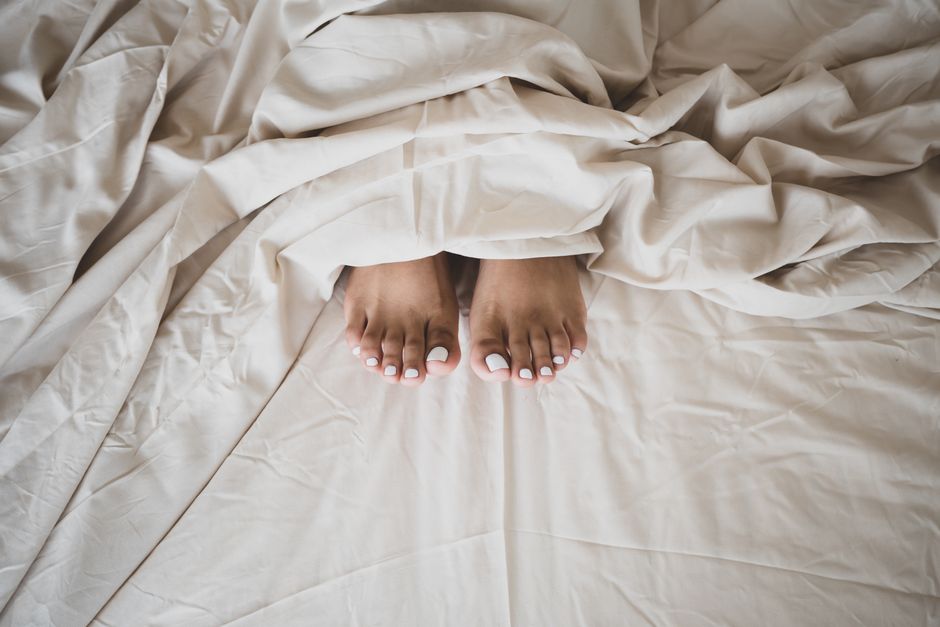
You wake up and your toes are curled tight, almost gripping the sheet. It can feel strange, even a little alarming. But for most people, curling the toes during sleep is a normal reflex, not a sign of disease. The toes bend and flex many times through the night, and you usually only notice it when you happen to wake mid-motion.
The short answer: toe curling at night usually comes from ordinary nerve reflexes, muscle contractions that happen during sleep, or the position your feet settle into. Occasionally it points to a nerve or circulation issue. The trick is knowing which one you are dealing with.
Why Do I Curl My Toes When I Sleep?
Toes curl during sleep because the muscles and nerves that control your feet stay active all night. Your brain cycles through different sleep stages, and during some of them, small muscle twitches and reflex movements are completely normal. The toes are at the end of a long chain of nerves and muscles, so they pick up these signals easily.
There is also a simple physical reason. When you lie down, your feet often point downward, a position called plantarflexion. In that position, the tendons that run along the top of your foot are relaxed, and the muscles on the underside of your foot and calf pull the toes into a slight curl. You are not doing it on purpose. Your foot is just resting in a shape that encourages it.
Most of the time, this is harmless. It becomes worth paying attention to when the curling comes with pain, cramping, numbness, or a feeling that your toes are stuck.
Is Curling Your Toes During Sleep Normal?
Yes, for most people it is normal. The nervous system does not shut off when you sleep. It shifts into different modes, and one of those modes involves periodic muscle activity.
During non-REM sleep, your body goes through cycles of light and deep sleep roughly every 90 minutes. In lighter stages, small movements are common. You might twitch a leg, flex a foot, or curl your toes without ever waking up. These are sometimes called hypnic jerks when they are sudden, but slow, sustained curling is a different, quieter kind of movement.
What matters is the pattern:
- Occasional curling with no pain is almost always normal.
- Curling that wakes you up or comes with cramping deserves a closer look.
- Curling on one side only, especially with numbness or weakness, is worth mentioning to a doctor.
If you have curled your toes in sleep for years and feel fine, there is likely nothing to fix.
What Causes Toe Curling at Night?
Several different things can make your toes curl during sleep. They range from completely ordinary to worth investigating.
Normal muscle activity during sleep
The most common cause is simply the nervous system doing its background work. Muscles maintain a low level of tone even at rest, and the small muscles in your feet are no exception.
Foot and calf cramps
Nighttime leg cramps are common, especially in adults over 50. A cramp is a sudden, hard muscle contraction. When it hits the muscles that control your toes, the toes pull down and curl. The cramp usually lasts seconds to a few minutes and can leave the area sore afterward.
The exact cause of most nighttime cramps is not fully understood. Some cases are linked to dehydration, certain medications, or nerve problems. Many have no clear cause at all.
Restless legs syndrome
Restless legs syndrome creates an urge to move the legs, usually in the evening or at rest. People often describe a creeping or pulling feeling. Toe and foot movements can be part of it. This is a recognized condition with defined diagnostic criteria, and it is different from simple toe curling.
Nerve compression or damage
Nerves that run to the feet can be pinched or damaged. This can cause the toes to curl, along with tingling, burning, or numbness. Causes include:
- Spinal issues in the lower back
- Pressure on nerves in the leg or ankle
- Diabetes-related nerve damage, called peripheral neuropathy
When nerve damage is involved, toe curling usually comes with other symptoms. Curling alone, with no numbness or pain, is less likely to be nerve-related.
Foot structure and position
Some people have foot shapes that naturally rest with the toes curled. High arches or tight calf muscles can pull the toes into that position when the foot relaxes. This is a mechanical issue, not a nerve one.





When Should Toe Curling at Night Concern You?
Toe curling by itself is rarely a warning sign. The concern comes from what travels with it. Pay attention if you notice any of these:
- Pain that wakes you or lingers after you get up
- Numbness, tingling, or a burning feeling in the toes or feet
- Weakness in the foot or trouble lifting the toes
- Curling that is new, one-sided, or getting worse over weeks
- Toes that stay curled and cannot be straightened
A toe that is permanently curled and cannot be straightened is a different situation. That can be a fixed deformity, sometimes called a hammertoe, which is a structural change rather than a sleep behavior. It is worth having a clinician look at it.
If you have diabetes, circulation problems, or a known back condition, mention new toe symptoms to your doctor. These conditions can affect the nerves and blood vessels that serve the feet, and early attention matters.
Can Toe Curling at Night Be Prevented?
You cannot stop normal sleep-related muscle activity, and you do not need to. What you can do is reduce the things that make cramping or tension more likely.
For nighttime cramps and muscle tightness, some people find these steps helpful. The evidence for each varies, and none is a guaranteed fix:
- Stretching the calves and feet before bed
- Staying hydrated through the day
- Keeping the feet warm and avoiding tight bedding that pulls the toes down
- Avoiding heavy blankets that force the feet into a pointed position
If you take medications, ask your doctor or pharmacist whether any of them can cause muscle cramps. Some diuretics and other drugs are associated with cramps in some people. Do not stop any medication on your own.
For nerve-related symptoms, the approach is different. Prevention means treating the underlying cause, not the toe curling itself. That is a conversation for a clinician.
Does Curling Your Toes Mean Something Is Wrong?
No, in most cases it does not. The human body moves during sleep. Toes flex, feet shift, and limbs twitch. You simply do not notice most of it because you are asleep.
What makes toe curling noticeable is timing. You catch it in the moment between sleep and waking, when your muscles have not fully relaxed yet. That brief window can make an ordinary movement feel deliberate or strange.
There is one useful distinction to hold onto. Curling that happens by itself, feels neutral, and goes away when you move is ordinary. Curling that hurts, comes with numbness, or does not resolve is worth a medical visit. The difference is not the curling. It is everything around it.
Frequently Asked Questions
Why do I wake up with my toes curled?
You likely woke during a normal sleep movement before your muscles relaxed. The toes stay briefly curled in that transition, then loosen once you move.
Is curling your toes in your sleep a sign of a nerve problem?
Usually not on its own. Nerve problems typically come with numbness, tingling, burning, or weakness, so curling by itself is unlikely to be the only sign.
Can toe curling at night be caused by a vitamin deficiency?
It is possible but not well established. Some research links low levels of certain nutrients to muscle cramps, but the evidence is mixed and no single deficiency is confirmed as a common cause.
When should I see a doctor about toe curling at night?
See a doctor if the curling comes with pain, numbness, weakness, or happens on one side only. Also seek care if a toe stays curled and cannot be straightened.
