
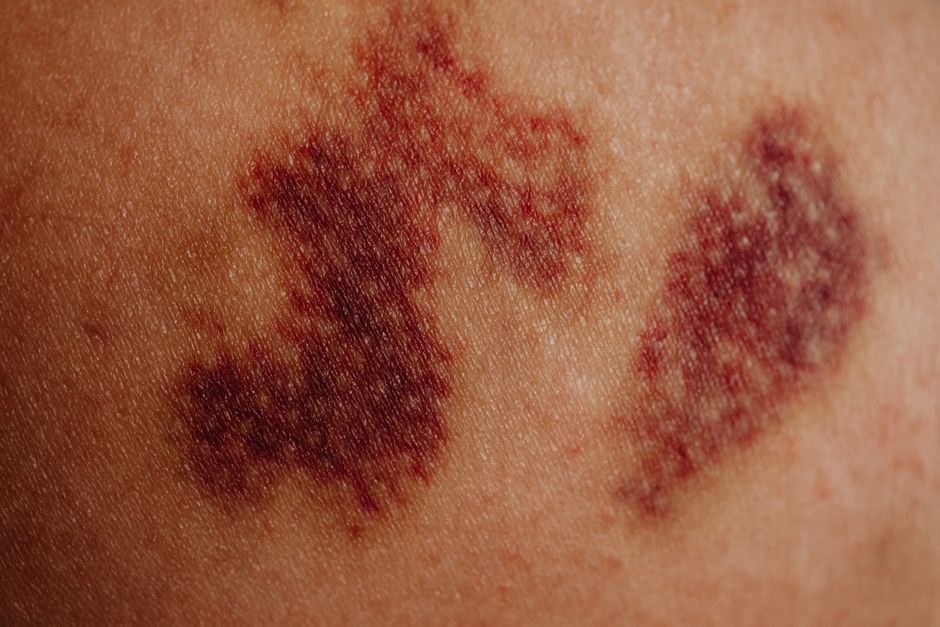
If you bruise more easily than you used to, the most common reason is that the small blood vessels under your skin have become more fragile, or that the tissue supporting them has thinned. That happens naturally with age, with sun damage, and with certain medications. But easy bruising can also be the first visible sign of a problem with your blood, your liver, or your platelets. The key question is whether the bruising is a change from your normal pattern, and whether it comes with other symptoms.
Why Do I Bruise So Easily Causes And When To Worry
A bruise forms when small blood vessels called capillaries break and leak blood into the tissue underneath. The blood collects there, and over the next several days your body breaks it down. That breakdown is what produces the color changes — red or purple at first, then blue and black, then green and yellow, then brown before it fades.
Most people think of a bruise as damage to the skin. It is really damage to the vessels beneath it. Anything that weakens those vessel walls, reduces the number of platelets that plug leaks, or interferes with the clotting proteins in your blood will make bruising happen more easily and more often.
There is one detail worth knowing early. The location of a bruise tells you something. Bruises on the shins, forearms, and backs of the hands are common and usually harmless — these areas get bumped constantly and the skin there is thin. Bruises on the back, chest, face, or buttocks are less typical, because those areas are protected. When bruising appears in protected areas without a clear injury, that is a reason to get it checked.
What Causes Easy Bruising?
There is no single cause. Easy bruising usually comes from one of a few broad categories, and sometimes from more than one at the same time.
Age and skin changes. As you get older, the skin thins and loses some of the fat layer that cushions blood vessels. Capillaries become more fragile. This is why older adults bruise more easily, especially on the arms and hands. Sun exposure speeds this process, which is why people who spent years outdoors often bruise more on their forearms.
Medications. This is one of the most common and most overlooked causes. Several drug classes affect bruising:
- Anticoagulants (blood thinners) such as warfarin and direct oral anticoagulants
- Antiplatelet drugs such as aspirin and clopidogrel
- Systemic corticosteroids, which thin the skin over time
- Some antidepressants, particularly SSRIs, which can affect platelet function
- Long-term or high-dose NSAIDs like ibuprofen and naproxen
If you started a new medication and noticed more bruising afterward, that timing matters. Do not stop a prescribed medication on your own. Talk to the prescriber.
Nutritional deficiencies. Vitamin C is needed to build healthy collagen, which supports blood vessel walls. Severe deficiency causes scurvy, which produces easy bruising and bleeding gums. This is rare in the US but does occur. Vitamin K is required for several clotting factors, and deficiency can lead to bruising and bleeding.
Alcohol use. Heavy drinking affects the liver, and the liver makes most of the clotting proteins in your body. It also affects platelet production. People who drink heavily often bruise more easily for this reason.
Blood and clotting disorders. Low platelets, abnormal platelet function, von Willebrand disease, and other inherited or acquired clotting problems can all cause easy bruising. Von Willebrand disease is the most common inherited bleeding disorder and is often mild enough to go undiagnosed for years.
Liver and kidney disease. Both organs play roles in clotting. When either is significantly impaired, bruising and bleeding can increase.
What Medications Make Bruising Worse?
Blood thinners and antiplatelet drugs are the most direct causes, because they work by interfering with clotting on purpose. That is their job. Bruising on these medications is expected and is not automatically a sign that something is wrong.
Corticosteroids are different. Taken by mouth or applied to the skin for long periods, they thin the skin and the underlying tissue. The bruising they cause is often on the forearms and backs of the hands.
SSRIs are a less obvious category. They are widely prescribed and generally well tolerated, but they can reduce platelet function, and some studies have found a modest increase in bleeding risk with their use. The absolute risk for any one person is small. This is a conversation to have with your doctor, not a reason to stop a medication that is working for you.
Over-the-counter pain relievers matter too. Regular use of NSAIDs affects platelet function. Many people do not think of ibuprofen as a blood-affecting drug, but it is.
When Should Bruising Worry You?
Most bruising is not a sign of anything serious. But some patterns deserve a medical evaluation, and it is better to be checked than to wait.
See a doctor if you notice any of the following:
- Bruises that appear without any injury you can recall, especially on the back, chest, or face
- Bruising that is much worse than it used to be, or a clear change from your normal pattern
- Bruises that are unusually large or keep growing
- Bruising along with frequent nosebleeds, bleeding gums, or blood in your urine or stool
- Small red or purple spots on the skin that do not fade when you press them (these are called petechiae and can signal low platelets)
- Bruising with fatigue, fever, unexplained weight loss, or feeling generally unwell
- Bruising in a child who also has other bleeding symptoms
Petechiae deserve a specific mention. They look like tiny pinprick dots and they do not blanch when pressed. They can point to a platelet problem, and they warrant prompt medical attention rather than a wait-and-see approach.
One practical point: a bruise that is not tender and not related to any injury is more concerning than a tender one. Pain usually means recent trauma. Painless bruising in an unusual spot is the pattern that gets investigated.
How Are Easy Bruising and Bleeding Problems Evaluated?
When someone comes in with unexplained bruising, the evaluation usually starts with a conversation and a physical exam, then moves to blood tests.
The history matters as much as the labs. A doctor will ask when the bruising started, where it appears, what medications and supplements you take, how much alcohol you drink, whether you have a family history of bleeding problems, and whether you have other bleeding symptoms like prolonged bleeding after dental work or surgery.
Common blood tests include:
- A complete blood count, which measures platelet number
- A blood smear, which looks at platelet and blood cell appearance
- Coagulation tests such as PT and aPTT, which check clotting pathways
- Liver function tests
- Sometimes specific tests for von Willebrand disease or platelet function
A normal platelet count does not rule out a bleeding problem. Platelets can be normal in number but work poorly, and von Willebrand disease does not show up on a standard platelet count. If bruising is a real concern and initial tests are normal, that does not necessarily end the evaluation.
Can You Prevent Easy Bruising?
You cannot stop all bruising, and some of it is simply part of aging. But there are reasonable steps that may reduce how often it happens.
Protect your skin from the sun. Sun damage thins the skin and makes vessels more fragile over time. This is a long-term effect, not something you fix in a week.
Keep your home clear of obvious hazards. For older adults especially, removing trip hazards and using padding on sharp furniture edges reduces the bumps that cause bruises.
Review your medications with your doctor or pharmacist. This includes supplements. Fish oil, ginkgo, ginger, garlic, and high-dose vitamin E can all affect bleeding to varying degrees. Whether any of these matter for you depends on your other medications and health conditions.
Eat a balanced diet that covers vitamin C and vitamin K. Vitamin K is found in leafy greens and other vegetables, and vitamin C in citrus, peppers, and many fruits and vegetables. For most people eating a varied diet, deficiency is unlikely.
What does not have strong evidence: most creams and supplements marketed for “fragile capillaries” or “bruise prevention.” No large human trials have confirmed that these products reduce bruising. The evidence here is limited.
Frequently Asked Questions
Why do I bruise so easily on my legs?
The legs, especially the shins, are the most commonly bumped part of the body, and the skin there is relatively thin. Bruising on the legs is usually from minor impacts you do not remember, but bruising in protected areas like the thighs or buttocks without injury is worth checking.
Can low iron cause easy bruising?
Iron deficiency itself does not directly cause bruising, but it can be a sign of ongoing blood loss, which is a separate reason to see a doctor. If you have easy bruising along with fatigue or unusual bleeding, get evaluated.
Does vitamin C deficiency cause bruising?
Yes. Severe vitamin C deficiency causes scurvy, which produces easy bruising and bleeding gums. It is uncommon in the US, but it does occur, particularly with very restricted diets or heavy alcohol use.
When should I worry about a bruise that will not go away?
A bruise that lasts more than a few weeks, keeps growing, or appears without any injury should be checked by a doctor. Most bruises fade within about two weeks, though larger ones can take longer.
