
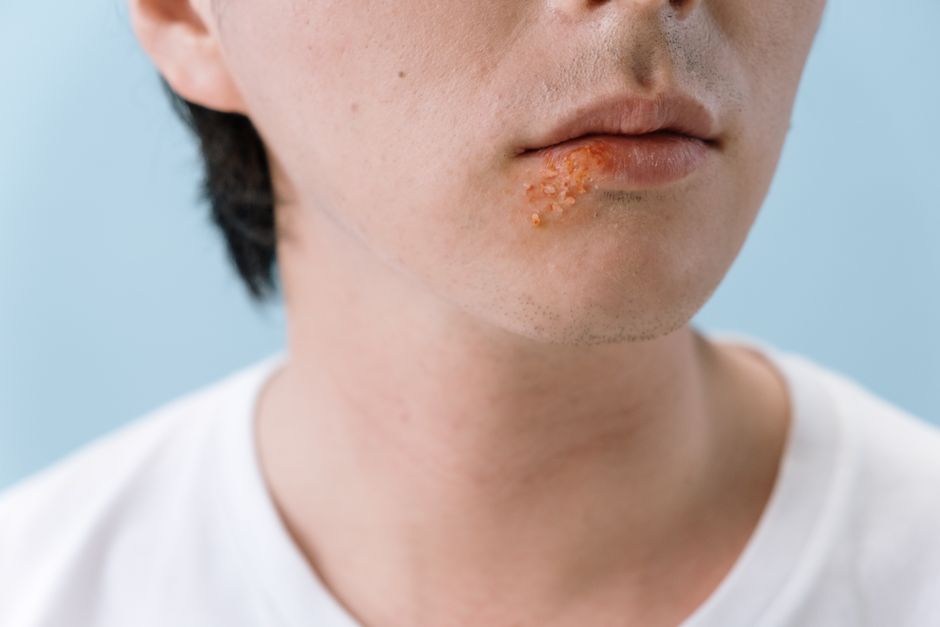
Cold sores have a frustrating habit of returning to the exact same corner of your mouth or edge of your nostril, time after time. This happens because the herpes simplex virus (HSV-1) does not leave your body after the first outbreak. Instead, it travels to a cluster of nerve cells near your spine and stays there, dormant, for the rest of your life. When the virus reactivates, it travels back down the same nerve pathway it used before, which is why the blister almost always appears in the same precise location.
What Causes the Virus to Reactivate in the Same Spot?
The virus hides in a structure called the trigeminal ganglion, a nerve center located near the base of the skull. From this hiding spot, the virus can travel down any of the three branches of the trigeminal nerve that supply feeling to your face. Once a specific nerve branch has been infected, the virus prefers to use that same route again. This is why your cold sore favors one side of your lower lip or the same nostril edge every time.
Reactivation is triggered by a range of physical and emotional stressors. Common triggers include illness with fever, sun exposure, hormonal changes during menstruation, physical exhaustion, and emotional stress. Even minor local trauma, like dental work or chapped lips, can wake the virus. When any of these events occur, the virus multiplies and travels down the nerve fiber to the skin surface, producing the familiar tingling, burning, and eventually the blister.
Why Does the Tingling Start Before the Blister Appears?
The tingling or burning sensation you feel before any visible bump is the virus traveling down the nerve. This phase, called the prodrome, is your body’s early warning system. The nerve itself becomes irritated as the virus moves along it, which creates that distinct localized itch, burn, or electric sensation. This prodrome phase typically begins 12 to 24 hours before the blister forms.
Treating a cold sore during the prodrome phase is significantly more effective than waiting for the blister to appear. Antiviral medications, whether prescription pills or over-the-counter creams, work best when started at the first hint of tingling. Once the blister is visible, the medication has a much harder time stopping the outbreak, though it may still shorten the duration slightly.
Are Recurrent Outbreaks in the Same Spot Dangerous?
Recurrent cold sores in the same location are normal and generally not dangerous for healthy adults. The pattern of returning to the same spot is simply a function of nerve anatomy, not a sign that the infection is worsening or spreading. Most people who carry HSV-1 experience fewer and milder outbreaks over time as their immune system builds a stronger response.
However, there are situations where you should see a doctor. If a cold sore does not heal within two weeks, spreads to other areas like your eyes or genitals, or is accompanied by high fever or severe headache, seek medical attention. Cold sores near the eye are particularly concerning because the virus can cause corneal damage. People with weakened immune systems, such as those undergoing chemotherapy or living with HIV, should also consult a doctor about any outbreak.





Can You Prevent the Virus From Returning to the Same Spot?
You cannot eliminate the virus from your body, but you can reduce the frequency of outbreaks. Identifying your personal triggers is the most effective prevention strategy. If sun exposure triggers your outbreaks, apply lip balm with SPF daily. If stress is your trigger, incorporating regular relaxation practices or physical activity may help reduce outbreak frequency.
For people who experience frequent outbreaks, defined as six or more per year, daily suppressive therapy with antiviral medication is an option. This approach involves taking a low dose of medication every day, not just during outbreaks. Studies show this can reduce outbreak frequency by 70 to 80 percent in many people. Your healthcare provider can help you decide if suppressive therapy makes sense for your situation.
What Treatments Actually Work for a Cold Sore?
Prescription antiviral medications are the most effective treatment. Drugs like acyclovir, valacyclovir, and famciclovir work by stopping the virus from replicating. When taken orally at the first sign of tingling, these medications can shorten an outbreak from roughly 7 to 10 days down to about 4 to 5 days. They may also reduce the severity of the blister.
Over-the-counter creams containing docosanol are also approved for cold sore treatment. These creams are less potent than prescription antivirals but can still shorten healing time if applied early. Some evidence suggests that topical treatments are most effective when combined with oral antivirals, though the benefit of combining them is modest. Pain relief with over-the-counter acetaminophen or ibuprofen can help with discomfort, and applying a cool compress can soothe the area.
When Are You Contagious With a Cold Sore?
You are contagious from the moment the tingling prodrome begins until the sore has completely crusted over and healed. The virus is present in saliva even before the blister is visible, which means you can transmit the virus without knowing you are shedding it. This is called asymptomatic shedding, and it happens intermittently even between outbreaks.
The highest risk of transmission occurs when the blister is present and weeping fluid. During an active outbreak, avoid kissing, sharing utensils, lip balm, towels, or razors. You should also avoid oral sex because HSV-1 can be transmitted to the genital area and cause genital herpes. Once the sore has fully crusted and no longer weeps, the risk of transmission drops significantly, though it never reaches zero.
Do Cold Sores Mean You Have a Weak Immune System?
Having frequent cold sores does not necessarily indicate a weak immune system. Roughly two-thirds of the global population under age 50 carries HSV-1, and many of these people experience recurrent outbreaks. Outbreak frequency is influenced by many factors, including genetics, specific viral strain, and how your individual immune system responds to the virus.
That said, a sudden increase in outbreak frequency or severity can sometimes signal an underlying health change. If you have always had one or two outbreaks per year and suddenly develop monthly outbreaks, it is worth discussing with your doctor. This change does not automatically mean something is wrong, but it warrants a conversation about potential triggers or health conditions that might be affecting your immune response.
Frequently Asked Questions
Why does my cold sore always appear in the exact same spot?
The virus hides in a specific nerve ganglion and always travels back down the same nerve fiber to reach the skin. This is why the blister returns to the identical location each time.
Can I stop cold sores from coming back to the same spot?
You cannot change where the virus reactivates, but daily suppressive antiviral medication can reduce how often outbreaks occur. Identifying and avoiding your personal triggers is also helpful for prevention.
Is it normal to get a cold sore in the same spot every month?
Monthly outbreaks are not typical for most people, though some individuals do experience them. If your outbreaks are that frequent, talk to your doctor about suppressive therapy options.
How long is a cold sore contagious in the same spot?
You are contagious from the first tingling sensation until the sore has completely crusted over and healed. This period usually lasts about 7 to 10 days from start to finish.
