
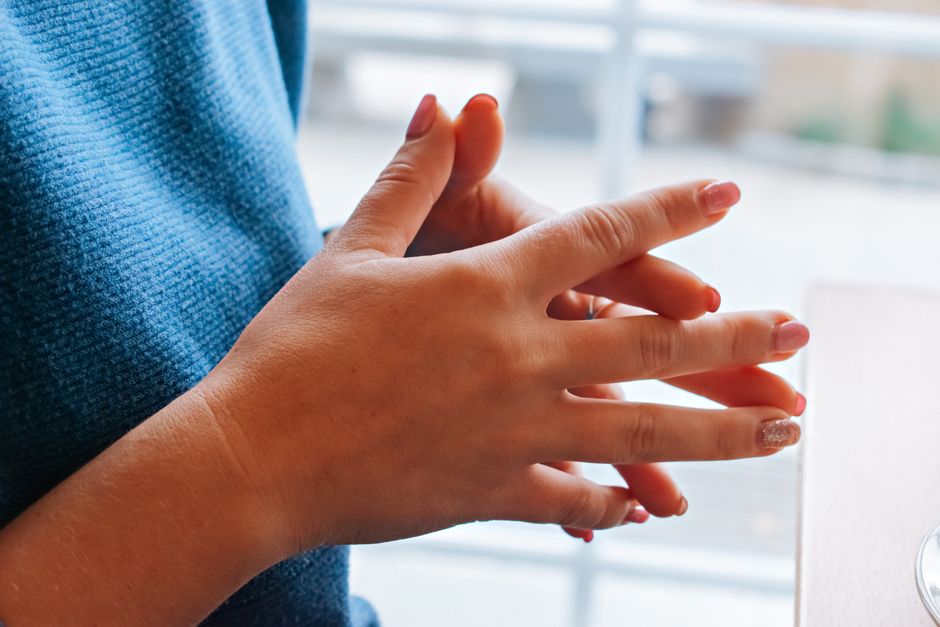
Nails are not a leftover from our evolutionary past. They are a working part of the human body with a clear purpose. Humans have nails because they protect the sensitive tips of the fingers and toes, and they make it easier to grip and manipulate small objects. This is not a cosmetic accident. It is a functional adaptation that has been part of the primate line for tens of millions of years.
What Is the Biological Purpose of Human Nails?
The fingernail is a plate of a tough protein called keratin. The same protein makes up hair and the outer layer of skin. But the nail is built differently. It is hard, dense, and anchored to the nail bed beneath it.
The primary job of the fingernail is to support the fingertip. When you press on a surface, the nail acts as a counterforce. It pushes back against the soft tissue of the finger pad. This makes the fingertip more sensitive and more precise. Without the nail, the fingertip would flatten out too much and you would lose fine touch sensation.
Nails also serve a mechanical role. They allow you to pick up a coin from a flat table, peel a piece of fruit, or scratch an itch. Toenails protect the toes from repeated pressure and friction inside shoes. In short, nails are tools and shields at the same time.
Why Do Humans Have Nails Instead of Claws?
Most mammals have claws. Primates — including humans — have flat nails. The shift from claw to nail happened millions of years ago as early primates adapted to life in trees.
Claws are excellent for climbing trunks and tearing prey. But they interfere with grasping. A wide fingertip with a flat nail can wrap around a branch more completely than a clawed digit can. This wider grip gives primates a stable hold on thin branches and allows for precise hand movements.
This evolutionary trade-off is well documented in the fossil record. Early primate fossils show a transition from claw-like structures to flat nails on the digits. The nail is not a weaker version of a claw. It is a different tool for a different lifestyle — one based on grasping, climbing, and manipulating objects rather than digging or tearing.
The nail also leaves the fingertip pad exposed. This pad is packed with nerve endings. In humans, the fingertip is one of the most sensitive areas of the body. A flat nail keeps that pad available for touch while still providing a hard backing for pressure.
How Do Nails Grow and What Do They Reveal About Health?
Nails grow from a structure called the nail matrix. This is the living tissue hidden under the cuticle at the base of the nail. The matrix produces new nail cells that push forward and harden. The visible part of the nail is actually dead tissue made of compressed keratin.
Fingernails grow at an average rate of about 3 millimeters per month. Toenails grow more slowly — roughly 1 millimeter per month. Growth is faster in younger people and slower with age. This is normal and not a sign of disease.
Nail changes can sometimes point to underlying health conditions. This is a real but often overstated area of medicine. A single white spot or a ridge is rarely meaningful. But certain patterns deserve attention.
Clubbing — where the fingertip enlarges and the nail curves downward — can be associated with lung or heart disease. Spoon-shaped nails that curve upward can indicate iron deficiency. Yellow or thickened nails may point to fungal infection. Dark streaks under the nail should be evaluated by a doctor.
The evidence here is solid but limited. Nail changes are clues, not diagnoses. A doctor looks at the whole picture — medical history, blood tests, and physical exam — before drawing conclusions. No one should self-diagnose based on a nail abnormality alone.




What Do Nails Tell Us About Human Evolution?
Nails are a defining feature of the primate order. Along with forward-facing eyes and opposable thumbs, flat nails help define what it means to be a primate. All primates have nails on at least some digits. Most have nails on all of them.
The presence of nails in all primates — from lemurs to gorillas to humans — tells us this trait appeared early in primate evolution and was strongly preserved. If nails did not provide a survival advantage, natural selection would have removed them. They have been maintained for roughly 50 million years.
This is not just an academic point. It explains why your nails look the way they do. The wide fingertip, the flat nail, and the sensitive pad are one integrated system. They evolved together to support grasping and manipulation. Your hand is a precision instrument, and the nail is part of that design.
Why Do Some People Have Stronger or Weaker Nails?
Nail strength varies widely from person to person. Genetics plays the largest role. Some people simply inherit nails that are thick and resistant to breaking. Others inherit thinner, more flexible nails.
Nutrition matters, but less than marketing suggests. Nails require protein, biotin, iron, and zinc to grow properly. Severe deficiencies in any of these can affect nail health. But for a healthy person eating a varied diet, adding supplements rarely changes nail strength. The evidence for biotin supplements improving nail strength is limited and mostly based on small studies.
Environmental factors matter too. Repeated wetting and drying weakens nails. So does exposure to harsh chemicals like acetone-based nail polish removers. Frequent hand washing — common in healthcare work — can dry out the nail plate and make it brittle.
Age is another factor. Nail growth slows and the nail plate can become thinner over time. This is a normal part of aging, not a deficiency.
The honest position is this: most nail problems are cosmetic and temporary. If your nails break easily, the first step is to protect them from mechanical stress and moisture. If they remain brittle despite good care, a doctor can check for thyroid disease, anemia, or fungal infection.
Should You Cut or File Your Nails in a Certain Way?
How you cut your nails affects their strength. Cutting straight across and then rounding the corners slightly is the standard recommendation. Cutting too far into the corners can cause ingrown toenails, especially on the big toe.
Filing in one direction rather than sawing back and forth can reduce splitting. Keeping nails at a moderate length — not too long and not too short — provides the best protection for the fingertip. Very short nails leave the fingertip pad exposed and reduce the counterpressure that makes gripping precise.
For toenails, the same rules apply. Cut them straight across. Do not round the edges aggressively. This is the simplest way to prevent ingrown toenails, which occur when the nail grows into the surrounding skin.
When Should You See a Doctor About Your Nails?
Most nail changes are harmless. But some warrant a medical evaluation. See a doctor if you notice any of the following:
- A dark streak or band under the nail
- Sudden thickening or discoloration of one or more nails
- Pain, swelling, or redness around the nail
- Nail separation from the nail bed
- Changes in nail shape, such as clubbing or spooning
These signs can indicate infection, injury, or — less commonly — an underlying systemic condition. A dermatologist or primary care doctor can evaluate the nail and determine whether further testing is needed.
Do not ignore a nail that changes suddenly and does not improve. Early evaluation is always better than waiting.
Frequently Asked Questions
Can nails grow back after being completely removed?
Yes, nails typically grow back if the nail matrix is intact. If the matrix is damaged, regrowth may be partial or absent.
Do fingernails grow faster than toenails?
Yes, fingernails grow about three times faster than toenails. Growth rates also slow with age and vary between individuals.
Are white spots on nails a sign of a calcium deficiency?
No, white spots are usually caused by minor trauma to the nail matrix. They are not a reliable sign of any nutritional deficiency.
Can nail biting cause permanent damage?
Chronic nail biting can damage the nail matrix and lead to permanent nail deformity. It also increases the risk of bacterial and viral infections around the nail.
