
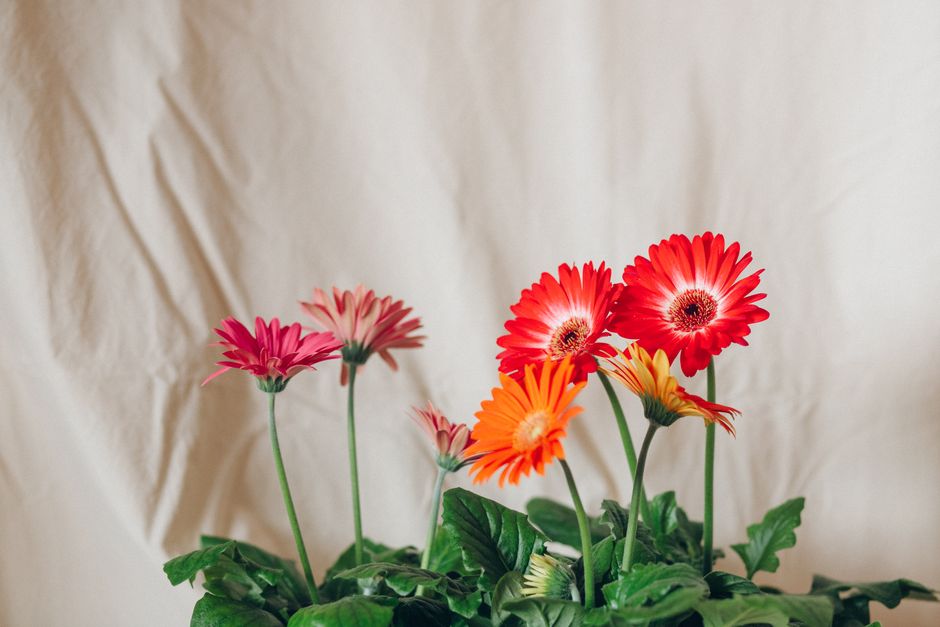
Gerbera daisies droop because the plant is losing water faster than it can replace it, or because the stems themselves have been pinched, kinked, or blocked by bacteria. In a vase, the most common cause is a dirty cut and bacterial growth in the water. In a garden bed, it is usually heat, waterlogged roots, or a plant that has been sitting in the same pot too long. Most drooping is reversible if you catch it early and fix the actual cause rather than just adding more water.
Why Do Gerbera Daisies Droop And How To Fix It?
Drooping is a plumbing problem. Water has to travel from the roots, up through the stem, and out to the petals and leaves. When any part of that chain fails, the flower head loses the internal water pressure that holds it upright. That pressure is called turgor, and it is the only thing keeping a gerbera stem stiff.
There are two broad failure points. Either the roots cannot take up water, or the stem cannot move water to the flower. Those are different problems with different fixes, and mixing them up is why people sometimes water a plant that is actually drowning.
Here is the useful distinction. A plant in soil that droops in the afternoon heat and perks up by evening is usually just transpiring faster than it can drink. A plant that stays limp overnight, when temperatures have dropped, has a real problem. A cut flower that droops within a day of going into the vase almost always has a stem issue, not a water issue.
Why Do Cut Gerbera Daisies Droop In A Vase?
Cut gerberas droop because air or bacteria has blocked the water-conducting tissue inside the stem. Once that happens, no amount of fresh water in the vase will reach the flower head.
Gerbera stems are hollow and soft. When you cut them, the cut surface is an open door. Two things walk through it.
- Air embolisms. If the stem sits out of water for even a short time after cutting, air can be pulled into the hollow channel. That air pocket physically blocks the column of water behind it.
- Bacteria. The sugary water in a vase is a growth medium. Bacteria multiply quickly, and their byproducts plug the cut end of the stem.
There is a third factor that is easy to miss: gerbera stems bend naturally. They are not rigid like a rose stem. A heavy flower head on a soft stem will droop under its own weight if the stem is not supported, even when water flow is fine. This is why florists often run a thin wire up the hollow center of a gerbera stem. It is not a gimmick. The stem genuinely needs the help.
How to revive a drooping cut gerbera
Recut the stem. Use a sharp knife or shears and take off the bottom inch or so at an angle, under running water if you can manage it. Cutting underwater prevents air from being drawn into the stem. Then get it into clean water immediately.
Strip any leaves that would sit below the waterline. Leaves rotting in the vase feed bacteria. Change the water daily if you want the flower to last. A commercial floral preservative helps, but the daily water change matters more than most people expect.
If the flower head itself is still firm and the stem is limp, the wire trick works. Push a thin florist wire up through the hollow stem from the bottom, then gently bend the stem to the shape you want. If the flower head has gone soft and the petals are browning, the blockage has been there too long and the flower will not recover.
Why Do Potted Gerbera Daisies Droop?
Potted gerberas droop for the opposite reasons people usually assume. Overwatering is more common than underwatering, and the symptoms look almost identical.
Gerberas have thick, fleshy roots that store water. They evolved in South Africa in well-drained, sandy soil. They are adapted to dry out between rains. Sitting in consistently wet soil causes those roots to suffocate and rot. A plant with rotting roots cannot take up water even though the soil is soaked. It wilts exactly like a thirsty plant.
So the first thing to check is not the top of the soil but the drainage. Does the pot have a working drainage hole? Is the saucer holding standing water? Is the soil compacted and staying wet for days?
If the soil is soggy and the plant is drooping, the fix is to stop watering and let it dry. If the roots are already brown and mushy, the plant may not recover.
If the soil is dry several inches down and the plant is drooping, that is genuine drought stress. Water thoroughly until it runs out the bottom of the pot, then wait.
A third possibility is heat. Gerberas perform best in full sun with moderate temperatures. In a container, roots get much hotter than they would in the ground. On a hot day, a potted gerbera can wilt in the afternoon and recover by evening. If it recovers on its own, the plant is fine. Move the pot so the root zone stays cooler, or shift it out of the harshest afternoon sun.





Why Do Gerbera Daisies In The Garden Droop?
In garden beds, drooping usually traces back to soil, water, or root health rather than anything happening above ground.
Gerberas need well-drained soil. Heavy clay holds water against the crown and roots. The crown is the point where the stem meets the root system, and it is the plant’s weak spot. If the crown stays wet, it can rot, and crown rot will wilt the whole plant. Once crown rot is advanced, there is no reliable fix. Prevention is the whole game: plant in raised beds or amend heavy soil so water moves through.
Planting depth matters too. The crown should sit at or slightly above the soil line. Burying it invites rot.
If drainage is fine and the plant still droops, consider how long it has been in that spot. Gerberas are often grown as annuals or short-lived perennials. A plant that has been in the same bed for several seasons may be crowded, root-bound, or simply declining. Division or replacement is sometimes the honest answer.
Pests and disease can also cause wilting, but they usually come with other visible signs. Look for discolored leaves, sticky residue, webbing, or spots before assuming a pest problem.
What Does Drooping Tell You About The Roots?
Drooping in a gerbera is most often a message about the roots, whether the plant is in a pot or the ground. The flower head is just the messenger.
Roots do two jobs that matter here. They take up water, and they need oxygen. In waterlogged soil, oxygen is pushed out. The roots cannot breathe, they weaken, and eventually they rot. A rotted root system cannot supply the top of the plant, so it wilts.
This is why the instinct to water a drooping plant can make things worse. If the problem is root rot from too much water, adding more water accelerates the decline. Check the soil before you water, every time. Push a finger in a few inches. If it is wet, do not water.
Healthy gerbera roots are firm and pale. Unhealthy roots are brown, dark, and soft, and they may smell sour. If you slide a potted gerbera out of its container and see mostly brown mushy roots, the plant is in trouble. You can try trimming the damaged roots and repotting in fresh, well-draining mix, but recovery is not guaranteed.
What Actually Fixes A Drooping Gerbera?
The fix depends entirely on which problem you have. Adding water to a drowning plant makes it worse. Recutting a stem that is already blocked will not help.
Work through it in order.
- For a cut flower: recut the stem at an angle under water, remove lower leaves, change the water daily, and add a wire if the stem is soft but the flower head is firm.
- For a potted plant: check drainage first, then check soil moisture a few inches down before deciding whether to water or wait.
- For a garden plant: check that the crown sits at soil level and that water drains away rather than pooling.
- For a plant that wilts only in afternoon heat and recovers by evening: this is normal and usually needs no intervention beyond moderating temperature.
One thing worth saying plainly: there is no product that “revives” a gerbera. The fixes are mechanical and cultural — a clean cut, clean water, correct drainage, and the right amount of sun. Anything sold as a guaranteed revival treatment should be treated with skepticism.
Frequently Asked Questions
Why do my cut gerbera daisies droop so fast?
Cut gerberas droop fast when air or bacteria blocks the water-conducting tissue in the stem, usually within a day or two. Recutting the stem under water and changing the vase water daily slows this down.
Should I water a drooping gerbera daisy?
Only if the soil is dry a few inches down. If the soil is wet and the plant is still drooping, the roots are likely struggling with too much water, and adding more will make it worse.
Can a drooping gerbera daisy recover?
A cut flower can recover if the stem is recut and the flower head is still firm. A potted or garden plant can recover if the cause is heat or temporary dryness, but plants with advanced root or crown rot usually do not.
Why does my gerbera wilt in the afternoon and perk up at night?
This is normal heat stress, not disease. The plant loses water through its leaves faster than it can take it up during peak heat, then rehydrates as temperatures drop.
