
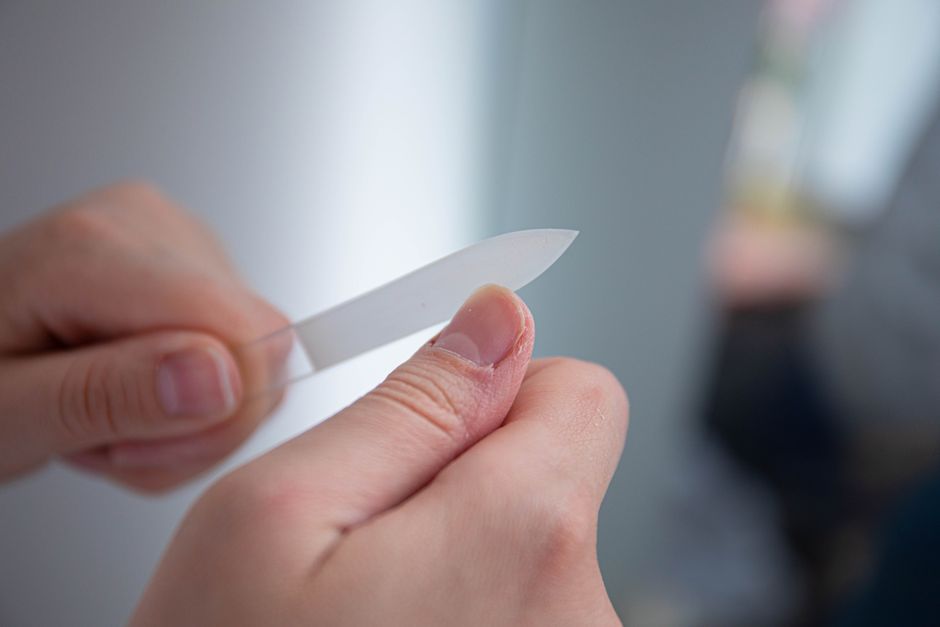
When a fingernail starts bending downward over the fingertip, it usually means the nail is changing shape in response to something happening underneath it. The most common cause is a condition called pincer nail, where the sides of the nail curve inward and the tip dips down. Less often, downward curling is a sign of clubbing, which is linked to lung and heart conditions. A third possibility is a simple age-related change or an injury to the nail bed.
Doctors look at how the curve forms, how long it has been there, and whether other fingers or toes are affected. That pattern points to the likely cause far more reliably than the curve itself.
What Does Downward Nail Curling Actually Look Like?
Nails curve in a few distinct ways, and the shape matters for diagnosis. A pincer nail curves inward from both sides, pinching the nail like a tube. The tip may press into the fingertip, and the sides can dig into the skin. This is a curvature problem, not a growth problem.
Clubbing looks different. The nail flattens and widens, then the tip of the finger swells and the nail bends downward over the rounded fingertip. The angle between the nail and the cuticle changes. Doctors measure this as the Lovibond angle, which is normally about 160 degrees. In clubbing, that angle flattens to 180 degrees or less.
A third pattern is a simple downward droop with no pinching and no fingertip swelling. This is often related to aging, long-term nail damage, or a previous injury. It tends to affect one or two nails and stays stable over time.
Knowing which pattern you have is the first step. The three causes have very different implications, and treating them the same way would be a mistake.
Why Do Fingernails Curl Down? Causes And Diagnosis
Most downward curling comes from one of three root causes: a structural problem in the nail itself, a change in the tissue under the nail, or a systemic condition that affects blood flow and tissue growth. Each one produces a slightly different appearance.
Pincer nail is the most common cause of isolated downward curling. The nail widens at the base and narrows at the tip, curving inward. It can be inherited, or it can develop from pressure from tight shoes (on toenails), arthritis, psoriasis, or a bone spur under the nail. Some cases have no clear trigger.
Clubbing is the cause that gets the most medical attention because it can signal serious illness. The nail bed softens, the fingertip swells, and the nail curves down like the back of a spoon. Clubbing is associated with lung cancer, interstitial lung disease, cystic fibrosis, congenital heart defects, and some gastrointestinal conditions. It is not a diagnosis on its own, but it is a reason to see a doctor.
Age-related changes are common and usually harmless. Over decades, the nail matrix that produces new nail cells can become less efficient. The nail grows more slowly, thickens, and may develop a slight downward curve. This pattern is gradual and affects multiple nails symmetrically.
Other causes include fungal infections that thicken the nail and change its shape, iron deficiency anemia, thyroid disease, and repetitive trauma from typing or manual work. These are less common but worth ruling out.
How Is Pincer Nail Different From Clubbing?
The two conditions are often confused because both involve a downward curve, but they look and behave differently. Pincer nail is a mechanical problem. Clubbing is a tissue problem.
In pincer nail, the nail itself is the issue. The sides curl inward and the tip may pinch. The fingertip looks normal. Pressing on the nail may cause pain because the edges dig into the skin. The condition can affect one nail or several, and it often runs in families.
In clubbing, the fingertip changes first. The tissue under the nail swells and softens, and the nail follows that new shape. The nail bed feels spongy when pressed. The angle between the nail and the cuticle flattens. Clubbing usually affects both hands and often both feet.
A simple test can help tell them apart. Press down on the nail bed. If it feels firm, pincer nail is more likely. If it feels soft and spongy, clubbing is more likely. This is not a diagnosis, but it is a useful clue.





What Conditions Are Linked To Nail Clubbing?
Clubbing is a sign, not a disease. It develops when certain conditions change the tissue at the fingertips. The exact mechanism is not fully understood, but research points to platelet precursors and growth factors that get trapped in the small vessels of the fingers and toes.
Conditions linked to clubbing include:
- Lung cancer, especially non-small cell lung cancer
- Interstitial lung disease and pulmonary fibrosis
- Cystic fibrosis and bronchiectasis
- Congenital heart defects that cause low blood oxygen
- Inflammatory bowel disease, celiac disease, and liver cirrhosis
- Thyroid disorders, particularly Graves’ disease
Clubbing can also be inherited without any underlying disease. This is called familial clubbing and is harmless. The key difference is that inherited clubbing appears early in life and does not progress.
If clubbing develops in adulthood, especially over weeks or months, it needs medical evaluation. The list of possible causes is long, and some are serious.
When Should You See A Doctor About Curling Nails?
See a doctor if the curling is new, is getting worse, or affects multiple nails. A single nail that has always curved slightly is usually not a concern. A nail that starts curling over months is a different story.
Other reasons to seek care:
- The fingertip is swollen, soft, or warm
- The nail is painful or the skin around it is red
- You have trouble breathing, a chronic cough, or chest pain
- The curling is accompanied by fatigue, weight loss, or fever
- The nail is thick, discolored, or crumbling, which may suggest fungal infection
Clubbing that appears suddenly is the most urgent sign. It can develop over just a few weeks in some lung conditions. If you notice it along with breathing problems, get evaluated promptly.
For pincer nail, see a doctor if the pain interferes with daily activities or if the nail is digging into the skin. A podiatrist or dermatologist can assess whether the curve is structural or a sign of something else.
How Are Curling Nails Diagnosed?
Diagnosis starts with a physical exam. A doctor will look at all your nails, not just the one that bothers you. They will check the angle between the nail and the cuticle, press on the nail bed to test for sponginess, and look for swelling at the fingertip.
They will also ask about your history. When did the curling start? Is it getting worse? Do you have any chronic conditions? Have you had lung or heart problems? Do you smoke? These questions help narrow the cause.
If clubbing is suspected, further tests may include:
- Chest X-ray or CT scan to check the lungs
- Pulse oximetry to measure blood oxygen levels
- Blood tests for anemia, thyroid function, and liver or kidney markers
- Echocardiogram if a heart defect is possible
If pincer nail is suspected, the exam is usually enough. In some cases, a doctor may order an X-ray to look for a bone spur under the nail or an underlying bone cyst.
There is no single test for clubbing. It is a clinical sign, meaning it is diagnosed by looking and feeling. The tests are to find the underlying cause, not to confirm the clubbing itself.
What Treatment Options Exist?
Treatment depends on the cause. There is no one fix for curling nails because the reasons vary so much.
For pincer nail, options include:
- Trimming the nail in a way that reduces pressure on the sides
- Using nail braces or splints to flatten the curve
- Applying urea-based creams to soften the nail
- Surgery to remove part of the nail or reshape the nail bed in severe cases
These treatments address the nail itself. They do not fix an underlying systemic condition.
For clubbing, treatment focuses on the underlying disease. If the cause is lung cancer, treating the cancer may reduce the clubbing. If it is a heart defect, surgery may help. In some cases, clubbing does not reverse even after the underlying condition is treated.
For age-related curling, no treatment is needed unless the nail becomes painful or hard to manage. Keeping nails trimmed and moisturized can help.
No clinical guidelines currently exist for reversing clubbing with medication or supplements. Any product claiming to do so is not supported by evidence.
Can You Prevent Fingernails From Curling Down?
There is no proven way to prevent clubbing, because it is a sign of an underlying condition. The best approach is to manage the conditions that can cause it. If you smoke, quitting reduces your risk of lung disease. If you have a chronic lung or heart condition, following your treatment plan helps.
For pincer nail, prevention is more practical. Avoid tight shoes if your toenails are affected. Keep nails trimmed straight across rather than rounded. Treat psoriasis or arthritis if you have them, since both can contribute to nail changes.
For age-related curling, there is no way to stop the process. But you can reduce discomfort by keeping nails short and filing them smooth.
Some people try biotin or other supplements to strengthen nails. The evidence for biotin in healthy people is weak. It may help in specific deficiencies, but it is not a general fix for curling.
Frequently Asked Questions
What does it mean when your fingernails curl downward?
It usually means the nail is changing shape because of a condition called pincer nail or clubbing. Pincer nail is a structural problem, while clubbing is linked to lung, heart, or digestive conditions.
Is downward nail curling always a sign of lung cancer?
No. Clubbing is associated with lung cancer, but it has many other causes, including heart defects, liver disease, and inherited traits. Most cases of downward curling are not cancer.
Can curling fingernails be reversed?
Pincer nail can sometimes be improved with splints, trimming, or surgery. Clubbing may improve if the underlying condition is treated, but it does not always reverse.
When should I worry about my nails curling down?
Worry if the curling is new, getting worse, or comes with breathing problems, fatigue, or fingertip swelling. A single nail that has always curved slightly is usually not a concern.
