
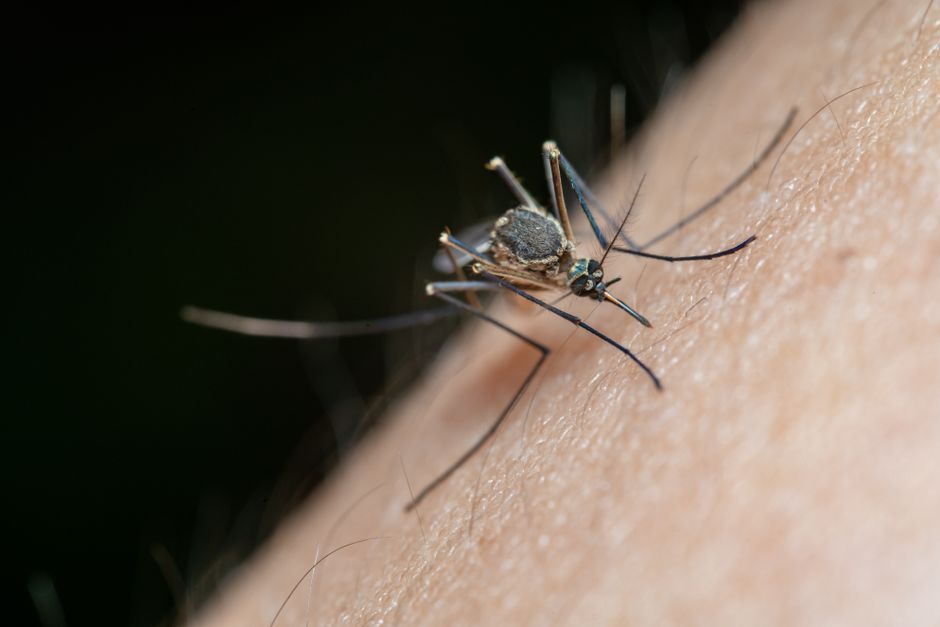
That mosquito bite on your arm is red, swollen, and driving you crazy. The urge to scratch is nearly impossible to ignore. But the itch itself is not caused by the bite. It is caused by your own immune system reacting to the insect’s saliva. When a mosquito, flea, or bed bug bites you, it injects a small amount of saliva into your skin to keep your blood from clotting. Your body recognizes this saliva as a foreign invader and releases histamine to fight it off. That histamine triggers inflammation and sends itch signals to your brain. The bite is the trigger, but your immune response is the reason it itches.
What Happens in Your Skin After a Bug Bite?
The process starts the moment an insect pierces your skin. The insect’s mouthparts break through the epidermis and dermis layers. As it feeds, it releases saliva containing proteins and anticoagulants. These substances keep the blood flowing so the insect can finish its meal.
Your immune system does not wait long to respond. Specialized cells in your skin detect the foreign proteins almost immediately. They release histamine, a chemical that causes small blood vessels to dilate and become leaky. This increased blood flow brings white blood cells to the area to fight off the perceived threat. The result is the classic red bump you see. Fluid leaking from the blood vessels causes the swelling. Histamine also binds to nerve endings in your skin, which is what creates the sensation of itch.
This entire reaction is a type of allergic response. For most people, it is a mild and localized reaction. For others, the immune system overreacts, causing larger welts and more intense itching. The severity depends on your individual sensitivity to the insect’s saliva, not on the size of the insect or how long it fed.
Why Do Bug Bites Itch More at Night?
Many people notice their bites feel worse when they are trying to sleep. This is not your imagination. There are several reasons why nighttime itching intensifies.
Your body’s natural cortisol levels drop in the evening. Cortisol is a hormone that helps control inflammation. Lower levels at night mean less suppression of the inflammatory response, which can make the itching feel stronger. Your body also produces more of certain immune signaling molecules at night as part of its natural repair cycle, which can amplify the itch response.
Distraction also plays a major role. During the day, work, conversations, and activities pull your attention away from the itch. At night, in a quiet, dark room, there is nothing to distract you. Your brain has less sensory input, so the itch signals from your skin become more noticeable. Scratching in your sleep can make the problem worse. You may wake up with broken skin and increased inflammation without even remembering scratching.
How Long Does the Itching Last?
For a typical mosquito bite, the itching usually peaks within the first 24 to 48 hours. After that, the immune response calms down and the itch gradually fades. Most bites resolve completely within three to four days. Some people experience itching for up to a week, especially if they have scratched the area and caused additional irritation.
Different insects produce different reactions. Flea bites often itch intensely for several days. Bed bug bites can take longer to appear in some people, sometimes showing up days after the actual bite. Chigger bites are known for causing intense itching that can last for a week or more because the chigger’s saliva contains digestive enzymes that break down skin cells.
If a bite is still intensely itchy after two weeks, or if it shows signs of infection like spreading redness, warmth, or oozing, it is worth getting medical attention. A secondary bacterial infection from scratching is possible. Scratching breaks the skin barrier, allowing bacteria from your nails or the environment to enter the wound.



Does Scratching Actually Make It Worse?
Scratching provides temporary relief because it creates a mild pain sensation that overrides the itch signals traveling to your brain. This is why it feels so satisfying in the moment. The pain briefly distracts your nervous system from the itch. But the relief never lasts.
When you scratch, you damage the skin cells. This damage triggers additional inflammation and causes your body to release even more histamine and other inflammatory chemicals. The result is a stronger itch signal. You enter a cycle where scratching causes more inflammation, which causes more itching, which makes you want to scratch again. This is commonly called the itch-scratch cycle.
Scratching also risks breaking the skin. Open wounds are vulnerable to bacterial infection. If bacteria enter the broken skin, you can develop cellulitis or other skin infections that require antibiotic treatment. The most effective way to stop the cycle is to avoid scratching in the first place, even though it is difficult.
What Actually Stops the Itch?
Several treatments can interrupt the itch response. The most effective options target the histamine reaction directly.
Oral antihistamines are one of the most reliable options. These medications block the histamine receptors in your body, reducing both the itch sensation and the inflammation. Some antihistamines also cause drowsiness, which can help you sleep through the worst of the itching at night. Non-drowsy versions are available for daytime use.
Topical corticosteroids such as hydrocortisone cream reduce inflammation directly at the bite site. These work by suppressing the local immune response, which lowers both swelling and itch. They are most effective when applied early, before the reaction peaks.
Cold compresses are a simple and effective physical method. Applying a cold pack or ice wrapped in a cloth to the bite for 10 to 15 minutes numbs the nerve endings in the area. This blocks the itch signals temporarily and also reduces swelling by constricting blood vessels.
Some people find relief from calamine lotion or other products containing zinc oxide. These work as mild astringents and can soothe irritated skin, though their effect on the underlying histamine response is minimal. Products containing pramoxine, a topical anesthetic, can also numb the area and provide temporary relief.
Are Natural Remedies Backed by Evidence?
Natural remedies for bug bites are widely shared online. The evidence supporting most of them is limited.
Aloe vera gel has anti-inflammatory properties and can soothe irritated skin. Some research supports its use for minor skin irritation, but it has not been specifically studied for insect bites in large clinical trials. It is generally safe to apply and may provide some cooling relief.
Oatmeal baths are sometimes recommended for widespread itching. Colloidal oatmeal has been shown in some studies to have anti-inflammatory properties that can calm irritated skin. However, for a single localized bug bite, applying an oatmeal paste is unlikely to provide more relief than a cold compress.
Essential oils like tea tree oil or lavender oil are often promoted as natural bite remedies. Tea tree oil has some antiseptic properties, but it can also irritate the skin, especially at full strength. No strong clinical evidence shows that essential oils reduce the histamine response or stop itching more effectively than standard treatments.
Heat treatments using a heated spoon or specialized devices are sometimes recommended. The theory is that brief, intense heat breaks down the proteins in the insect’s saliva, stopping the reaction. Some small studies have shown modest benefit, but results are inconsistent and the devices are not widely available. The evidence is not strong enough to recommend this as a first-line treatment.
One common myth is that applying heat from a hair dryer or hot spoon kills the “venom” in the bite. Insect saliva proteins are not destroyed by the temperatures you can safely apply to your skin. This approach provides temporary relief at best because the heat overrides the itch signals, similar to how scratching works. It does not stop the underlying immune reaction.
When Should You See a Doctor?
Most bug bites are harmless and resolve on their own. Certain situations require medical attention.
Watch for signs of a severe allergic reaction, also called anaphylaxis. Symptoms include difficulty breathing, swelling of the face or throat, dizziness, rapid heartbeat, or hives spreading across large areas of your body. These symptoms require emergency medical care immediately.
Signs of infection are another reason to seek care. If the bite area becomes increasingly red, warm to the touch, swollen, or starts draining pus, a bacterial infection may have developed. Red streaks extending away from the bite are a concerning sign that the infection is spreading through your lymphatic system.
If you have a known allergy to insect stings, especially bee or wasp stings, you should carry your prescribed epinephrine auto-injector and know how to use it. For mosquito bites and other common nuisance bites, severe allergic reactions are rare but possible.
Frequently Asked Questions
Why does scratching a bug bite feel so good?
Scratching creates a mild pain sensation that temporarily overrides the itch signals traveling to your brain. The relief is short-lived because scratching also triggers more inflammation, which leads to more itching.
Is it safe to pop a blister from a bug bite?
No, you should not pop a blister from a bug bite. The blister is a protective barrier formed by your skin, and breaking it opens the area to bacterial infection.
Do mosquito bites itch more the second time you are bitten?
Yes, repeated bites often cause stronger reactions because your immune system becomes sensitized to the mosquito’s saliva. The first bite may produce little reaction, but later bites can trigger more intense itching and swelling.
Can toothpaste stop a bug bite from itching?
No clinical evidence confirms that toothpaste is an effective treatment for bug bites. It may provide a cooling sensation from ingredients like menthol, but it does not address the histamine response causing the itch.
