
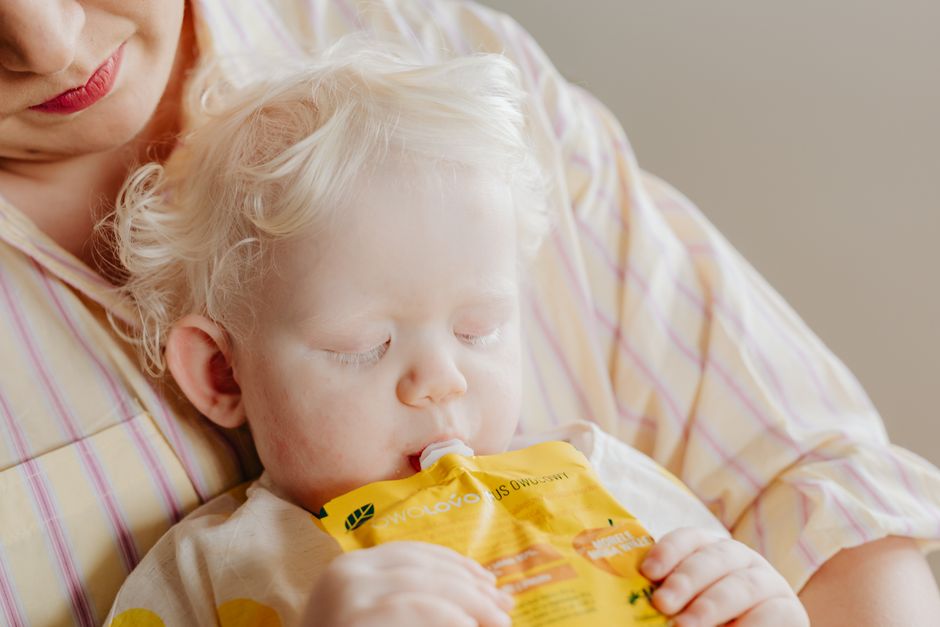
Babies hold food in their mouth for reasons that range from normal development to simple preference. Many are still learning how to move food around with their tongue and coordinate a swallow. Others are teething, tired, distracted, or not quite hungry. Sometimes the food itself is the problem — too chewy, too dry, or unfamiliar. Most of the time this is a phase, not a warning sign.
It helps to know what is typical and what is not. A baby who holds food but eventually swallows it is usually fine. A baby who holds food and then gags, coughs, or turns away may be telling you something different. This guide covers the common causes, the practical tips that help, and the signs that mean you should talk to a pediatrician.
Why do babies hold food in their mouth? The main causes
Oral motor skills develop gradually, and holding food is often part of that learning curve. Chewing and swallowing is not one skill. It is a sequence: the tongue moves food to the side, the jaw grinds it, the tongue gathers it back into a ball, and then the throat takes over. Each step takes practice.
For many babies, holding food is the pause between steps. They are not refusing. They are figuring out what to do next.
Other common causes include:
- Teething discomfort. Gums that ache may make a baby reluctant to chew and swallow. Holding food can be a way of avoiding the pressure.
- Fatigue or distraction. A tired or overstimulated baby may lose focus mid-meal and simply stop the process.
- Low hunger. A baby who just had milk or a snack may hold food without much interest in finishing it.
- Food texture. Dry, stringy, or tough foods take more work. Some babies hold them because they are hard to break down.
- New flavors. Unfamiliar tastes can slow a baby down. Holding food lets them get used to it before swallowing.
- Pouching. Some babies store food in their cheeks as a habit. This is common and usually outgrown.
One clarification worth knowing: holding food is not the same as gagging. Gagging is a protective reflex that pushes food forward when it gets too close to the back of the throat. It is loud and looks alarming, but it is a safety mechanism, not choking. Choking is silent. A baby who is holding food and making noise is generally managing it.
When is holding food a normal part of development?
Holding food is normal during the transition to solid foods, which usually begins around 6 months. At that stage, babies are learning to handle textures for the first time. Some food ends up on the chin, some in the cheeks, and some held in the mouth before it is swallowed. That is expected.
The skill usually improves with practice. Most babies become more efficient eaters over the first year and a half of life as their chewing and tongue control mature. Progress is rarely a straight line. A baby may eat well for a week and then hold food again during a growth spurt, a cold, or a new tooth.
A few patterns suggest normal development rather than a problem:
- The baby eventually swallows the food or spits it out without distress.
- The baby is gaining weight and growing along their expected curve.
- The baby eats a variety of textures over time, even if slowly.
- The behavior comes and goes rather than persisting for weeks.
If those patterns hold, the most useful response is patience. Mealtimes are practice sessions, not tests.
What are the practical tips for a baby who holds food?
Adjust the food before you adjust the baby. Texture is often the simplest lever. If a baby is holding dry or chewy food, softer pieces that mash easily between the fingers may move things along.
Try these approaches:
- Offer soft, graspable pieces. Food that squishes between your thumb and forefinger is easier for a baby to manage.
- Keep portions small. A few pieces at a time is less overwhelming than a full plate.
- Model chewing. Babies learn by watching. Chewing slowly and visibly at the table gives them something to copy.
- Space meals from milk. A baby who is full of milk has less reason to work at solid food.
- Reduce distractions. Turn off screens and keep the table calm. Focus is part of eating.
- Give it time. Rushing a baby through a meal tends to backfire. Let them set the pace.
- Stay calm if they hold food. A relaxed adult face helps a baby stay relaxed too.
One tip that surprises many parents: do not fish food out of a baby’s mouth with your fingers unless there is a real problem. Sweeping the mouth can push food backward and increase the risk of choking. If a baby is breathing, coughing, or making noise, they are moving air. Let them work it out while you stay close.
If a baby consistently holds food and then spits it out, that is still progress. Spitting is a controlled action. It shows the baby is managing the food, not losing control of it.
When should you talk to a pediatrician about food holding?
Talk to a pediatrician if the behavior comes with signs that eating is not working. The concern is not the holding itself. It is what happens around it.
Reach out if you notice:
- Frequent gagging, coughing, or choking during meals.
- Food or liquid coming back through the nose.
- Weight loss, poor weight gain, or falling off the growth curve.
- Refusing most textures for weeks, not days.
- Mealtimes that regularly end in distress for the baby or the family.
- Food held for long stretches and never swallowed.
- Any breathing trouble during or after eating.
Some babies have feeding difficulties that benefit from evaluation by a speech-language pathologist or a feeding specialist. These are not rare, and early support tends to help. A pediatrician can help decide whether a referral makes sense.
Trust your instincts here. Parents often notice something before it shows up on a growth chart. If something feels off, it is reasonable to ask.
What safety steps matter while a baby is learning to eat?
Safety during meals comes down to position, supervision, and food preparation. These are well-established practices, not opinions.
Seat the baby upright in a high chair. Slouching or reclining makes swallowing harder and raises the risk of choking. Stay within arm’s reach for the whole meal. Never leave a baby alone with food, even for a moment.
Prepare food to reduce risk:
- Cut round foods like grapes and cherry tomatoes into small pieces. Whole round foods are a known choking hazard.
- Avoid hard, raw, or sticky foods that are difficult to chew, such as whole nuts, popcorn, and large dollops of nut butter.
- Cook firm vegetables until they are soft enough to mash.
- Remove bones, pits, and tough skins.
Learn the difference between gagging and choking. Gagging is noisy and the baby is moving air. Choking is quiet, and the baby may not be able to breathe, cry, or make sound. If a baby is choking, act immediately and call for emergency help. Every caregiver should know infant choking response, and pediatric first aid courses teach it.
One more point on safety: the evidence on baby-led weaning versus spoon-feeding is mixed. Some studies suggest both approaches can be safe when done carefully, but the research is not strong enough to declare one clearly better. What matters most is supervision, appropriate food texture, and an upright seat, whichever approach a family chooses.
How long does this phase usually last?
There is no fixed timeline, and anyone who gives you one is guessing. Some babies hold food for a few weeks and move on. Others take months to warm up to certain textures. The range is wide.
What tends to matter more than duration is direction. Is the baby gradually eating more variety? Are mealtimes calmer than they were a month ago? Is weight gain on track? Those questions give a clearer picture than counting days.
If holding food persists for many weeks alongside poor weight gain or distress, that is a reason to check in with a pediatrician. If it is fading over time, the phase is likely doing what phases do.
Frequently Asked Questions
Is it normal for my baby to hold food in their mouth and not swallow?
Yes, it is common during the transition to solid foods while babies learn to chew and swallow. It usually improves with practice and time.
Should I take food out of my baby’s mouth if they are holding it?
Usually no, unless there is a real choking concern. Sweeping the mouth with your fingers can push food backward and raise choking risk, so stay close and let the baby manage it.
Can teething cause a baby to hold food in their mouth?
It can. Sore gums may make a baby reluctant to chew and swallow, so they hold food instead. This usually eases once the tooth comes through.
When should I worry about my baby holding food?
Talk to a pediatrician if holding food comes with frequent gagging, coughing, poor weight gain, or refusal of most textures for weeks. These signs suggest an evaluation may help.
