
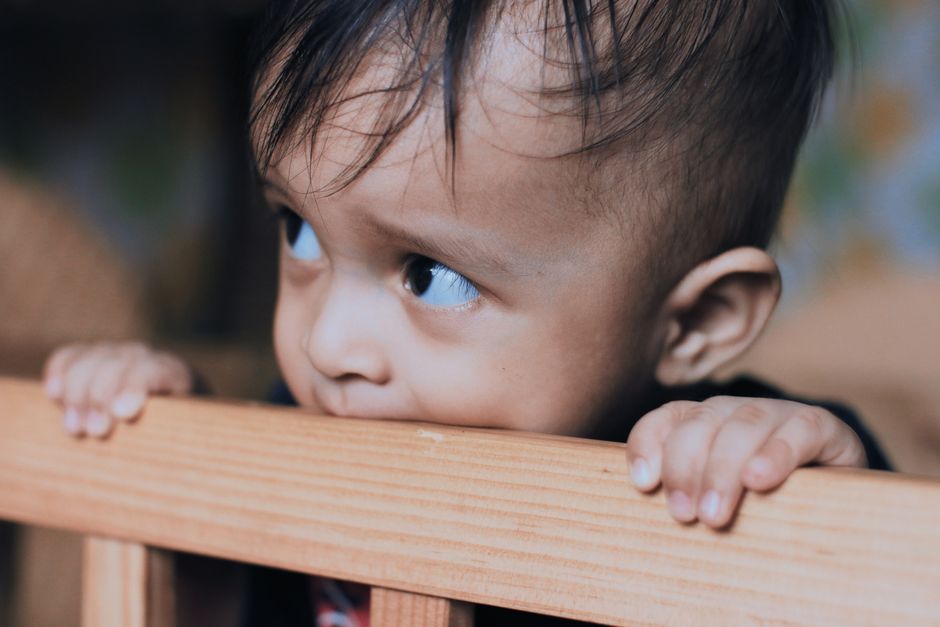
Babies bite faces for reasons that have little to do with teething. Most face-biting happens because a baby is exploring with the mouth, seeking closeness, or managing excitement and big feelings they cannot yet express. Teething can make a baby want to chew, but it does not explain why they aim for your nose, chin, or cheek specifically. Face-biting is usually a normal part of development, not a sign of aggression or a behavior problem.
It can still hurt, and it can catch you off guard. Understanding what is actually driving the behavior makes it easier to respond in a way that helps your baby learn — and keeps your face intact.
Why Do Babies Bite Your Face Its Not Just Teething?
Babies put things in their mouths because the mouth is one of the most sensitive and information-rich parts of their body. A baby’s lips and tongue carry a high density of nerve endings, and mouthing is how they gather information about texture, temperature, and shape. Your face is warm, familiar, and interesting. Biting it is, from the baby’s point of view, a form of investigation.
There is also a social layer. Babies learn early that faces are the most important thing in their world. Faces give them attention, food, comfort, and reactions. A bite to the face reliably produces a big response — a yelp, a laugh, a startled expression. For a baby, that response is fascinating, and it is a form of connection.
Teething does play a role in mouthing and chewing, but it does not explain the targeting. A teething baby will chew on anything within reach. Face-biting that is repeated, deliberate, and aimed at people suggests something beyond gum discomfort. If your baby is biting your face and not the crib rail, the driver is usually social or developmental.
What Is Actually Going On in a Baby’s Brain When They Bite?
Babies bite faces for several overlapping reasons, and most of them are developmental rather than behavioral. The most common drivers are exploration, teething discomfort, excitement, and communication.
Exploration and sensory learning
From around four to six months, babies become increasingly interested in the world and use their mouths to learn about it. Mouthing is a normal sensory tool. Your face is one of the most stimulating objects available — it moves, makes sounds, and reacts.
Teething discomfort
When gums are swollen and tender, counter-pressure feels good. Chewing on something firm provides relief. This is why teething babies chew on their own hands, toys, and sometimes whatever is closest — which may be your shoulder or chin. Teething is a real contributor to mouthing, but it is usually not the whole story behind face-biting.
Excitement and overflow
Young children have limited ways to manage strong feelings. When a baby is very excited, happy, or overwhelmed, the energy has to go somewhere. Biting can be a release valve. Some babies bite when they are joyful, not upset. This can be confusing for parents who expect biting to signal frustration.
Communication before words
Before language develops, babies communicate with their bodies. A bite can mean “I want more attention,” “I’m done,” “I’m tired,” or “I’m overwhelmed.” It is not manipulation. It is a young brain using the tools it has.
Curiosity about reactions
Babies are learning cause and effect. They discover that biting produces a reaction, and they want to see it again. This is normal learning, not mischief.
Is Face-Biting Ever a Sign of Something Concerning?
In most cases, face-biting is a normal developmental behavior that fades as language and self-regulation develop. It is not a sign of aggression in a baby. Babies do not have the social understanding to be aggressive in the way older children or adults are.
That said, there are situations worth discussing with a pediatrician. If biting is frequent, intense, and accompanied by other concerns — such as persistent difficulty with feeding, unusual reactions to sensory input, delayed communication skills, or biting that continues well beyond toddlerhood — it is reasonable to raise it at a checkup. This does not mean something is wrong. It means a clinician can look at the whole picture.
Biting that breaks the skin or draws blood should be cleaned and monitored. Human bites carry a risk of infection, and a bite that breaks the skin is worth a call to your child’s doctor, especially if the area becomes red, swollen, or warm.




How Should You Respond When Your Baby Bites Your Face?
Respond calmly and consistently, and keep your reaction small. A dramatic reaction — a shout, a laugh, or a big expression — can make the behavior more interesting and more likely to repeat. The goal is to teach, not to startle.
A practical approach that many parents and pediatric professionals use:
- Gently move your baby away and say a short, calm phrase like “No biting. Biting hurts.”
- Keep your face neutral and your voice low. Do not lecture a baby.
- Offer an alternative — a teething toy, a soft cloth, or your hand — and say “You can bite this.”
- Redirect to another activity. Babies learn best through repetition and redirection, not explanation.
- Watch for patterns. If biting happens at a certain time — when tired, hungry, or excited — you can anticipate and prevent it.
Consistency matters more than intensity. A calm, repeated response over weeks is more effective than a strong reaction once. It also helps to notice what happens right before a bite. If your baby bites when they are overexcited during play, a short pause can reset the moment.
Does Teething Really Cause Face-Biting?
Teething contributes to mouthing and chewing, but it is rarely the whole explanation for face-biting. A teething baby is uncomfortable and seeks pressure on the gums. That can lead to chewing on whatever is nearby, including a caregiver’s face. But the specific targeting of faces points to social and sensory factors as well.
Teething typically begins around six months, though the timing varies widely. Some babies get their first tooth earlier, some later. If your baby is biting your face and also drooling heavily, chewing on hands, and seeming fussy, teething may be part of the picture. If your baby is happy, engaged, and biting during play, teething is probably not the main driver.
Teething toys that are firm and safe to chew can help. Chilled — not frozen — teething rings are commonly used, though the evidence for how much they relieve pain is limited. Never tie a teething toy around a baby’s neck, and avoid teething necklaces, which carry a strangulation risk and are not recommended by pediatric safety organizations.
When Does Face-Biting Usually Stop?
Face-biting usually decreases as a child’s language and self-regulation develop, often fading during the toddler years. There is no single timeline that applies to every child. Some babies bite for a few weeks; others continue on and off for months.
The trajectory depends on several things: how consistently caregivers respond, whether the child has other ways to communicate needs, and the child’s temperament. Children who are more sensitive to sensory input or who are strongly driven to explore may mouth and bite for longer.
It helps to remember that this is a phase, not a personality trait. Most children stop biting faces once they can use words, gestures, or other tools to get their needs met. If biting is still frequent and intense well into the preschool years, it is reasonable to talk with a pediatrician or early childhood professional.
What About Biting During Breastfeeding or Bottle-Feeding?
Biting during feeding is common and usually temporary. A baby may bite at the end of a feed when they are full, distracted, or uncomfortable. It can also happen when a baby is teething or when milk flow changes.
If your baby bites during breastfeeding, break the suction gently, take a short pause, and then try again. A calm “no” and a brief interruption can help. Some parents find that offering a teething toy before a feed reduces biting. If biting during feeding is persistent or painful, a lactation consultant or your baby’s doctor can help identify what is going on.
For bottle-feeding, check the nipple flow. A nipple that is too slow can frustrate a baby, and one that is too fast can cause them to clamp down. Matching the flow to your baby’s pace can reduce biting.
What Should You Do If Your Baby Bites Other Children?
Biting other children is common in group care settings, especially among toddlers who are still developing language. It is not a sign of a “bad” child. It is a sign that a child is still learning how to manage frustration, excitement, and communication.
If your baby or toddler bites another child, separate them calmly, comfort the child who was bitten, and give a short, simple message: “Biting hurts. We don’t bite.” Then redirect. Avoid shaming or long explanations, which young children cannot process. Work with caregivers to watch for patterns and prevent bites before they happen.
If biting in group care becomes frequent, it is worth talking with the care provider about strategies. Many early childhood programs have consistent approaches that help children learn alternatives.
Frequently Asked Questions
Why does my baby bite my face and not other people?
Your face is likely the most familiar and stimulating thing in your baby’s world, so it draws the most mouthing and exploration. Babies often target the caregivers they are most attached to.
Is face-biting a sign of aggression in babies?
No. Babies do not have the social understanding to be aggressive in the way older children are. Face-biting is usually exploration, excitement, teething, or a way to communicate before words develop.
Should I ignore it when my baby bites my face?
Do not ignore pain, but keep your reaction calm and brief. A short “no biting” and a redirect to a safe teething toy teaches more than a big reaction, which can make the behavior more interesting.
When should I worry about my baby biting?
Talk with a pediatrician if biting is frequent and intense, continues well past toddlerhood, breaks the skin, or comes with other concerns like feeding difficulties or delayed communication. Most face-biting is normal and fades with time.
