
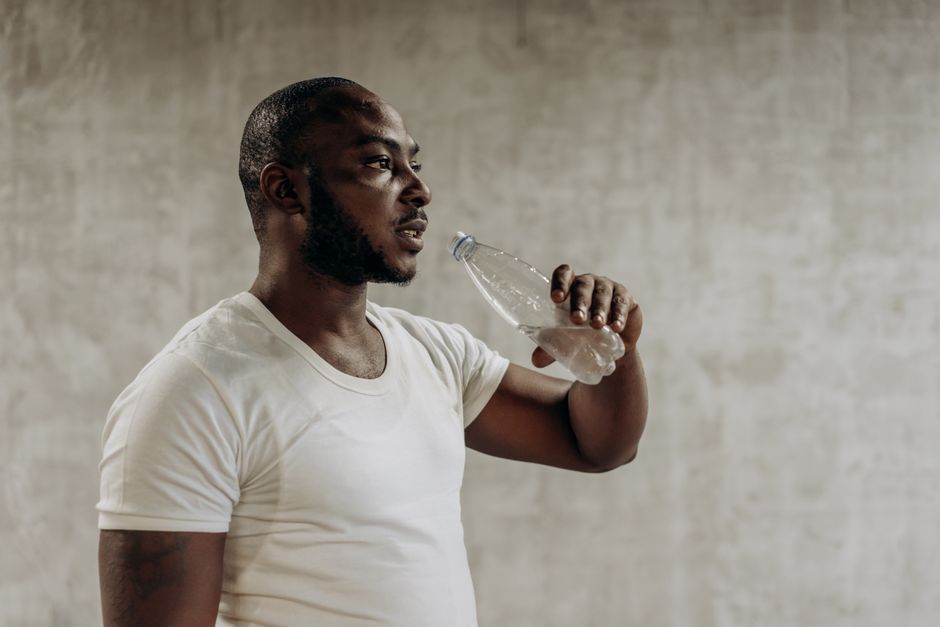
You have seen it mid-race: a cyclist or marathoner grabs a bottle, swishes a mouthful of sports drink, and spits it onto the road. It looks like waste, or maybe a stomach problem. It is neither. This is a deliberate technique called carbohydrate mouth rinsing, and the science behind it is stranger than most people expect. The athlete is not trying to swallow fuel. They are trying to trick the brain into feeling less tired.
The idea rests on a simple fact: the mouth is wired to the brain. Specialized taste receptors on the tongue detect carbohydrate and send signals through nerves to the central nervous system. Those signals appear to reduce perceived effort and help the brain drive the muscles a little harder. Spitting the liquid out lets the athlete get that signal without putting more fluid or sugar into an already full stomach. Whether it actually improves performance is a more complicated question, and the honest answer depends heavily on how long the event lasts.
Why Do Athletes Spit Out Water Carb Rinsing Explained?
The rinse works through a mouth-to-brain pathway, not through digestion. When carbohydrate touches the tongue, receptors there activate and send signals along the facial, glossopharyngeal, and vagus nerves toward the brain. Imaging studies have shown that rinsing a carbohydrate solution in the mouth activates regions of the brain involved in reward and motor control, including areas that other research links to movement and effort.
That is the mechanism. The performance effect is smaller and more conditional. A well-known body of work, including a meta-analysis published in Sports Medicine, found that carbohydrate mouth rinsing produced a modest improvement in exercise performance, mainly in events lasting roughly 30 to 75 minutes. In longer events, the benefit tends to shrink or disappear, because at that point the body genuinely needs fuel and fluid, and a rinse cannot replace either.
So the technique is not a substitute for eating or drinking. It is a small cognitive tool with a narrow window where it seems to help most.
What Is Actually Happening in the Mouth and Brain?
Taste receptors on the tongue are not just for enjoying food. They are part of a sensory system that feeds information to the brain about what is coming into the body. When those receptors detect carbohydrate, the brain responds in ways that appear to influence how hard the effort feels.
Researchers describe this as a central effect, meaning it acts on the brain and nervous system rather than on the muscles directly. The athlete does not get energy from the rinse. Blood glucose does not meaningfully rise from a mouthful that is spat out. What changes is the perception of effort, and in some studies, the drive to keep going.
This is where a common assumption goes wrong. People assume the rinse must deliver some fuel to work. It does not. The effect, when it appears, comes from signaling, not from calories. That distinction matters because it explains why the technique helps in short events and fades in long ones.
Does Carb Rinsing Actually Improve Performance?
The evidence supports a real but modest effect, and it is not universal. Some studies show clear improvement in time-to-exhaustion and time-trial performance. Others show little or no difference. The results vary by event length, by the athlete, and by how the study was designed.
The pattern that emerges across the research is fairly consistent on one point: the benefit is most reliable in shorter, higher-intensity efforts, roughly in the 30 to 75 minute range. In events lasting much longer, the picture changes. Once an athlete has been exercising for a couple of hours, the body is running low on stored carbohydrate, and real fuel matters more than a taste signal.
It is also worth being clear about what the research does not show. No study demonstrates that rinsing is superior to actually consuming carbohydrate when an athlete needs it. The rinse is best understood as an addition to a fueling plan, not a replacement for one. For a short, hard effort where eating solid food or drinking a lot would cause stomach discomfort, a rinse can be a practical option. For a long endurance event, it is not enough on its own.
Why Spit Instead of Swallow?
Spitting avoids putting more into the stomach. During hard exercise, blood flow shifts toward the working muscles and away from the gut. That can make the stomach slow to empty and make athletes feel sloshy, full, or nauseated if they drink too much.
A rinse delivers the taste signal without adding volume. For athletes who are prone to stomach problems during races, or who are already carrying enough fluid, this is the appeal. They get the possible brain benefit without the gut cost.
There is a practical catch. Spitting repeatedly during a race means managing bottles and aim, and it is not always welcome on a crowded course. Many athletes simply take a small sip and swish rather than a full mouthful. The amount needed to trigger the receptors is small.
What Should the Rinse Contain?
Most research uses a carbohydrate solution, typically a sports drink or a glucose solution. The taste and the presence of carbohydrate both appear to matter. Some studies suggest that simply tasting something sweet, even without swallowing, is enough to trigger the response, though the evidence on artificial sweeteners is less clear and results are mixed.
Water alone does not contain carbohydrate, so rinsing with plain water would not be expected to produce the same effect. The point of the technique is the carbohydrate signal, not the moisture.
- Carbohydrate solution: the standard approach in most studies, using a sports drink or glucose-based liquid.
- Duration: a swish of roughly 5 to 10 seconds is typical in research protocols.
- Timing: often done periodically during the event rather than once.
- Water: not a carbohydrate source, so not a substitute for the rinse itself.
These are the conditions used in studies, not a prescription. Individual athletes respond differently, and what works in a lab does not always translate to race day.
Is Carb Rinsing Worth Trying?
It is low-risk and cheap to test, but it is not a magic bullet. The most honest framing is that it may give a small edge in shorter, harder efforts, and it is unlikely to matter much in long events where real fueling is the priority.
Athletes considering it should treat it as one small piece of a larger plan. Sleep, training, pacing, and actual nutrition during long events do far more for performance than a mouth rinse. The rinse is a detail, not a foundation.
It is also worth noting that the response varies between people. Some athletes report a noticeable difference; others notice nothing. That variability is part of what the research shows, and it is a reason to test it in training rather than trying it for the first time on race day.
Frequently Asked Questions
Does carb rinsing actually work?
Research shows a modest performance benefit, mainly in efforts lasting about 30 to 75 minutes. The effect is smaller or absent in longer events where real fuel matters more.
Why do athletes spit out sports drink instead of swallowing it?
Spitting delivers the carbohydrate taste signal to the brain without adding fluid or sugar to a stomach that may already be full or sensitive during hard exercise.
Can I rinse with water instead of a sports drink?
Water contains no carbohydrate, so it would not be expected to trigger the same response. The technique relies on the carbohydrate signal, not on moisture.
How long should I swish the drink in my mouth?
Most research protocols use a swish of roughly 5 to 10 seconds. This reflects study conditions rather than an established recommendation for every athlete.
