
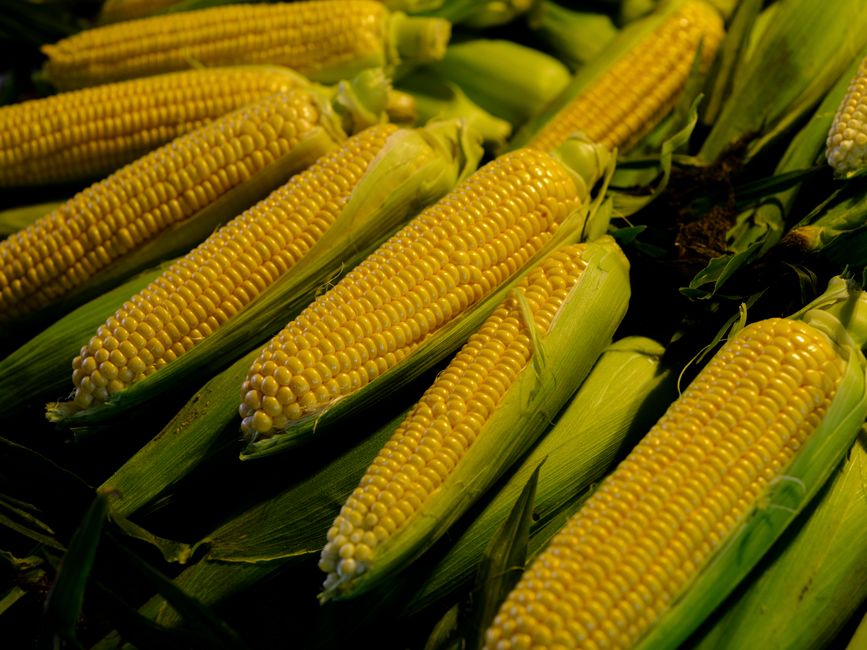
You eat corn on the cob at a summer cookout. The next day, you see yellow kernels in the toilet. Nothing looks digested. That can be alarming, but it is normal. The human body can digest most of a corn kernel. What it cannot break down is the tough outer shell, and that shell is what passes through intact. The bright yellow bits you see are the hulls of kernels, not whole kernels that failed to digest.
This is one of the most common food questions people ask, and the answer comes down to a specific plant fiber called cellulose. Humans do not make the enzyme needed to break it apart. Corn is not unusual in that respect. Every plant food you eat contains some fiber your body cannot digest. Corn just makes the result easy to see.
Why Can’t Our Bodies Digest Corn?
Digestion depends on enzymes, and enzymes are picky. Your digestive tract produces enzymes that break starches, fats, and proteins into pieces small enough to absorb. It does not produce cellulase, the enzyme that dismantles cellulose.
Cellulose is a carbohydrate built from long chains of glucose, the same sugar your body uses for fuel. The difference is how the glucose units are linked together. Human digestive enzymes can snap certain chemical bonds between sugars. The bonds in cellulose are a different shape, and our enzymes cannot grip them. So the cellulose passes through the stomach and small intestine essentially unchanged.
The outer layer of a corn kernel, called the pericarp, is especially rich in this tough fiber. That layer is what survives the trip. The softer inner part of the kernel — the starchy endosperm — is digestible and gets broken down normally. So a kernel in the toilet is usually an empty shell, not a kernel your body ignored.
There is a useful detail here. Chewing matters more than most people realize. A kernel swallowed whole has its starchy center sealed inside the hull, so digestive enzymes have less surface to work on. Chewing well breaks the hull open and lets more of the digestible part be reached.
Is Corn Actually Hard to Digest?
Corn is not hard to digest in any special way. It is a normal plant food with a mix of digestible starch and indigestible fiber, like beans, whole grains, and many vegetables.
Most of a corn kernel is starch, and starch is digested efficiently. The fiber portion — the hull — is not digested by you, but it is not wasted. It travels to the large intestine, where gut bacteria ferment some of it. That fermentation produces short-chain fatty acids, which the cells lining your colon use for energy. This is a normal and beneficial process, not a sign of trouble.
So the honest framing is this: corn is partly digested. The starch is absorbed. The fiber is not, and that is true of fiber from every plant source. Corn simply leaves visible evidence of the fiber part, which most foods do not.
Why Do I See Whole Kernels in My Stool?
Seeing intact-looking kernels is about chewing and speed of transit, not a digestive disorder. The kernels you notice are the fibrous hulls, and they look whole because the hull resists breakdown.
Several everyday things make this more noticeable:
- Swallowing kernels whole. Less chewing means the starchy interior stays protected from enzymes.
- Eating fast. Rushed eating tends to mean bigger pieces reach the stomach.
- Large portions. More corn in means more hulls out.
- Normal gut transit. Fiber moves through at its own pace, and some of it always arrives intact.
This is not a sign that your body is failing to absorb nutrients. It is a sign that you ate a plant with a tough outer coat. The same thing happens with other high-fiber foods, such as the skins of beans or the strings on celery — you just do not usually inspect them.
Is It Normal to See Corn in Your Stool?
Yes. Seeing corn in stool is common and generally not a cause for concern. It reflects the fiber content of the food, not a problem with your digestion.
What matters is not whether you see corn. What matters is whether you have other symptoms. Occasional undigested food in stool is normal. Persistent undigested food alongside diarrhea, weight loss, abdominal pain, or changes in bowel habits is a different situation and worth discussing with a clinician.
It is also worth knowing that seeing food in stool does not by itself mean you have a malabsorption problem. Malabsorption is a clinical diagnosis based on a pattern of symptoms and testing, not on spotting a kernel. If your digestion otherwise feels fine, corn in the toilet is not evidence of anything wrong.
Does Cooking Corn Make It Easier to Digest?
Cooking softens corn and can make it easier to chew and break down, but it does not remove the cellulose. Heat can break apart some of the starch and soften the kernel’s structure, which helps your teeth and enzymes do their work.
Even thoroughly cooked corn still contains its fibrous hull, so some of it will still pass through. Cooking changes how easily the kernel comes apart in your mouth. It does not give your body a new enzyme. This is why cooked corn can still show up in stool, though often in smaller or more broken pieces if you chew well.
Processing corn into cornmeal, masa, or corn flour changes things more substantially. Grinding breaks the hull into tiny fragments and exposes far more starch, which is why products made from ground corn are digested quite differently from whole kernels.
Does Corn Cause Digestive Problems for Some People?
Corn can cause gas and bloating in some people, mostly because of its fiber content. Fiber is fermented by gut bacteria, and that fermentation produces gas. This is a normal response to fiber from any source.
Some people notice more discomfort with corn than with other foods. The reasons vary and are not always clear. A large portion of corn, eaten quickly, can produce more gas than a small amount. Individual tolerance to fiber differs widely from person to person.
Corn is also a common allergen, though true corn allergy is uncommon. Corn allergy is distinct from intolerance. An allergy involves an immune response and can cause symptoms like hives, swelling, or breathing difficulty, which require medical attention. If you suspect a food allergy, that is a conversation for a clinician, not something to self-diagnose.
For most people, corn is a normal part of a varied diet. The fiber it provides is part of what makes whole grains and vegetables useful. If corn consistently causes significant discomfort, it is reasonable to mention it to a doctor rather than assume it is harmless or assume it is serious.
The Bottom Line on Digestion
Your body digests most of a corn kernel. The part that passes through is the cellulose-rich hull, and humans lack the enzyme to break cellulose down. That is true of all plant fiber, not just corn.
Seeing corn in your stool is normal. It is a visible reminder of the fiber in your diet, not a warning sign. Chewing well reduces how much you notice. If you have ongoing digestive symptoms beyond the occasional kernel, that is worth a conversation with a healthcare professional.
Frequently Asked Questions
Why does corn come out undigested?
The tough outer hull of the kernel is made largely of cellulose, which human digestive enzymes cannot break down. The softer starchy inside is digested, but the hull passes through intact.
Is it bad if I see corn in my poop?
No, it is common and generally not a concern. It reflects the fiber in corn, not a digestive problem, unless it comes with other symptoms like diarrhea, pain, or weight loss.
Can humans digest corn at all?
Yes, humans digest most of the kernel, including its starch. Only the fibrous hull resists digestion, and that fiber is partly fermented by gut bacteria in the large intestine.
Does chewing corn help you digest it?
Chewing well breaks open the hull and exposes more of the starchy interior to digestive enzymes. It can reduce how many intact-looking kernels you notice later.
