
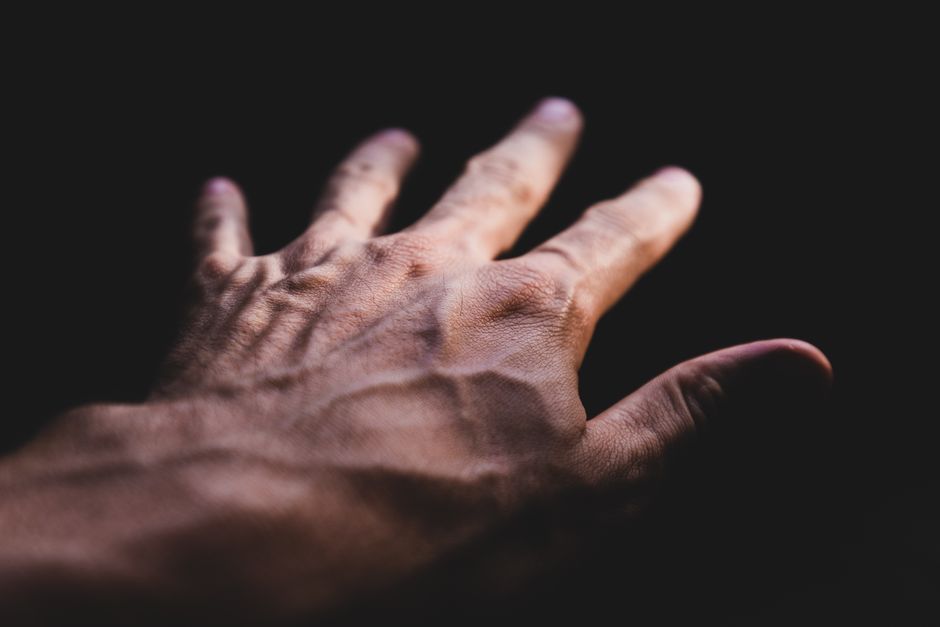
You look at your wrists or the back of your hands and see a map of blue and green lines under the skin. For most people, this is completely normal. Visible veins are usually just a sign that your skin is thin enough, or your body fat is low enough, for the blood vessels beneath to show through. The color you see is not actually blue blood — it is the way light scatters through your skin and reflects back to your eye. In nearly all cases, this is harmless anatomy doing exactly what it is supposed to do.
What Causes Veins to Show Through the Skin?
Veins are blood vessels that carry blood back to the heart. They sit in a layer of tissue beneath the skin, and how clearly you can see them depends on a few physical factors. The most important is the thickness of your skin and the layer of fat just under it. Where skin is naturally thin — like the backs of your hands, your wrists, your ankles, and your chest — veins are closer to the surface. With less tissue covering them, they become more visible.
Body fat percentage matters too. People with lower body fat have less padding between the skin and the veins. This is why athletes and people who have lost a significant amount of weight often notice more visible veins. It is not a sign of poor health. It is simply a structural difference.
Genetics also plays a role. Some people are born with thinner skin or veins that sit slightly closer to the surface. If your parents had visible veins, you likely will too. Age is another factor. As you get older, skin naturally loses collagen and elasticity, becoming thinner and more transparent. Veins that were hidden in your twenties often become noticeable in your forties and fifties.
Why Do Veins Look Blue or Green If Blood Is Red?
Blood inside your veins is always red. Oxygen-rich blood is bright red, and oxygen-poor blood is a darker, deeper red. Neither is blue. The blue or green appearance is an optical effect caused by how light travels through your skin.
Light penetrates the skin and gets absorbed and scattered. Red light travels deeper into the tissue, while blue light is scattered closer to the surface. When you look at a vein, you are seeing the light that bounces back to your eye. The vein itself absorbs some of the red light, so the light that returns appears more blue or green. The effect is stronger in people with lighter skin tones. In darker skin, more pigment absorbs the light, making veins harder to see even when they are close to the surface.
This is a well-established principle of optics, not a myth. The idea that deoxygenated blood is blue is false. It comes from medical diagrams that color veins blue to distinguish them from red arteries, and that convention got confused with reality.
When Are Visible Veins a Sign of Something Else?
In most cases, visible veins are cosmetic and harmless. But there are situations where they signal an underlying issue. The key difference is whether the veins are new, painful, or accompanied by other symptoms.
Spider veins are small, thin veins that appear close to the surface, often on the legs or face. They look like red, blue, or purple webs. They are common and usually harmless, though they can cause mild aching in some people. Varicose veins are larger, bulging veins that often look twisted or rope-like. They develop when the one-way valves inside the veins stop working properly, allowing blood to pool. This is a medical condition called chronic venous insufficiency. It is more than a cosmetic concern — it can cause pain, swelling, a heavy feeling in the legs, and skin changes.
Sudden, prominent veins on the chest, abdomen, or arms can occasionally point to a circulation problem. If a vein appears suddenly and is hard, tender, or warm to the touch, that could be a blood clot, which requires prompt medical attention. Visible veins alone are rarely a reason for concern, but visible veins plus pain, swelling, or skin discoloration are worth a doctor’s visit.





Can Exercise or Heat Make Veins More Visible?
Yes, and this is normal physiology. When you exercise, your muscles need more oxygen, so your heart pumps more blood. Veins expand to carry the increased volume, and the increased pressure pushes them closer to the skin. This is why bodybuilders and athletes have pronounced veins during and immediately after a workout. The effect fades as your heart rate returns to normal.
Heat does the same thing. Warm temperatures cause blood vessels to dilate, or widen, as part of your body’s cooling system. More blood flows near the surface to release heat, which makes veins look larger and more prominent. This is why veins are more visible in summer, after a hot shower, or after a sauna. Cold has the opposite effect — vessels constrict, and veins become less visible.
Dehydration can also make veins more visible, though this sounds counterintuitive. When you are dehydrated, your blood volume drops and your skin becomes less elastic. The veins sit closer to the surface because the tissue around them is less plump. This is why phlebotomists often ask people to drink water before a blood draw — well-hydrated veins are actually easier to find because they are fuller and firmer.
What Is the Difference Between Visible Veins and Varicose Veins?
Visible veins are normal anatomy. Varicose veins are a medical condition. The distinction matters because the treatment and the risks are different.
Normal visible veins are flat or only slightly raised. They do not cause pain. They do not change over time in a dramatic way. They are simply the natural result of your skin thickness, body composition, and genetics.
Varicose veins are enlarged, swollen veins that bulge above the surface of the skin. They develop when the valves inside the vein that prevent backflow stop working. Blood pools in the vein, causing it to stretch and widen. Over time, this can lead to leg swelling, aching, itching, and skin changes around the ankle. In more advanced cases, the skin can become discolored or develop ulcers.
Spider veins are a milder version of the same problem. They are small, dilated blood vessels near the surface, and they rarely cause symptoms beyond appearance. Both spider veins and varicose veins are more common in women, and risk increases with age, pregnancy, prolonged standing, and a family history of the condition.
Are There Any Health Risks From Having Visible Veins?
For the vast majority of people, no. Visible veins on the hands, arms, chest, or legs are a cosmetic feature, not a health problem. They do not increase your risk of blood clots, circulation problems, or any other medical condition. They are not a sign of poor fitness or poor health.
The situation changes if the veins are varicose. Varicose veins are associated with a slightly higher risk of blood clots, though the overall risk is still low. The most serious complication is a condition called superficial thrombophlebitis, where a blood clot forms in a vein just under the skin. It causes pain, redness, and a firm cord-like feel along the vein. This is different from deep vein thrombosis, which is a clot in a deeper vein and a more serious emergency. Varicose veins can also lead to skin changes and ulcers over time if the underlying valve problem is not addressed.
If you have visible veins that are not painful, not swollen, and not changing, there is no medical reason to worry. If you have veins that are bulging, tender, or accompanied by leg swelling, that is worth a medical evaluation. The evaluation is simple — a doctor can usually tell the difference between normal visible veins and venous disease with a physical exam and, if needed, an ultrasound.
Frequently Asked Questions
Can visible veins be a sign of poor circulation?
Not by themselves. Visible veins usually mean your skin is thin or your body fat is low, not that your circulation is impaired. If you have leg swelling, pain, or skin discoloration along with visible veins, that is a different situation and worth a medical check.
Why are my veins suddenly more visible than before?
Sudden changes often come from weight loss, increased exercise, warmer weather, or normal aging. If a vein appears suddenly and is painful, hard, or warm, contact a doctor because that could be a blood clot.
Can you make veins less visible?
Yes, but there is no medical need to do so. Gaining weight, staying out of heat, and avoiding dehydration can make veins less noticeable. For varicose or spider veins, treatments like sclerotherapy or laser therapy are available, but these are cosmetic procedures for people who want them.
