
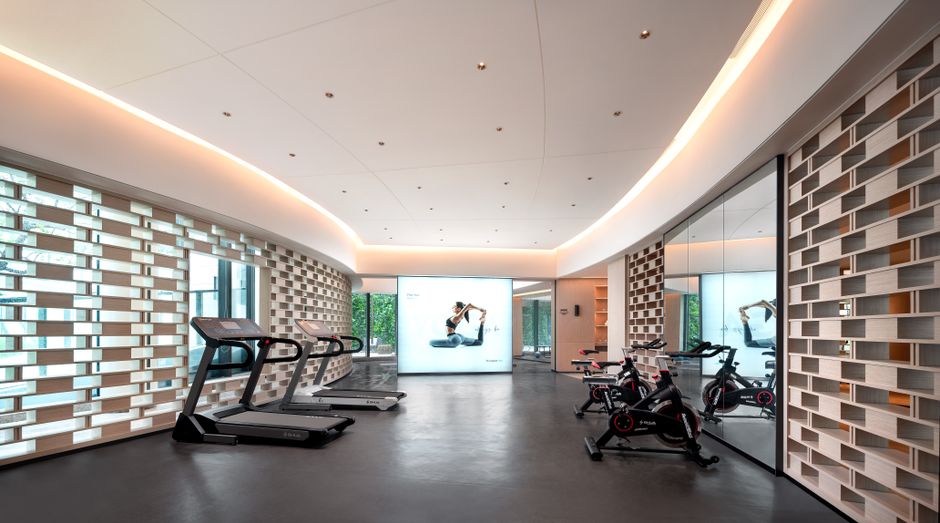
You have logged miles on the treadmill without much trouble, but the moment you take the same pace outdoors, your legs feel heavy and your breathing gets ragged. The short answer is that treadmill running and outdoor running are different physical tasks. The belt moves under you, the surface is flat and predictable, and your body works less to move itself forward. Outdoors you push your own weight, manage changing terrain and weather, and set your pace without a machine to pace you. Same effort on paper, different demands on your body.
Why Can I Run On A Treadmill But Not Outside?
The treadmill does part of the work for you. On a moving belt, your foot lands and the ground slides backward underneath it. That means you do not have to generate all the force needed to move your body forward through space. Outdoors, every step has to propel your entire body mass against a stationary surface, and against air resistance.
There is a second factor that gets overlooked. Treadmill running is mechanically repetitive. The belt surface is uniform, and most people settle into a fixed stride. Outdoor running throws variation at you constantly — camber, roots, curbs, small hills, and the need to steer. Your muscles, tendons, and joints handle a wider range of loads. If your training has been almost entirely on the belt, those tissues are simply less prepared for the outdoor version of the movement.
Pacing is the third piece. On a treadmill, the belt sets your speed whether you feel good or bad. Outside, most people unconsciously run faster than they do indoors, especially at the start. That early speed can make a pace that felt comfortable on the belt feel hard within a few minutes.
Does The Treadmill Actually Make Running Easier?
At the same reported speed and zero incline, running outdoors generally costs more energy than running on a treadmill. This is well established in exercise physiology. Two things explain most of it.
First, air resistance. Outdoors, you are moving through air that pushes back. Indoors, the air is still and you are not moving through space in the same way. The faster you run, the more this matters.
Second, the belt effect. The moving surface reduces the demand on your muscles to push you forward. Your legs still cycle through the motion, but the ground is helping.
A commonly cited workaround is to set the treadmill to a 1 percent incline to better match the effort of outdoor running. Some studies support this as a rough equivalent for certain runners, but the exact number varies with speed, body size, and running form. Treat it as a reasonable adjustment, not a precise conversion.
Is Outdoor Running Harder On Your Body?
Outdoors, the load is different in kind, not just in amount. The surface is not perfectly level or uniform. Your foot may land on a slight slope, a patch of gravel, or a curb. Each of these requires small corrections from your ankles, knees, and hips.
This is not automatically bad. Variation in load is part of how tissue adapts and gets stronger. But it is a demand your body has to be ready for. If you have built your fitness almost entirely on a flat belt, the transition to outdoor running asks your stabilising muscles and connective tissue to do more than they have been doing.
Downhill running is a specific example. It produces more eccentric loading on the quadriceps, which is the type of muscle action that causes soreness. Treadmill running at zero incline does not prepare you for this. A gradual introduction to hills is the usual way people manage it.





Why Does My Pace Feel So Different Outside?
Your pace feels different outside for two reasons that stack on top of each other.
First, the physical demand is genuinely higher at the same speed, as covered above. Second, most people do not hold the same speed outdoors that they set on the belt. Without a machine controlling the pace, it is easy to start faster than intended.
There is also a feedback difference. On a treadmill, you can watch the numbers and adjust in real time. Outside, you rely on how you feel or on a watch. If you are used to the belt setting the pace, your sense of effort outdoors may be poorly calibrated at first.
GPS watches add their own wrinkle. GPS pace readings can lag or jump, especially under trees or between buildings. That can make your pace feel erratic even when your effort is steady.
What About Breathing And Air?
Breathing usually feels harder outdoors, and there are a few ordinary reasons for this.
Indoor air is often cooler and more humid than outdoor air in winter, or the reverse in summer. Temperature and humidity both affect how hard breathing feels and how well you regulate heat. Running outdoors in heat or cold adds a load the treadmill does not.
Allergies are another factor. Outdoor pollen exposure can make breathing feel more laboured for people with seasonal allergies, even if their fitness is unchanged. This is a real physiological effect, not a lack of fitness.
Air pollution can also matter in some locations and at some times. The evidence on how much this affects recreational runners is mixed and depends heavily on local air quality, so it is not something to generalise about.
How Do You Make The Transition To Outdoor Running?
The main principle is to reduce the outdoor demand at first, then build it. A few practical adjustments help most people.
- Start with shorter outdoor runs than your usual treadmill distance, and accept a slower pace.
- Use walk breaks if needed. There is no rule that says you have to run continuously.
- Add a small incline on the treadmill (around 1 percent) if you want it to feel closer to outdoor effort.
- Introduce hills gradually rather than all at once.
- Run by feel or by effort at first, not by a target pace.
- Give yourself several weeks of outdoor running before expecting the same pace to feel easy.
The timeline varies a lot between people. Some adapt within a few weeks; others take longer, especially if they are new to running or returning after a break. There is no standard number, and anyone who gives you one is guessing.
Is One Better Than The Other?
Neither is better in general. They are different tools.
The treadmill is useful for controlled pacing, for running in bad weather or at night, and for people who want to avoid traffic or uneven ground. It is also easier on the body in some ways because the surface is uniform.
Outdoor running gives you terrain variation, fresh air, and the mental engagement of moving through a changing environment. Many runners find it more enjoyable, which matters for consistency.
The honest position is that both can build fitness. The problem is not the treadmill. The problem is expecting outdoor running to feel identical when it is a different task.
Frequently Asked Questions
Why can I run on a treadmill but not outside?
Treadmill running is mechanically easier because the belt moves under you and there is no air resistance. Outdoors you have to propel your own body against a stationary surface, which requires more work at the same speed.
Is running on a treadmill the same as running outside?
No. At the same speed, outdoor running generally costs more energy because of air resistance and the lack of a moving belt. The surfaces and terrain also differ, which changes the load on your muscles and joints.
Does treadmill running make you less fit for outdoor running?
It builds cardiovascular fitness, but it does not fully prepare your muscles and connective tissue for outdoor terrain. A gradual transition with shorter outdoor runs and slower pacing is the usual approach.
Should I set the treadmill to an incline to match outdoor running?
A 1 percent incline is often used as a rough adjustment to better match outdoor effort, though the exact number varies with speed and running form. It is a reasonable starting point, not a precise conversion.
