
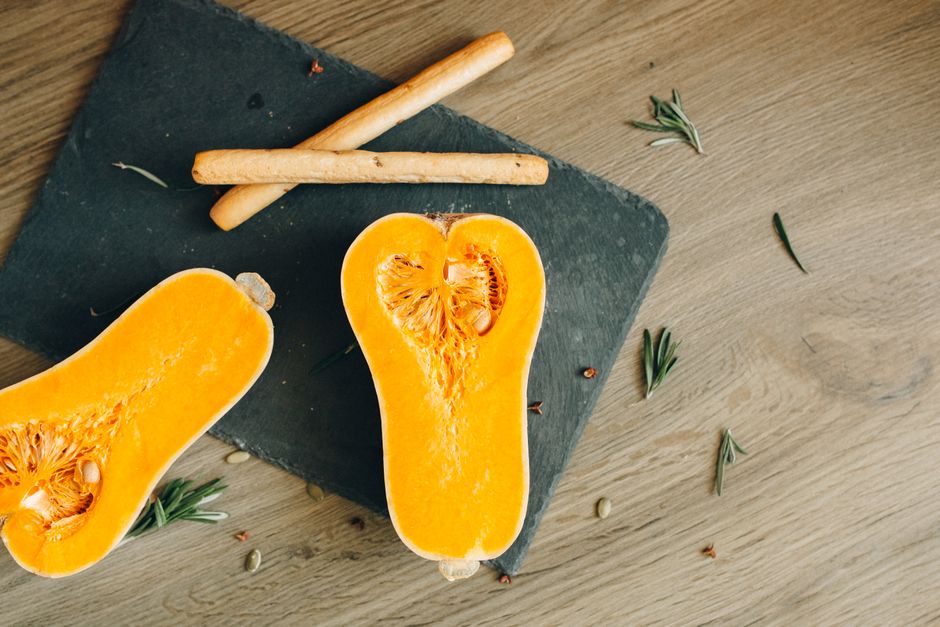
Butternut squash does not dry out your skin. No compound in squash pulls moisture from the skin, and eating it does not cause dryness. What actually happens is that people who eat a lot of it — or who are sensitive to the carotenoids it contains — sometimes notice dry, flaky, or orange-tinted skin and assume the squash is the cause. The real explanation usually sits somewhere else: a dietary pattern that crowds out fats, a genuine skin condition, or a buildup of vitamin A precursors that changes skin color without drying it.
Does Butternut Squash Actually Dry Out Skin?
There is no established mechanism by which butternut squash causes dry skin. It is roughly 90 percent water, contains no known drying compounds, and is not classified as a diuretic food in any clinical sense.
The confusion likely comes from two separate things getting mixed together. First, butternut squash is very high in beta-carotene, a pigment the body converts to vitamin A. Eating large amounts over weeks can tint the skin yellow-orange — a harmless condition called carotenemia. Carotenemia changes color, not moisture. The skin does not become dry or flaky from it.
Second, some people who load up on squash are also following low-fat or restrictive eating patterns. Dietary fat is needed to absorb fat-soluble vitamins, including vitamin A. A very low-fat diet can leave skin drier over time, but the squash is not the culprit — the missing fat is.
If your skin is genuinely dry, the squash on your plate is not the place to start looking.
What Are the Real Causes of Dry, Flaky Skin?
Dry skin — the medical term is xerosis — has a short list of well-understood causes. Almost all of them have nothing to do with squash.
- Environment: Cold air, low humidity, and indoor heating pull moisture from the skin surface. This is the most common reason dry skin worsens in winter.
- Harsh soaps and hot water: Both strip the skin’s lipid barrier, the oily layer that holds water in.
- Aging: Sebum production and barrier lipids decline with age, which is why dryness becomes more common after 40.
- Underlying conditions: Eczema, psoriasis, thyroid disorders, and diabetes can all present with dry skin.
- Medications: Diuretics, retinoids, and some cholesterol and blood pressure drugs list dry skin as a known side effect.
- Nutritional gaps: Low intake of essential fatty acids, zinc, or vitamin A can affect skin, though true deficiency is uncommon in people eating a varied diet in the US.
Notice what is missing from that list: any vegetable. If you are eating squash regularly and your skin is dry, the squash is a bystander, not a cause.
Can Eating Too Much Butternut Squash Change Your Skin?
Yes — but the change is color, not texture. This is worth understanding because it is the most likely source of the “squash dries my skin” idea.
Beta-carotene is a carotenoid. When you eat more than your body needs to make vitamin A, the excess circulates in the blood and deposits in the outer skin layer. Over time this gives a yellow-orange tint, most visible on the palms, soles, and around the nose. The medical name is carotenemia.
Carotenemia is considered harmless. It is not a sign of vitamin A toxicity, because the body regulates conversion of beta-carotene to vitamin A and does not overproduce the active vitamin from plant sources. It fades when intake drops.
Two clarifications matter here. First, carotenemia does not dry the skin. Second, if the skin looks yellow rather than orange, and the whites of the eyes are also yellow, that is a different situation. That pattern points to jaundice, which is a liver or blood condition and needs medical evaluation. Carotenemia spares the whites of the eyes; jaundice does not.




Why Butternut Squash Dries Out Skin And How To Fix It: Separating Fact From the Diet
The phrase itself rests on a false premise, but the practical question underneath it is reasonable: if your skin is dry and you eat a lot of squash, what should you actually change?
Start by looking at the whole plate, not the squash. Fat-soluble vitamins like A, D, E, and K need dietary fat to be absorbed well. If your meals are built around plain steamed vegetables and little else, absorption of those vitamins drops, and over months that can affect skin. Adding a modest amount of olive oil, avocado, nuts, or fatty fish to squash dishes is a simple, evidence-based adjustment — not because squash needs “fixing,” but because nutrient absorption works better with fat present.
Second, consider whether anything else changed around the same time. New soap, a colder season, a new medication, more hot showers — any of these is a far more likely driver of dry skin than a vegetable.
Third, if dryness is persistent, widespread, or accompanied by itching, cracking, or rash, that is a reason to see a clinician. Dry skin that does not respond to basic care can be a sign of eczema, thyroid problems, or another condition that needs diagnosis.
What Actually Helps Dry Skin?
The interventions with the strongest support are unglamorous and well established. None of them involve removing squash from your diet.
- Moisturize within minutes of bathing. Applying cream or ointment to damp skin traps water before it evaporates. This is the single most effective habit for most people.
- Shorten showers and lower the temperature. Long, hot showers strip barrier lipids. Warm and brief is better for skin.
- Use gentle, fragrance-free cleansers. Harsh surfactants and added fragrance are common irritants.
- Run a humidifier in dry indoor air. Raising indoor humidity reduces water loss from the skin surface.
- Choose thicker products for very dry skin. Ointments and creams hold moisture better than lotions, which are mostly water.
On diet: there is no strong evidence that any single food reliably improves dry skin. Eating a varied diet with adequate fat, protein, and micronutrients supports skin health in a general sense, but no food acts as a targeted moisturizer from the inside. Claims that a specific food “hydrates skin from within” are not supported by clinical trials.
Does Butternut Squash Have Any Real Skin Benefits?
Butternut squash is a genuinely nutritious food. It provides beta-carotene, vitamin C, potassium, and fiber, and it is low in calories. Vitamin A and vitamin C both play established roles in normal skin maintenance.
That said, the gap between “contains nutrients skin needs” and “improves skin when eaten” is large. No well-controlled human trials show that eating butternut squash improves skin dryness, texture, or appearance in otherwise healthy adults. The nutrient content is real; the specific skin benefit is not demonstrated.
This is a pattern worth recognizing across nutrition marketing generally. A food can be healthy and still not do the specific thing claimed for it. Butternut squash is a good food. It is not a skin treatment, and it is not a skin problem.
When Should You See a Doctor About Dry Skin?
Most dry skin responds to basic care within a few weeks. Certain patterns warrant a medical visit rather than more moisturizer.
- Dryness that is severe, widespread, or getting worse despite consistent care
- Cracking, bleeding, or open sores
- Yellowing of the eyes or skin — this needs prompt evaluation
- Dry skin along with fatigue, weight change, or feeling cold, which can point to thyroid issues
- Rash, intense itching, or skin changes that spread
These signs do not mean squash is involved. They mean something else is, and it deserves a proper look.
Frequently Asked Questions
Can eating butternut squash make your skin dry?
No. There is no established mechanism by which butternut squash causes dry skin, and it is not recognized as a cause of xerosis. If your skin is dry, the cause is far more likely environmental, age-related, or a separate skin condition.
Does butternut squash turn your skin orange?
Yes, eating large amounts over time can cause carotenemia, a harmless yellow-orange tint from beta-carotene buildup. It changes skin color but does not dry or damage the skin, and it fades when intake decreases.
How can I tell carotenemia from jaundice?
Carotenemia leaves the whites of the eyes their normal color, while jaundice turns the whites yellow. If the whites of your eyes look yellow, see a doctor promptly, because that points to a liver or blood issue rather than diet.
What actually fixes dry skin?
Moisturizing within minutes of bathing, taking shorter and cooler showers, using gentle fragrance-free cleansers, and running a humidifier in dry air have the strongest support. No single food reliably treats dry skin.
