
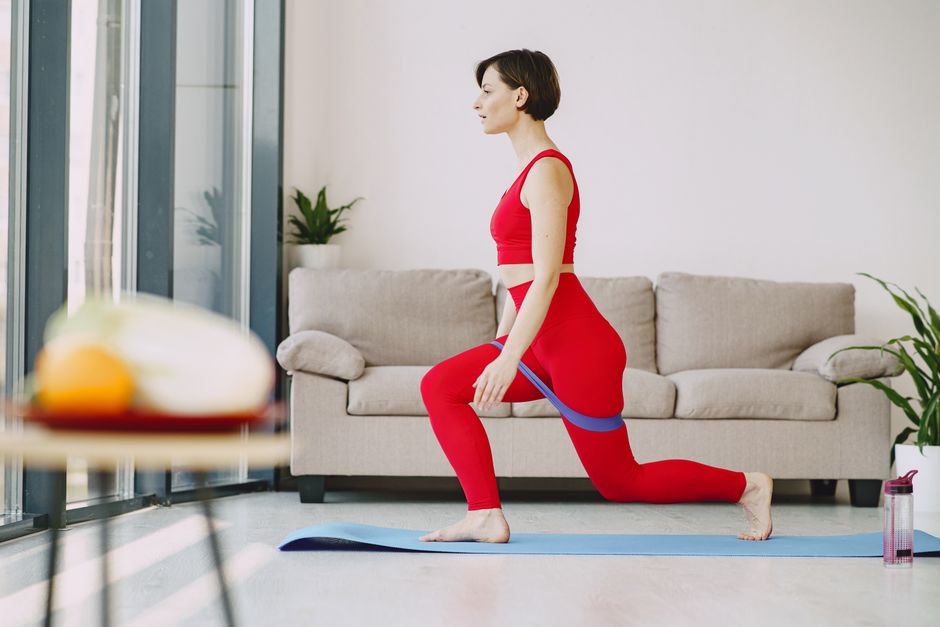
Bulgarian split squats cause pain for a simple reason: they load one leg hard while that leg is also stretched into a deep hip and knee position, and most people set up in a way that pushes the knee and hip past what their joints and tissues tolerate. The fix is rarely to abandon the exercise. It is to correct foot placement, torso angle, depth, and load so the working leg is challenged without being jammed. Pain that comes from muscle fatigue feels very different from pain that comes from a joint or tendon, and telling those apart is the first step.
Why Do Bulgarian Split Squats Hurt So Much?
This exercise is one of the most demanding lower-body movements you can do with just a bench and your body weight. It loads a single leg through a large range of motion, which means the muscles, tendons, and joints on that side handle forces that would normally be shared by both legs.
The rear foot is elevated, so the front leg does almost all the work. The hip flexor of the back leg is stretched. The front knee travels forward under load. And the glute and quadriceps of the front leg contract while lengthened. That combination is what makes the movement effective, and it is also what makes it uncomfortable when something is off.
Discomfort from muscular effort is expected. Sharp pain, pinching, or pain that lingers after you stop is not. The distinction matters more here than in most exercises because the setup is so easy to get wrong.
What Causes Knee Pain During Bulgarian Split Squats?
Knee pain in this movement usually traces back to where the front foot is placed and how far forward the knee travels. When the front foot sits too close to the bench, the knee is forced well past the toes under load, which concentrates stress on the kneecap and the tissue around it.
Moving the front foot forward shifts more demand to the hip and reduces how far the knee drives forward. For many people this alone changes the experience. It is not a universal rule, but it is the most common adjustment trainers make.
Two other factors matter. First, if the heel lifts off the floor, the knee loses a stable base and the joint absorbs more shear. Second, if the lifter lets the knee cave inward during the descent, the kneecap tracks poorly. Both are correctable with attention and, sometimes, a slightly wider stance.
There is a persistent idea that knees should never pass the toes. Research has repeatedly shown this is not a useful rule. Knees traveling forward is normal and necessary in many movements. The problem in a Bulgarian split squat is not the position itself but the load and control at that position.
What Causes Hip and Glute Pain?
Hip pain on the working side often comes from a front-leg position that is too short, which jams the hip into a compressed end range at the bottom. When the front foot is close to the bench, the hip joint runs out of room before the muscles have finished working. That pinching sensation at the front of the hip is a common description.
Glute pain on the back-leg side is different. The rear hip is stretched, and if the pelvis rotates or drops, the back-leg hip can be pulled into an awkward position. Some people feel this as a deep ache in the rear glute or hamstring.
Hip pain that feels sharp, catches, or produces a clicking sensation deserves attention. A qualified clinician should assess it rather than assuming it is a setup problem. Some hip conditions produce pain in this exact position, and no amount of foot adjustment will fix them.
Why Does the Back Foot or Ankle Hurt?
The rear foot is often the forgotten part of this exercise. Resting the top of the foot on a bench forces the ankle into heavy plantarflexion, which many people cannot tolerate. The result is cramping, pressure on the top of the foot, or ankle discomfort.
Placing the rear foot so the toes are on the bench rather than the top of the foot reduces this strain for most people. A lower bench height also helps. The rear leg does not need to be highly elevated for the exercise to work.
Ankle stiffness on the front leg is another common source of trouble. If the front ankle cannot bend enough, the heel lifts and the whole chain above it compensates. Improving ankle mobility over time, or simply raising the heel slightly on a small wedge, can reduce that compensation.
How Do You Set Up to Avoid Pain?
Most pain in this exercise is a setup problem, and setup is adjustable. Work through these points before assuming the movement is wrong for you.
- Front foot distance. Start with the front foot far enough forward that the knee stays roughly over the midfoot at the bottom. Move it forward if the knee feels pinched; move it back only if the hip feels overstretched.
- Bench height. A lower bench reduces rear-leg stretch and hip flexor strain. Knee-height or below is a reasonable starting point for most people.
- Rear foot position. Toes on the bench rather than the top of the foot, unless the top-of-foot position is comfortable.
- Torso angle. A slight forward lean increases glute involvement and can reduce knee stress. An upright torso shifts demand toward the quads and the knee.
- Depth. Stop where you can control the position. Going deeper than your hip and ankle allow produces compression, not extra benefit.
- Load. Body weight first. Add weight only when the movement is pain-free and controlled through the full range you intend to use.
None of these adjustments is a treatment for an injury. They are ways to make the exercise match your current joint capacity.
Should You Push Through the Pain?
No. Muscle burn during a set is normal. Joint pain, pinching, sharp pain, or pain that persists after the set is a signal to stop and reassess.
The general principle in strength training is that discomfort from effort is acceptable and pain from tissue stress is not. A Bulgarian split squat should feel hard in the working muscles. It should not feel like something is being compressed or caught.
If pain continues after you have corrected setup and reduced load and depth, the exercise may not suit your current situation. That is not a failure. It is information. A physical therapist or qualified trainer can assess what is driving the pain and whether a different variation makes sense.
What Should You Do Instead If It Still Hurts?
Several alternatives train the same muscles with less demand on the front knee and hip.
Split squats with both feet on the floor reduce the load on the front leg and remove the rear-foot elevation entirely. Step-ups onto a low box train single-leg strength with a smaller range of motion. Reverse lunges let the front leg stay more vertical. And a simple lunge or leg press can build the same qualities without the deep single-leg position.
None of these is inferior. The best exercise is the one you can perform with control and without joint pain, because that is the one you will keep doing.
When Should You See a Professional?
See a clinician if pain is sharp, if it persists for more than a few days after stopping the exercise, if there is swelling, or if the joint feels unstable or catches. These signs point to something beyond a setup issue.
Persistent knee, hip, or ankle pain deserves a proper assessment. Self-adjusting setup is reasonable for mild discomfort that resolves with changes. It is not a substitute for diagnosis when symptoms are significant or lasting.
Frequently Asked Questions
Why do Bulgarian split squats hurt my knees?
The most common cause is a front foot placed too close to the bench, which drives the knee far forward under load. Moving the foot forward and keeping the heel down usually reduces the strain.
Are Bulgarian split squats bad for your knees?
Not inherently. They are a demanding single-leg exercise, and knee discomfort usually reflects setup, load, or existing joint capacity rather than the movement being harmful.
How do I stop my back foot from hurting during Bulgarian split squats?
Place the toes on the bench instead of the top of the foot, and use a lower bench. Both reduce the extreme ankle stretch that causes most rear-foot discomfort.
Should I stop doing Bulgarian split squats if they hurt?
Stop if the pain is sharp, joint-related, or persists after the set. Correct setup and reduce load first, and see a clinician if pain continues.
