
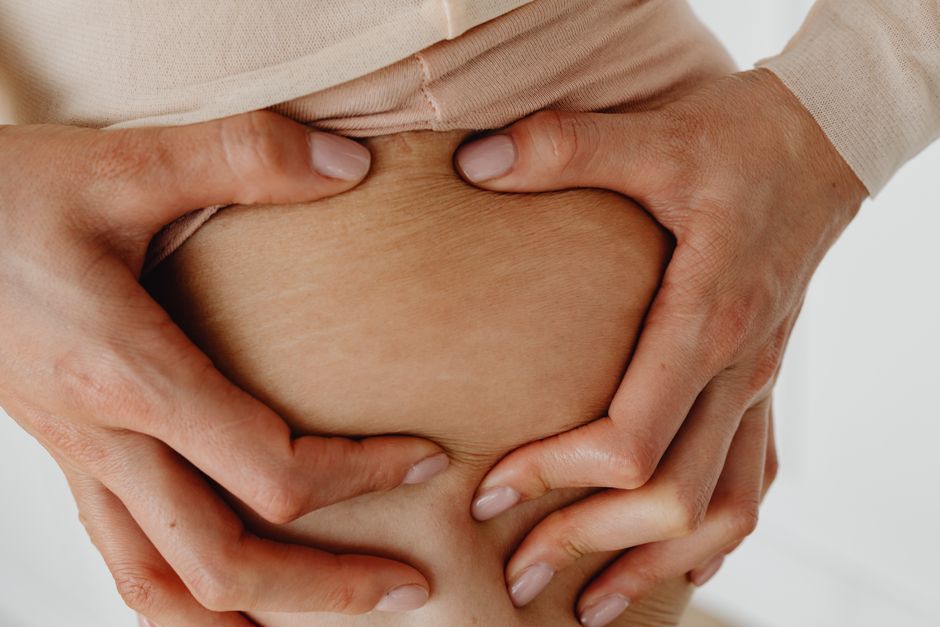
That purple color on your stretch marks is not a sign of something dangerous. It is simply the color of blood vessels showing through thin, stretched skin. When skin stretches faster than it can produce new collagen, the deeper layers tear. The purple or red color comes from blood vessels in the dermis — the middle layer of your skin — that are now visible through the damaged tissue. Over time, those blood vessels constrict and the marks fade to a lighter, silvery-white color. That is the short answer. The rest of this article explains the science behind it, what actually changes the color, and what does not.
What Causes Stretch Marks to Turn Purple in the First Place?
Stretch marks form when the skin is stretched beyond its normal capacity. This happens during rapid growth — puberty, pregnancy, rapid weight gain, or muscle building. The skin’s middle layer, the dermis, contains collagen and elastin fibers that give skin its strength and flexibility. When stretched too fast, these fibers tear.
The purple color comes from the body’s immediate response to that tearing. Blood vessels in the dermis dilate and leak small amounts of blood into the damaged area. This is called vascular congestion. The same reason a bruise looks purple — blood pooling under the skin. The difference is that stretch marks are tears, not impact injuries, so the color is more even and linear.
Research published in the Journal of the American Academy of Dermatology confirms that the red-to-purple phase of stretch marks — called striae rubra — is directly linked to inflammation and increased blood flow. The color is not permanent. It is the active, early stage of the mark. As the inflammation subsides and blood vessels return to normal, the color shifts.
Hormones also play a role. Cortisol, a stress hormone, can weaken collagen fibers before stretching even happens. This is why stretch marks are common during pregnancy and puberty — both times when hormone levels fluctuate significantly. Weaker collagen tears more easily, and the resulting marks appear more vivid in color.
How Does the Color Change from Purple to White Over Time?
The transition from purple to white is a natural process called maturation. It is not a sign that the mark is healing in the sense of repairing the tear — the collagen damage is permanent. What changes is the blood flow and inflammation around the damage.
In the first six to twelve months, the blood vessels in the dermis gradually constrict. Less blood means less red and purple color. At the same time, the body lays down thin, scar-like collagen fibers across the tear. These fibers are not as strong or organized as normal skin collagen. They reflect light differently, giving the mark a silvery or white appearance. Dermatologists call this stage striae alba.
A study in Dermatologic Surgery found that about 80 percent of stretch marks become white within one to two years without any treatment. The timing varies by individual. Younger skin tends to stay in the purple phase longer because blood flow is generally higher. Older skin transitions faster due to reduced circulation.
There is no medical benefit to speeding up this transition. The white marks are just as permanent as the purple ones. The color change only matters for cosmetic reasons. Some people prefer the white stage because it is less noticeable. Others prefer the purple stage because treatments like laser therapy work better on marks that still have blood flow.
Does Where Stretch Marks Appear on Your Body Affect Their Color?
Yes, location matters. Areas with more blood vessels and thinner skin tend to have more intense purple coloring. The thighs, hips, breasts, and upper arms are common examples. These areas also experience more movement and stretching, which can prolong inflammation.
Areas with thicker skin — like the lower back or abdomen — may show less purple color because the blood vessels are deeper. The color is still there, but it is muted by the overlying skin layers. This is why stretch marks on the belly during pregnancy can look pink or light red rather than deep purple.
Body temperature also affects color. Warm skin has more blood flow near the surface. Cold skin constricts blood vessels. You may notice your stretch marks look more purple after a hot shower or workout. That is temporary and not a sign of anything changing.
The direction of the stretch marks matters too. Marks that run perpendicular to skin tension lines — like vertical marks on the belly — tend to be more visible and more colorful. They cut across the natural grain of the skin, which creates more inflammation during the tearing process.





What Does Research Say About Treatments That Fade Purple Stretch Marks?
Research on stretch mark treatments is mixed. No cream or oil can fully repair torn collagen. But some treatments can reduce the purple color by addressing the blood vessels and inflammation underneath.
| Treatment | What It Does | Evidence Level |
|---|---|---|
| Pulsed dye laser | Targets blood vessels in the dermis | Strong — multiple studies show color improvement |
| Topical retinoids (tretinoin) | Increases collagen production | Moderate — works best on early purple marks |
| Microneedling | Stimulates wound healing response | Moderate — some color improvement reported |
| Cocoa butter / vitamin E oil | Moisturizes skin surface | Weak — no evidence they change color or structure |
| Hyaluronic acid | Hydrates skin temporarily | Weak — may improve appearance but not color |
The pulsed dye laser is the most studied option specifically for purple stretch marks. A 2018 review in Lasers in Medical Science found that patients saw a 50 to 75 percent reduction in redness after three to five sessions. The laser targets hemoglobin in the blood vessels, causing them to collapse. This directly reduces the purple color.
Topical retinoids like tretinoin have some evidence for early-stage marks. A study in the British Journal of Dermatology showed that tretinoin cream applied daily for six months reduced the length and width of early stretch marks. The effect on color was modest. Retinoids are not safe during pregnancy or breastfeeding.
Microneedling works by creating tiny injuries in the skin, which triggers collagen remodeling. Some small studies show improvement in both texture and color. But the evidence is not as strong as for laser. Results vary widely between individuals.
Creams and oils sold over the counter — cocoa butter, vitamin E, shea butter — have no solid evidence behind them. They moisturize the surface, which can make marks look slightly less noticeable. They do not change blood flow or collagen structure. The purple color will not fade from moisturizing alone.
What Common Myths About Purple Stretch Marks Should You Ignore?
There is a lot of misinformation online about stretch marks. Some of it is harmless wishful thinking. Some of it leads people to waste money on products that do not work.
- Myth: Purple stretch marks mean you are losing collagen permanently. The collagen is damaged, not gone. Your body still produces collagen in the area. It is just disorganized and weaker than normal skin.
- Myth: Scrubbing or exfoliating fades the color. The purple color comes from blood vessels in the dermis — the middle layer of skin. Scrubbing only affects the top layer, the epidermis. It does not reach the blood vessels.
- Myth: Tanning makes purple marks less visible. Tanning darkens the surrounding skin, which can make the contrast worse. The stretch marks themselves do not tan because they lack melanin-producing cells. You end up with white or purple marks against darker skin.
- Myth: Drinking more water prevents stretch marks from turning purple. Hydration is good for skin health overall. But stretch marks form from mechanical tearing of collagen, not from dehydration. Water intake does not prevent or change the color.
- Myth: Stretch marks only appear on people who gain weight quickly. Genetics play a major role. Some people can gain significant weight without developing any stretch marks. Others get them with minimal change. Family history is a stronger predictor than weight gain speed.
One more clarification: purple stretch marks are not a sign of poor health. They are a cosmetic skin change. They do not indicate vitamin deficiency, liver problems, or any internal disease. If you have other symptoms — itching, blistering, or marks appearing without any stretching — see a dermatologist. But color alone is not a medical concern.
Can You Prevent Purple Stretch Marks from Forming in the First Place?
Prevention is difficult because the main risk factors — genetics, hormones, and rapid growth — are largely out of your control. But there is some evidence that certain strategies may reduce the severity of marks when stretching happens.
Keeping skin well-moisturized can improve its flexibility. A study in Pediatric Dermatology found that pregnant women who massaged a cream containing centella asiatica extract into their bellies had fewer and less severe stretch marks. The effect was small but statistically significant. The cream did not prevent marks entirely but reduced their size and color intensity.
Gradual weight gain helps. Rapid stretching is the main trigger for collagen tearing. If you are gaining weight intentionally — through pregnancy or muscle building — a slower pace gives your skin more time to adapt. There is no magic number, but gaining more than two pounds per week increases risk.
Retinoid creams applied before stretching occurs have not been studied for prevention. They are not recommended for that purpose. Most dermatologists advise against using prescription retinoids during pregnancy due to safety concerns.
There is no evidence that collagen supplements, bone broth, or gelatin prevent stretch marks. Your body breaks down dietary collagen into amino acids and distributes them where needed. It does not send them directly to your skin. Eating a balanced diet with adequate protein and vitamin C supports general skin health, but it will not target stretch marks specifically.
The honest truth is that most people who are genetically prone to stretch marks will get them regardless of what they do. That does not mean prevention is useless — it may reduce the number or intensity of marks. But expecting to avoid them entirely sets you up for disappointment.
Frequently Asked Questions
Why are my stretch marks purple and not red or pink?
The purple color comes from blood pooling in the dermis after collagen tears. The exact shade depends on how deep the blood vessels are and how much inflammation is present.
Do purple stretch marks ever go away completely?
They do not disappear entirely. The purple color fades to white over months or years, but the collagen damage is permanent and visible as a scar-like line.
Can exercise make purple stretch marks fade faster?
Exercise does not directly fade stretch marks. Improved circulation from exercise may help with overall skin health, but it will not change the color of existing marks.
Is there a cream that turns purple stretch marks white faster?
No cream has been proven to speed up the natural color transition. Prescription retinoids may help early marks fade slightly faster, but results are modest and inconsistent.
