
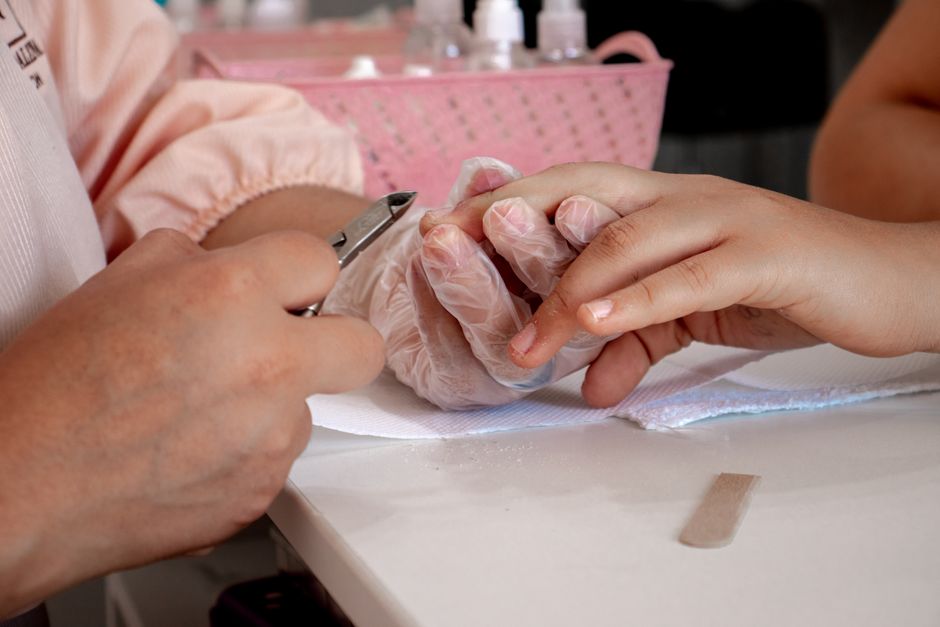
Your nails are splitting because the keratin layers that make them strong are weakening or being damaged faster than your body can repair them. Think of your nail like a stack of paper sheets glued together. When that glue dries out, gets stripped away by chemicals, or is never strong enough in the first place, the layers peel and split apart. This is rarely a sign of a serious health problem, but it is a clear signal that something needs to change in how you treat them or what you are eating.
What Actually Causes Nails to Split?
The most common cause is simple mechanical stress. Your nails get wet and dry over and over again. Each time they swell with water and then shrink as they dry, the layers separate slightly. Over weeks and months, this repeated expansion and contraction creates tiny separations that grow into visible splits.
Frequent hand washing, dishwashing without gloves, and long baths or showers all do this. A study published in the Journal of the American Academy of Dermatology found that nail plate strength drops significantly after just 10 minutes of water exposure. The effect is cumulative. It is not about one bad day. It is about the thousand small exposures that happen every week.
Chemical exposure is the second major cause. Nail polish remover with acetone strips natural oils from the nail plate. Harsh soaps and cleaning products do the same. Over time, the nail becomes brittle and loses its ability to flex under pressure. Instead of bending, it cracks.
Does Your Diet Really Matter for Nail Splitting?
Yes, but not in the way most articles claim. The idea that biotin alone fixes everything is oversold. Research published in the journal Skin Appendage Disorders shows that biotin supplements can improve nail thickness and reduce splitting in people who are actually deficient. But true biotin deficiency is rare in people eating a normal diet.
What matters more is total protein intake. Your nail plate is made almost entirely of keratin, which is a protein. If you are not eating enough protein overall, your body prioritizes hair and nail growth last. The nails grow slower and the keratin they produce is weaker. The recommended dietary allowance for protein is 0.8 grams per kilogram of body weight per day, but many adults, especially women over 50, fall below this.
Iron status matters too. A 2018 study in the Journal of the European Academy of Dermatology and Venereology found that women with iron deficiency anemia had significantly thinner nail plates. When their iron levels normalized, nail thickness improved. If you are vegetarian, have heavy periods, or have been told your iron is low before, this is worth checking.
Zinc and vitamin D play supporting roles. Zinc helps keratin cells divide and mature properly. Vitamin D regulates the growth cycle of the nail matrix. But these are not magic bullets. Getting them from food is almost always better than supplements unless a blood test shows you are low.
Can Nail Products Make Splitting Worse?
Many of them can. Gel manicures are a common culprit. The process of applying gel requires etching the nail surface with a buffer, then soaking the nail in acetone to remove the polish. Each step strips layers off the nail plate. A 2020 study in the Journal of Cosmetic Dermatology found that repeated gel manicure cycles reduced nail thickness by up to 30 percent over six months.
Acrylic nails are worse in some ways. The application involves filing the nail surface aggressively. The chemicals in the acrylic monomer can penetrate and disrupt the keratin structure. When the acrylic lifts or is pried off, it often takes layers of natural nail with it.
Hard nail hardeners are another trap. Many contain formaldehyde or formaldehyde-releasing agents. These cross-link the keratin proteins, making the nail temporarily harder but also more brittle. Brittle nails do not flex, so they crack instead. The American Academy of Dermatology advises against using these products for more than a few months at a time.
What about nail oils and moisturizers? The evidence is mixed. A small study in the Journal of Drugs in Dermatology found that applying jojoba oil to nails twice daily for two weeks improved nail flexibility. But most of these products only affect the surface. The split happens in the deeper layers. Keeping the nail hydrated at the surface can reduce the frequency of new splits, but it will not fix an existing split.




What Actually Works to Stop Nail Splitting?
The evidence supports a few specific changes. First, stop the mechanical damage. Wear gloves for washing dishes, cleaning, and any task that keeps your hands wet for more than a minute. Apply a moisturizer with ingredients like lanolin, shea butter, or petroleum jelly to your nails and cuticles every time you wash your hands.
Second, give your nails a break from enhancements. Go without polish, gel, or acrylics for at least two to three months. This is not easy if you are used to having them done, but it is the most effective intervention. The nail plate grows out completely in about four to six months. You need to let the damaged part grow out and be replaced by healthy nail.
Third, file properly. Use a fine-grit glass file. File in one direction only, not back and forth. The back-and-forth motion creates micro-tears along the edge of the nail that propagate into splits. File the nail into a rounded or squoval shape. Sharp corners catch on things and tear.
Fourth, consider a targeted supplement only if you have a reason to believe you are low. A blood test for ferritin, vitamin D, and zinc is reasonable if your nails have been splitting for months without an obvious cause. Biotin at 2.5 to 5 milligrams per day is safe for most people and has some evidence of benefit, but it takes three to six months to see results because it only affects new nail growth.
| Intervention | What the Evidence Shows | Time to See Results |
|---|---|---|
| Gloves and moisturizer | Reduces water damage and surface brittleness | 2-4 weeks |
| No nail enhancements | Allows nail plate to regrow without damage | 4-6 months |
| Proper filing technique | Prevents micro-tears from spreading | Immediate |
| Biotin supplementation | Improves nail thickness in deficient individuals | 3-6 months |
| Iron supplementation (if low) | Restores nail plate thickness | 3-6 months |
When Should You See a Doctor About Splitting Nails?
Most nail splitting is not a medical problem. But there are specific signs that warrant a visit. If your nails are splitting along with yellowing, thickening, or a white chalky appearance, you may have a fungal infection. A dermatologist can confirm this with a simple scraping and culture. Fungal infections require prescription antifungal treatment. Over-the-counter creams rarely work for nail fungus.
If multiple nails are splitting and you also have fatigue, pale skin, or shortness of breath, iron deficiency anemia is a real possibility. A complete blood count and ferritin test will tell you. Similarly, if your nails are splitting and you have a history of thyroid problems, ask your doctor to check your thyroid hormone levels. Both hypothyroidism and hyperthyroidism can affect nail growth and strength.
There is a rare condition called onychoschizia, which is the medical term for splitting nails that are otherwise healthy. It is not dangerous. It is just frustrating. The treatment is the same as what is described above: reduce water exposure, use moisturizer, avoid harsh chemicals, and let the nail grow out.
One thing to avoid is worrying about every split. Social media has created a lot of fear around nail changes. A single split nail is almost never a sign of a vitamin deficiency or a disease. It is usually just a nail that got caught on something or dried out from hand sanitizer. Look for patterns. If it keeps happening to the same nail or to multiple nails at once, then it is worth investigating.
Common Misconceptions About Nail Splitting
The biggest myth is that gelatin or collagen supplements will fix your nails. Gelatin is just cooked collagen protein. Your body digests it the same way it digests any protein. There is no special benefit for nails. A 2017 systematic review in the Journal of Cosmetic Dermatology found no convincing evidence that oral collagen supplements improve nail strength or reduce splitting in people who are not malnourished.
Another myth is that nail polish itself is bad for nails. It is not. The problem is the removal process. Acetone-based removers strip natural oils. Non-acetone removers are gentler but still drying. The best approach is to use a remover with added moisturizers and to apply cuticle oil immediately after removing polish.
Some people believe that taking more than the recommended dose of biotin will work faster. It will not. Biotin is water-soluble, so your body excretes what it does not use. Megadoses have not been shown to improve nail outcomes beyond the standard dose. They also interfere with some lab tests, including thyroid tests and troponin tests for heart attacks. If you take biotin, tell your doctor before any blood work.
Finally, there is the idea that nail splitting is always a sign of poor health. It is not. Many perfectly healthy people have splitting nails. The structure of your nails is partly genetic. Some people simply have thinner nail plates that are more prone to splitting. This is not a disease. It is just how your nails are built. You can manage it, but you cannot change your genetics.
Frequently Asked Questions
How long does it take for a split nail to grow out?
Fingernails grow about 3 millimeters per month on average. A full nail replacement takes four to six months for fingernails and up to twelve months for toenails.
Can a split nail heal on its own?
The split itself will not heal because the nail plate is dead tissue. You have to wait for the damaged part to grow out and be trimmed off.
Does nail hardener stop splitting?
Nail hardeners can reduce splitting in the short term but often make nails more brittle over time, which leads to more cracking and breaking.
What vitamin deficiency causes splitting nails?
Iron deficiency is the most common nutritional cause. Biotin and zinc deficiencies can also contribute but are less common in people eating a balanced diet.
