
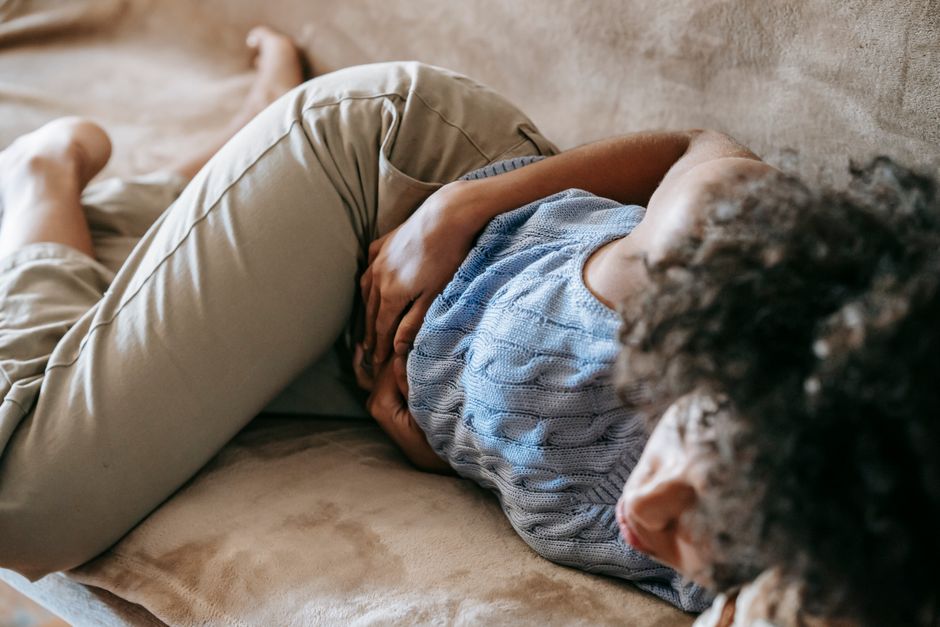
Ovulation cramps are real, and they have a name: mittelschmerz, a German word that means “middle pain.” Roughly one in five people who menstruate notice some kind of pain or twinge around the middle of their cycle, according to surveys of menstrual symptoms.
The cramps happen because a mature egg is bursting out of the ovary. That release irritates nearby tissue and can trigger a sharp pinch on one side of the lower belly. The pain is usually mild, lasts a few hours to a day or two, and is not a sign that anything is wrong.
But not all mid-cycle pain is ovulation pain. Sometimes the same feeling points to something that needs a doctor’s attention. Knowing the difference matters.
Why Are You Cramping During Ovulation?
Ovulation is a physical event, not just a hormonal shift. Each month, a follicle in one ovary swells with fluid until it ruptures and releases an egg. The rupture itself stretches the ovarian wall, and the fluid that spills out can irritate the lining of the pelvis. That irritation is what you feel as a cramp.
The timing lines up with the middle of the cycle. In a typical 28-day cycle, ovulation happens around day 14. Cycles vary, so the exact day shifts from person to person and even month to month.
Two things happen at once during release:
- The follicle wall stretches and tears, which sends a sharp signal through nearby nerves.
- Small amounts of blood and fluid escape into the pelvic cavity, which can cause a dull ache or a feeling of pressure.
The pain is usually one-sided, because only one ovary releases an egg in most cycles. Which side it lands on can switch from month to month. Some people feel it on the right more often, which is simply how their cycles fall.
What Does Ovulation Cramping Actually Feel Like?
Most people describe it as a sudden pinch or a sharp twinge on one side of the lower belly. It can also feel like a dull ache, a heaviness, or mild pressure that builds and fades.
The sensation tends to be different from period cramps. Period cramps are usually lower, centered, and crampy in a wave-like way. Ovulation pain is more often pinpointed to one side and comes on quickly rather than building over hours.
How long it lasts varies. Some people feel a brief stab that passes in minutes. Others have a lingering ache for a day or two. A small number notice light spotting along with it, which happens when the hormone shift around ovulation briefly affects the uterine lining.
Other signs often show up at the same time, which can help confirm the timing:
- Clear, stretchy cervical mucus, similar to raw egg white
- A small rise in basal body temperature that shows up the day after ovulation
- Mild breast tenderness or a brief uptick in libido
None of these signs on their own proves ovulation happened. Together, they give a reasonably clear picture.
Is Ovulation Pain Normal?
Yes. Ovulation pain is considered a normal part of the menstrual cycle when it is mild and short-lived. It does not mean the ovary is damaged or that fertility is at risk.
It is also not dangerous in itself. The rupture is a small, controlled event that the body handles on its own. Most people who feel it do not need any treatment.
That said, “normal” does not mean “ignore anything unusual.” The key features of ordinary ovulation pain are that it is mild, one-sided, brief, and predictable around the middle of the cycle. Pain that breaks any of those patterns deserves a closer look.



When Should Ovulation Cramping Worry You?
Severe pain is not typical ovulation pain, and it should be checked. The line between a normal twinge and something more serious is usually about intensity, duration, and other symptoms.
Seek medical care if you notice any of these:
- Pain that is severe, worsening, or stops you from your normal activities
- Pain that lasts more than a couple of days
- Fever, nausea, vomiting, or dizziness along with the pain
- Heavy bleeding or bleeding outside your normal pattern
- Pain during pregnancy, or pain with a missed period
Some conditions can mimic ovulation pain but are not harmless. An ovarian cyst that twists or ruptures can cause sudden, intense pain. Pelvic inflammatory disease, appendicitis, and ectopic pregnancy can all produce lower belly pain that people mistake for cycle-related cramping. These are not things to wait out.
If the pain is new, much stronger than usual, or comes with any of the warning signs above, contact a doctor rather than assuming it is ovulation.
What Else Can Cause Mid-Cycle Cramping?
Not every twinge at mid-cycle comes from ovulation. Several other things can produce similar pain, and telling them apart often takes a doctor’s evaluation.
Common possibilities include:
- Ovarian cysts. Fluid-filled sacs on the ovary can cause pressure or pain, especially if they grow or rupture.
- Endometriosis. Tissue similar to the uterine lining grows outside the uterus and can cause pain that flares at different points in the cycle.
- Pelvic inflammatory disease. An infection of the reproductive organs that can cause ongoing pelvic pain.
- Digestive issues. Gas, constipation, and irritable bowel symptoms can cause pain in the same general area.
- Urinary tract problems. Bladder infections and kidney issues can cause lower belly discomfort.
Because these overlap so much with ovulation pain, the pattern matters. Ovulation pain is predictable, brief, and tied to the middle of the cycle. Pain that is constant, unpredictable, or getting worse over time is less likely to be simple ovulation.
How Is Ovulation Pain Managed?
For mild ovulation pain, most people do not need treatment. When it is uncomfortable, a few simple steps are commonly used.
A warm bath or heating pad on the lower belly can ease the ache. Light activity often helps more than lying still. Over-the-counter pain relievers may help, but check with a pharmacist or doctor about what is right for you, especially if you take other medications or have health conditions.
Hormonal birth control is sometimes prescribed when ovulation pain is frequent or disruptive. Combined hormonal methods can prevent ovulation, which means the pain does not happen in the first place. This is a decision to make with a clinician, not a first-line fix for occasional twinges.
There is no diet or supplement proven to stop ovulation pain. Claims that certain products “balance hormones” or “prevent ovulation cramps” are not backed by clinical evidence. If a symptom is mild and predictable, it usually does not need a product at all.
Does Ovulation Cramping Mean You Are Fertile?
Feeling ovulation pain can be a rough clue that ovulation is happening, which is when pregnancy is possible. But it is not a reliable fertility test.
Ovulation pain does not confirm that an egg was actually released, and it does not tell you the exact window for conception. Some people ovulate without feeling anything. Others feel pain without a successful release.
If you are trying to conceive or trying to avoid pregnancy, tracking methods like basal body temperature, cervical mucus changes, and ovulation predictor kits give a clearer picture than pain alone. A doctor can help you interpret what your cycle is doing if the timing is unclear.
The Bottom Line
Ovulation cramping is common, usually mild, and tied to the normal release of an egg at mid-cycle. It happens because the follicle ruptures and briefly irritates the tissue around it.
The main thing to watch is the pattern. Mild, one-sided, short-lived pain around the middle of your cycle is expected. Pain that is severe, lasts longer than a couple of days, or comes with fever, dizziness, or unusual bleeding is not, and it should be checked by a doctor.
Frequently Asked Questions
How long does ovulation cramping usually last?
Most ovulation pain lasts from a few minutes to about a day or two. Pain that continues beyond a couple of days is not typical and should be evaluated by a doctor.
Which side do you feel ovulation cramps on?
You feel it on the side of the ovary that is releasing the egg, which can switch from month to month. Some people notice it more on one side simply because of how their cycles fall.
Can ovulation cramping be a sign of pregnancy?
No. Ovulation pain happens before an egg can be fertilized, so it is not a sign of pregnancy. If you have a missed period and pelvic pain, see a doctor to rule out other causes.
When should I see a doctor for ovulation pain?
See a doctor if the pain is severe, lasts more than a couple of days, or comes with fever, vomiting, dizziness, or heavy bleeding. These signs point to causes other than normal ovulation.
