
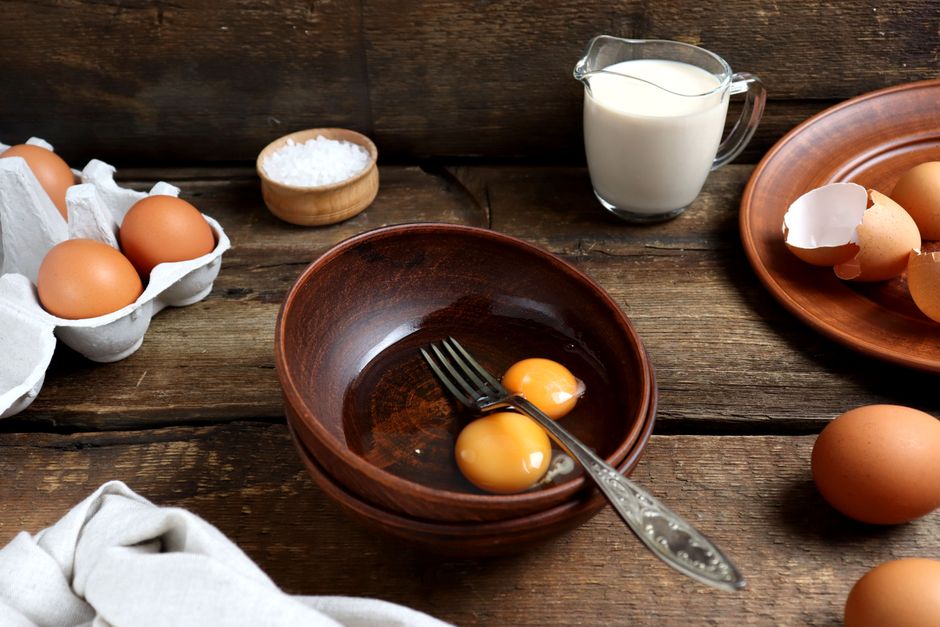
The color of an egg yolk ranges from pale yellow to deep orange, and many people assume the darker yolks are healthier or taste better. The short answer is that yolk color is determined almost entirely by what the hen eats, not by the egg’s nutritional value. A darker yolk does not automatically mean a more nutritious egg, though it can signal a diet rich in certain plant compounds.
What Determines the Color of an Egg Yolk?
The color comes from pigments called carotenoids. Hens get these pigments from the plants and grains in their feed. Carotenoids are the same compounds that give carrots their orange color and leafy greens their deep green hue.
When a hen eats feed rich in these pigments, the yolks turn darker. When the feed is low in carotenoids, the yolks stay pale. This is a direct cause-and-effect relationship. Commercial feed producers can even add specific amounts of marigold extract or other natural pigments to standard feed to create a consistent, desired yolk color.
There is no biological difference in the egg itself based on color. The hen’s breed, age, and overall health play a much larger role in the egg’s nutritional profile than the yolk’s shade.
Does a Darker Yolk Mean More Nutrition?
Not necessarily. The carotenoid content is the main nutritional difference between pale and dark yolks. A darker yolk does contain more carotenoids, which are antioxidants. However, this difference is small in the context of your overall diet.
Research consistently shows that the protein, fat, vitamin, and mineral content of eggs is remarkably similar regardless of yolk color. A study comparing pasture-raised eggs to conventional eggs found some differences in omega-3 fatty acids and vitamin E, but these differences were tied to the hens’ diet overall, not the yolk color specifically.
Some research suggests that eggs from pasture-raised hens may contain higher levels of certain nutrients, including vitamin D and omega-3s. But you cannot reliably judge these differences by looking at the yolk. A deep orange yolk from a hen fed marigold extract in a commercial barn has the same basic nutrition as a pale yolk from a different commercial barn.
Why Are Pasture-Raised Egg Yolks Often Darker?
Hens that forage outdoors naturally eat grass, weeds, insects, and seeds. These foods are rich in carotenoids. This is why eggs from pasture-raised hens frequently have darker yolks than eggs from hens kept indoors on standard commercial feed.
But this is not a guarantee. A pasture-raised hen that does not actually forage much, or that lives in a region with poor pasture quality, may lay eggs with lighter yolks. Conversely, a commercial hen given feed with added pigments can lay very dark yolks without ever seeing sunlight.
If you are buying eggs for the welfare of the hens, pasture-raised is the clearest label. If you are buying for nutrition, the research does not support paying a premium based on yolk color alone.
Does Yolk Color Affect Taste?
Some people report that darker yolks taste richer or more “eggy.” There is limited scientific evidence to confirm this consistently. The flavor differences people notice are likely tied to the hen’s diet, which affects both yolk color and subtle flavor compounds.
A hen that eats a varied diet of plants and insects will produce eggs with a slightly different flavor profile than a hen on a monotonous grain diet. The darker color is a visible marker of that varied diet, but it is not the cause of the taste difference.
Freshness, storage conditions, and how the egg is cooked have a far greater impact on taste than yolk color. A fresh pale yolk will taste better than a stale dark yolk every time.
Should You Pay More for Darker Yolks?
That depends on what you value. If you want eggs from hens with outdoor access and a natural diet, look for pasture-raised or certified humane labels. These eggs often have darker yolks, but the label, not the color, is what matters.
If you are only chasing the darkest yolk, you may be paying for cosmetic appearance. Some producers add pigments to feed specifically to darken yolks because consumers associate dark color with quality. This practice is legal and common in some regions.
For basic nutrition, a standard commercial egg provides nearly identical protein, vitamins, and minerals as a premium dark-yolk egg. The differences are real but small. Your overall diet matters far more than the shade of your egg yolk.
Are There Any Health Risks With Darker Yolks?
No. Darker yolks are not a sign of contamination or spoilage. They are simply a result of the hen’s diet. Eggs with unusually dark yolks, sometimes nearly red, are typically from hens fed high amounts of specific carotenoid-rich plants like paprika or red pepper.
The only safety concern with eggs is bacterial contamination, particularly Salmonella. This risk is unrelated to yolk color. Always store eggs refrigerated and cook them until both the white and yolk are firm.
If you crack an egg and see an unusual color like green or black, that indicates spoilage or bacterial growth. Those eggs should be discarded. But the normal range of yellow to deep orange is completely safe.
How to Choose Eggs Wisely
Look at the label, not just the yolk. The most meaningful differences between eggs come from the hen’s living conditions and diet, not the color of the yolk.
- Pasture-raised means hens have outdoor access and can forage. These eggs may have more omega-3s and vitamin D.
- Free-range means hens have some outdoor access, but the quality and duration of that access varies widely.
- Cage-free means hens are not in cages but are typically indoors in large barns.
- Conventional eggs come from hens in cages with controlled feed. These are the most affordable and still nutritionally solid.
Organic eggs come from hens fed organic feed without antibiotics. This does not change yolk color or basic nutrition, but some consumers prefer it for environmental or ethical reasons.
The bottom line: buy eggs that fit your budget and values. Yolk color is a cosmetic feature, not a reliable indicator of quality or nutrition.
Frequently Asked Questions
Are darker egg yolks healthier than lighter ones?
Not meaningfully. Darker yolks contain more carotenoids, but the overall nutritional differences are small. Protein, vitamins, and minerals are nearly identical regardless of yolk color.
Why are some egg yolks almost orange?
Hens that eat feed rich in carotenoids, such as marigold petals, alfalfa, or grass, produce yolks with a deeper orange color. This is a natural pigment from their diet, not an additive in the egg itself.
Do pasture-raised eggs always have darker yolks?
No. Pasture-raised hens often have darker yolks because they forage on plants and insects, but this depends on the quality of the pasture and the hen’s actual behavior. Some pasture-raised eggs have pale yolks.
Can you tell if an egg is fresh by its yolk color?
No. Yolk color has nothing to do with freshness. The best way to check freshness is to place the egg in water — a fresh egg sinks, while an older egg stands upright or floats.
