
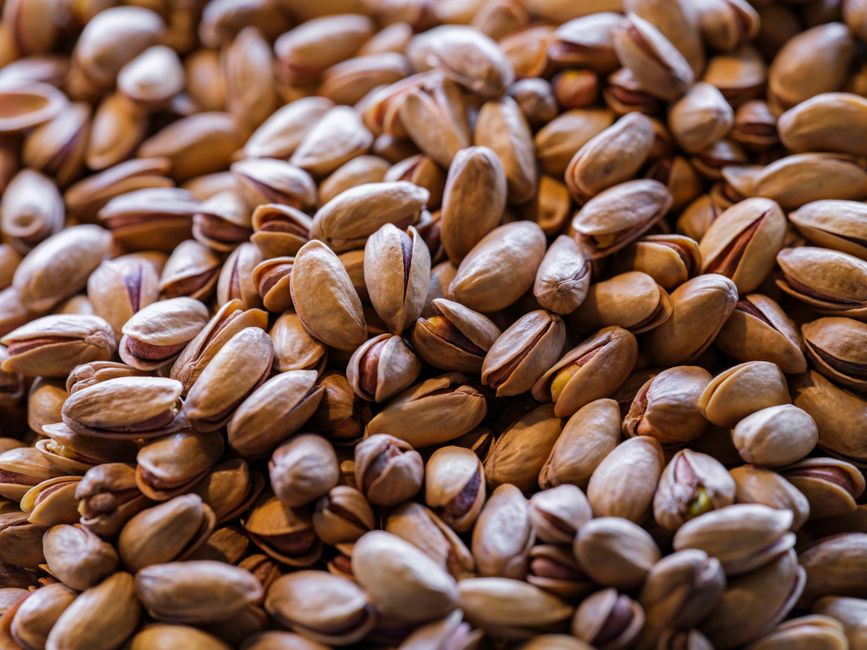
Pistachios cost more than almost any other nut on the grocery shelf, and the reason is not marketing. Pistachio trees take years before they produce a meaningful crop, the harvest is labor-intensive, and the nuts must be split open, hulled, and sorted quickly before they spoil. Global demand has also grown faster than supply, and most of the world’s crop comes from a small number of regions. Add in a short shelf life for the fresh nut and the need for hand-sorting, and you get a price that reflects real production difficulty rather than a premium label.
Why Are Pistachios So Expensive Compared to Other Nuts?
Pistachios sit near the top of the nut price range because almost every step from orchard to package costs more than it does for almonds, peanuts, or cashews.
The biggest factor is time. A pistachio tree grown from seed may not produce a commercial crop for seven to ten years. Grafted trees can bear sooner, but even then, a full harvest takes years to develop. During that entire period, the grower pays for water, land, pruning, and pest management with no income from the tree. Few crops require that long a wait before they pay anything back.
Then there is the harvest itself. Pistachios grow in clusters and ripen unevenly. The outer hull softens and the shell splits as the nut matures, and the window to pick them at the right moment is short. If the hull stays on too long, the nut can stain or develop mold. That means growers often harvest by shaking trees and collecting the fruit quickly, then moving it to processing within hours.
After harvest, the nuts must be hulled, dried, and sorted. The split shells are what consumers expect, but not every nut splits. Those that do not are usually diverted to other uses or discarded. The sorting itself has historically been done by hand in many operations, which adds labor cost that machine-only crops avoid.
How Does Pistachio Farming Affect the Price?
Pistachio farming is capital-intensive and geographically limited. The trees need hot, dry summers and cool winters, and they are sensitive to poor drainage and humidity. That narrows where they can be grown commercially.
Water is a major cost. Pistachios are drought-tolerant compared to many crops, but they still need consistent irrigation to produce a good yield. In regions where water is scarce or regulated, the cost of irrigation rises, and that cost shows up in the final price.
Pests and disease also matter. Pistachios can be affected by insects and fungal problems, and managing them requires ongoing attention and expense. A single bad season, whether from weather, pests, or disease, can reduce the crop and push prices up the following year.
Because trees take years to mature, growers cannot quickly respond to high prices by planting more. If demand rises sharply, supply cannot catch up for years. That lag keeps prices elevated even when buyers are willing to pay more.
Why Does Most of the World’s Pistachio Supply Come From a Few Places?
Pistachio production is concentrated in a small number of countries, and that concentration makes the global price sensitive to problems in any one of them.
Iran and the United States are the two largest producers, with Turkey, Syria, and a few other countries contributing smaller amounts. When one major producer has a poor harvest, the effect on world supply can be significant because there are few other sources to fill the gap.
Trade rules and sanctions have also affected pistachio flows over the years. When access to certain markets changes, the nuts get redirected, and prices in different regions can shift. This is one reason pistachio prices can vary more than prices for crops grown across many countries.
A concentrated supply also means that a single weather event, such as a frost during bloom or a drought, can affect a large share of the global crop. Buyers then compete for a smaller supply, and the price rises.





Is the Split Shell a Reason Pistachios Cost More?
Yes. The split shell is both a sign of ripeness and a source of extra cost.
As the pistachio matures, the shell splits naturally. Growers want a high percentage of split nuts because those are the ones sold in-shell to consumers. Nuts that do not split are harder to sell in that form and often go to other uses at lower value.
Getting a high split rate depends on timing the harvest correctly. Pick too early and fewer nuts have split. Pick too late and the hull may have already deteriorated, risking quality. That narrow window means growers must move fast, which adds to labor and processing costs.
After drying, the nuts are sorted to remove shells, hull fragments, and nuts that did not split properly. This sorting is part of why in-shell pistachios cost more than many shelled nuts.
How Much Do Pistachios Cost Compared to Other Nuts?
Pistachios are consistently among the more expensive nuts by weight, though prices vary by region, season, and whether the nuts are in-shell or shelled.
| Nut | Typical relative price | Main reason |
|---|---|---|
| Peanuts | Lowest | Fast-growing, high yield, grown widely |
| Almonds | Moderate | Large global supply, mechanized harvest |
| Cashews | Higher | Labor-intensive shelling, tropical growing range |
| Pistachios | Highest | Long time to bear, narrow growing range, hand sorting, short harvest window |
The exact prices change often, so it is more useful to understand why the ranking holds than to memorize a number. The pattern is driven by how long the tree takes to produce, how limited the growing regions are, and how much labor the harvest and processing require.
Does Demand Play a Role in Pistachio Prices?
Demand has grown steadily, especially in markets where pistachios are seen as a premium snack. When demand rises faster than supply, prices rise with it.
Pistachios have a strong reputation as a healthy snack, and that has increased interest in many countries. But because supply cannot expand quickly, the extra demand tends to show up as higher prices rather than more nuts on the shelf.
There is also a cultural and seasonal factor. Pistachios are a traditional food in some regions and are especially popular around certain holidays, which can create short-term spikes in demand. Those spikes are usually temporary, but they can affect prices during peak periods.
Are Pistachios Worth the Price?
Whether pistachios are worth the cost depends on what you value, but the nutritional case for them is real.
Pistachios are a source of protein, healthy fats, fiber, and several vitamins and minerals. Like other nuts, they are calorie-dense, so portion size matters. The USDA lists pistachios as providing a range of nutrients including vitamin B6, thiamine, and potassium, along with antioxidants.
If cost is a concern, there are practical ways to manage it:
- Buy in-shell pistachios rather than shelled. The shells add weight but slow eating, and in-shell nuts are often cheaper per ounce of edible nut.
- Buy plain rather than flavored or salted varieties, which usually cost more.
- Compare prices across stores and buy larger bags when the unit price is lower.
- Consider other nuts for everyday snacking and keep pistachios for when you specifically want them.
None of this changes the fact that pistachios are a premium nut. The price reflects real constraints in how they are grown, harvested, and processed, not just branding.
Will Pistachio Prices Come Down?
Prices could ease if production expands in new regions or if existing orchards become more productive, but any change would be slow.
New pistachio orchards take years to bear, so a decision to plant more trees today does not affect supply for a long time. Improvements in irrigation, pest management, and mechanical sorting could lower costs over time, but the fundamental limits remain: the trees need specific conditions, the harvest window is short, and the nuts require careful handling.
For now, the most reasonable expectation is that pistachios will stay among the more expensive nuts. That is not a marketing story. It is the result of biology, geography, and labor.
Frequently Asked Questions
Why are pistachios more expensive than almonds?
Pistachio trees take longer to produce a commercial crop and grow in fewer regions than almonds, and the harvest window is shorter. Almonds are grown more widely and harvested with more mechanization, which keeps their cost lower.
Are pistachios the most expensive nut?
Pistachios are consistently among the most expensive nuts by weight, though prices vary by region and season. Some specialty nuts, such as pine nuts, can cost more, but among common nuts pistachios are near the top.
Why are in-shell pistachios cheaper than shelled?
In-shell pistachios are often cheaper per ounce of edible nut because the shell adds weight and the nuts require less processing to sell. Shelled pistachios have had the shell removed, which adds labor and reduces the weight you pay for.
Do pistachios really take years to grow?
Yes. A pistachio tree grown from seed may not produce a commercial crop for seven to ten years, and grafted trees can bear sooner but still take years to reach full production. That long wait is a major reason pistachios cost more than faster-growing crops.
