
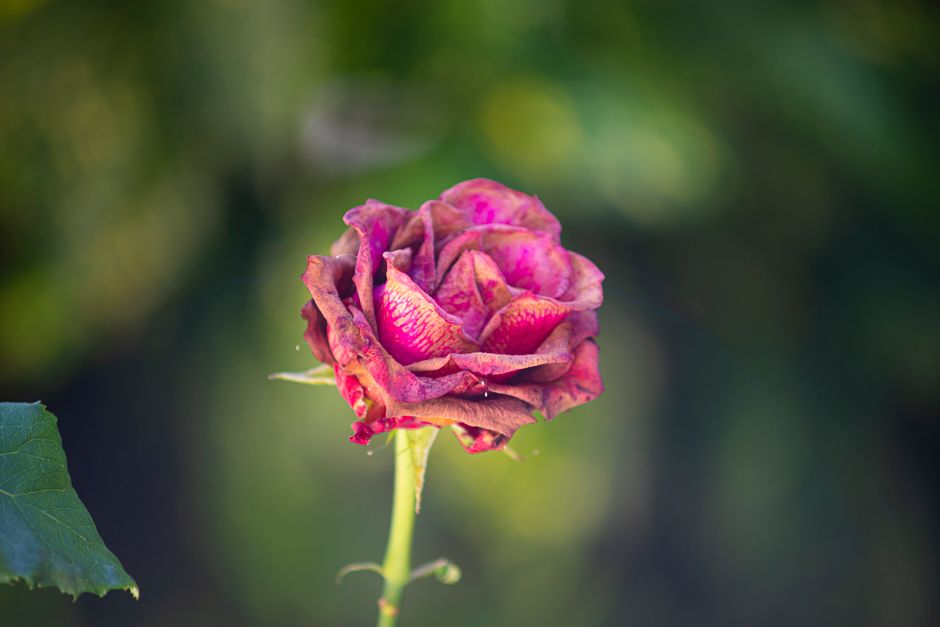
Roses are tough plants, but they are also dramatic. When a rose bush starts to fail, it is usually trying to tell you something specific. The most common reasons roses die are poor watering habits, lack of sunlight, fungal diseases, or pest infestations. Fixing the problem starts with identifying the actual cause, because treating a fungus when the real issue is overwatering will not save the plant. Here is how to diagnose what is killing your roses and what to do about it.
Why Are My Roses Dying Common? Causes And How To Fix Them
The fastest way to save a dying rose is to check the basics first. Most rose problems fall into four categories: water, light, disease, and pests. Look at the leaves, stems, and soil before you do anything else. A rose that is too dry has crispy brown edges on the leaves. A rose that is too wet has yellow leaves that drop off easily. A rose with a fungal problem has black spots, white powder, or orange growth on the leaves. A rose with pests has chewed leaves, webbing, or tiny insects visible on the buds and stems.
Is Your Rose Getting Too Much or Too Little Water?
Watering mistakes kill more roses than any disease. Roses need deep, infrequent watering rather than light daily sprinkling. The goal is to soak the root zone, which extends about 12 to 18 inches deep, and then let the top inch of soil dry out before watering again.
Overwatering is the more common killer. When soil stays soggy, the roots cannot get oxygen. They begin to rot, and the plant cannot take up water even though the soil is wet. This is why an overwatered rose looks wilted and yellow — it is drowning, not thirsty. If you dig down and the soil is muddy or smells sour, you are watering too much.
Underwatering is easier to spot. The leaves will look dull, droop during the hottest part of the day, and develop brown, crispy edges. If the soil is dry more than two inches below the surface, the plant needs water. A good rule is to water deeply once or twice a week during hot weather, depending on your soil type. Sandy soil drains fast and needs more frequent watering. Clay soil holds water and needs less.
Does Your Rose Get Enough Sunlight?
Roses are sun-loving plants. They need at least six hours of direct sunlight each day to bloom well and stay healthy. Less than that, and the plant becomes weak, leggy, and more vulnerable to disease.
If your rose is in a spot that gets morning shade or is blocked by a tree or building, it may be slowly starving. The plant will produce fewer blooms, the stems will stretch toward the light, and the leaves may stay small. The fix is simple but not instant: move the rose to a sunnier location in the fall or early spring, or prune back whatever is shading it.
One caveat: in very hot climates, afternoon sun can scorch the leaves. If you live somewhere with intense summer heat, morning sun with some afternoon shade is often better. But in most of the United States, more sun is the answer, not less.





Common Fungal Diseases That Kill Roses
Fungal diseases are the second most common reason roses die. Black spot is the most widespread. It causes black spots with feathery edges on the leaves, and the leaves turn yellow and fall off. Left untreated, black spot can defoliate a rose completely, weakening it until it dies.
Powdery mildew looks like a white or gray powder on the leaves, stems, and buds. It thrives in warm days and cool nights with high humidity. It rarely kills a mature rose outright, but it weakens it and distorts new growth. Rust appears as orange or rust-colored spots on the undersides of leaves. It spreads quickly in cool, wet weather.
Fungicides work best when applied early, at the first sign of disease. But the most effective prevention is cultural: water at the base of the plant, not on the leaves. Wet leaves are how fungal spores spread. Also, clean up fallen leaves and debris around the base of the rose, because that is where the spores overwinter. Choose disease-resistant rose varieties when planting new bushes. Some research has shown that resistant varieties reduce the need for fungicides significantly, though no variety is completely immune.
Are Pests Eating Your Rose Alive?
Aphids are the most common rose pest. These small, soft-bodied insects cluster on new growth and buds, sucking sap from the plant. They excrete a sticky substance called honeydew, which attracts ants and can lead to sooty mold. A heavy aphid infestation can stunt growth and deform blooms.
Spider mites are tiny and hard to see with the naked eye. They cause a stippled, yellowed appearance on leaves and fine webbing on the undersides. They thrive in hot, dry conditions. Japanese beetles are larger and easier to spot. They chew irregular holes in the leaves and flowers, sometimes skeletonizing entire leaves within days.
For aphids, a strong spray of water from the hose knocks them off and often solves the problem. For spider mites, the same treatment works, but you may need to repeat it. Japanese beetles are harder to control. Hand-picking them in the early morning when they are sluggish is effective for small gardens. Some research indicates that neem oil can help with aphids and mites, but it must be applied thoroughly to the undersides of leaves.
Soil Problems and Nutrient Deficiencies
Roses are heavy feeders. They need balanced nutrition to produce blooms and resist disease. But more fertilizer is not always better. Too much nitrogen produces lush green leaves with few flowers and soft growth that attracts pests.
The most common nutrient problem in roses is a lack of phosphorus, which is needed for bloom production. A deficiency shows up as poor flowering, weak stems, and leaves that turn reddish-purple. Iron deficiency causes yellowing between the veins of young leaves, while magnesium deficiency causes yellowing between the veins of older leaves.
The best approach is to test your soil before adding anything. A soil test tells you the pH and nutrient levels. Roses prefer a slightly acidic soil with a pH between 6.0 and 6.5. If your pH is off, the rose cannot absorb nutrients even if they are present in the soil. Adding compost annually improves soil structure, drainage, and nutrient content. A balanced rose fertilizer applied in early spring and again after the first flush of blooms is usually sufficient.
When to Prune and When to Cut Your Losses
Pruning is not just about shaping the plant. Removing dead and diseased wood prevents problems from spreading. Prune roses in late winter or early spring, just as new growth begins. Remove any canes that are black, brown, or shriveled. Cut at a 45-degree angle about a quarter inch above an outward-facing bud.
If the entire plant is brown and brittle with no green tissue anywhere, check the roots. Dig around the base and scratch the bark on the roots. If the roots are brown and mushy, the plant is likely dead from root rot. If the roots are firm and white, there is still hope. Cut the canes back hard, water appropriately, and give it time.
Sometimes a rose is too far gone to save. If the plant has been struggling for years, has severe disease, or the roots have completely rotted, replacement is the practical choice. When you replant, choose a disease-resistant variety and improve the soil before planting. A rose planted in the right location with proper soil has a much better chance of thriving than one fighting against its environment from day one.
Frequently Asked Questions
Can I revive a rose with no leaves?
Yes, if the canes are still green and the roots are healthy. Check the roots first, prune back dead wood, and water consistently.
How often should I water roses in hot weather?
Deep watering two to three times per week is usually enough, but sandy soil may need more frequent watering. Check the soil two inches down before watering.
What is the white powder on my rose leaves?
That is powdery mildew, a fungal disease that thrives in humid conditions. Improve air circulation and apply a fungicide labeled for powdery mildew.
Should I remove yellow leaves from my rose bush?
Yes, remove yellow leaves and dispose of them in the trash, not the compost pile. They may be diseased and can spread spores to healthy growth.
