
Peeling nails almost always means the nail plate is separating in thin layers at its top edge, and the most common reason is repeated wetting and drying. Nail cells are held together by a natural glue that water and soap break down over time. When your hands are in and out of water all day, that glue weakens, and the layers flake apart. The fix is less about buying a product and more about keeping your nails dry and protecting them from the things that strip them.
What Actually Happens When Nails Peel
A fingernail is built in layers, like a stack of thin sheets pressed together. The medical name for peeling nails is onychoschizia. It is a cosmetic problem, not a sign of a disease on its own.
The layers are bound by fats and proteins that act as a kind of glue. Water is the main enemy. When a nail absorbs water it swells. When it dries out it shrinks. Do that over and over and the bonds between layers start to fail. The top layers lift and peel away.
This is why peeling usually starts at the free edge and works its way down. The tip of the nail takes the most abuse.
One thing worth knowing: peeling nails are not the same as brittle nails that snap off. Peeling is a separation of layers. Brittleness is a break across the whole nail. They can happen together, but they have somewhat different causes.
Why Are My Nails Peeling And How To Stop It
The single biggest cause is water. If you wash your hands often, do dishes by hand, clean, or work with wet hands, you are soaking your nails all day. Each soak-and-dry cycle weakens the bond between layers. This is why peeling is so common in nurses, cooks, cleaners, hairdressers, and anyone caring for a baby.
Household chemicals make it worse. Detergents, bleach, and cleaning sprays strip the natural oils from the nail surface. Without those oils, the nail loses flexibility and the layers separate more easily.
Cold, dry weather adds to it. Low humidity pulls moisture out of the nail faster. Winter is when many people notice peeling most.
Age is a factor too. Nails tend to become drier and thinner with age, though this varies a lot from person to person.
Finally, nail habits matter. Picking, biting, or peeling at a lifted edge pulls more layers off and keeps the cycle going.
To stop it, work on all of these at once:
- Keep nails short. A shorter nail has less free edge to catch and peel.
- Wear gloves for wet work and for cleaning. This is the highest-value change for most people.
- Use a gentle, non-acetone remover and skip harsh polish routines for a while.
- Moisturize the nail and the skin around it. A thick cream or ointment helps hold moisture in.
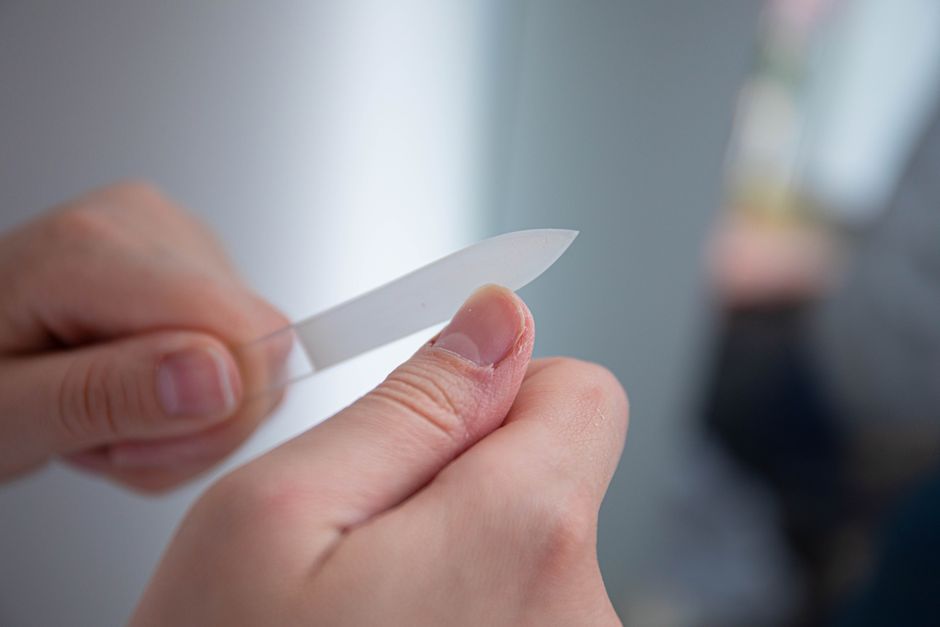
- Do not pick at lifted edges. Trim them smoothly with a file instead.
- Ask about biotin before taking it. See the section below.
Is Peeling Nails A Sign Of A Vitamin Deficiency?
Usually not. This is one of the most common assumptions people make, and for most healthy adults eating a normal diet, it is wrong.
Severe nutritional deficiencies can affect nails. Iron deficiency, low zinc, and low vitamin B12 have all been linked to nail changes in some research. But when these are the cause, there are usually other signs too, like fatigue, paleness, or tingling in the hands and feet. Peeling nails on their own are rarely the first or only clue.
Biotin deserves a specific mention because it is heavily marketed for nails. Biotin deficiency is genuinely rare. It is seen mainly in certain inherited conditions, in pregnancy in some cases, and in people on long-term anti-seizure medications. For people who are not deficient, the evidence that biotin supplements strengthen nails is weak. Some small studies suggest a possible benefit, but the results are mixed and the studies are small. There is no strong evidence that biotin helps people who already have enough.
There is also a real safety point. Biotin supplements can interfere with certain lab tests, including some thyroid and heart tests, and can cause misleading results. If you take biotin and your doctor orders blood work, tell them.
If you have peeling nails plus other symptoms, or if the peeling is severe, see a doctor. A simple blood test can check for the common deficiencies.




When Peeling Nails Are A Sign Of Something Else
Most peeling is caused by the everyday wear described above. But some patterns point to a medical cause, and those are worth a doctor’s look.
If the peeling comes with pain, redness, swelling, or a change in the nail’s shape or color, that is different from simple cosmetic peeling. So is peeling that starts deep at the base of the nail rather than at the tip.
A few conditions can cause nail changes that look like peeling or splitting:
- Fungal nail infection, which usually also causes thickening, yellowing, or crumbling
- Psoriasis, which can cause pitting, ridges, or separation of the nail from the nail bed
- Thyroid problems, which can make nails dry and brittle
- Iron deficiency or other nutritional issues
- Skin conditions like eczema around the nail
These are not the usual explanation for peeling nails. But if the problem is persistent, one-sided, or comes with other symptoms, it is reasonable to get it checked rather than assume it is just dryness.
Does Diet Or Hydration Help Nails Stop Peeling?
Staying hydrated supports normal body function, and nails are part of the body. But drinking more water will not fix nails that are being damaged by daily wetting and drying. The problem is on the outside of the nail, not inside.
A balanced diet gives your body what it needs to build nail tissue. Protein matters because nails are made largely of a protein called keratin. So do iron and zinc. But for someone eating normally, adding more of these rarely changes peeling nails.
Where diet genuinely matters is when there is a real deficiency. In that case, correcting it can help. That is a job for a doctor, not a supplement aisle.
The honest summary: diet supports healthy nails over time, but it is not the lever that fixes peeling for most people. The lever is protecting your nails from water and chemicals.
What Actually Helps And What Is Mostly Marketing
Nail hardeners are popular, and some can help temporarily. But many contain ingredients that can make nails more brittle with long-term use, so they are not a permanent fix. If you use one, follow the label and give your nails breaks.
Nail-strengthening polishes and “growth” products often promise more than they deliver. There is limited evidence that most of them change the underlying problem.
What has the best support is unglamorous: keep nails short, keep them dry, wear gloves, and moisturize. These steps address the actual cause.
If you want to go a step further, a few habits help:
- Pat hands dry instead of rubbing, and dry thoroughly after washing
- Apply moisturizer right after washing while nails are still slightly damp
- Choose a cream or ointment over a thin lotion for better moisture retention
- File in one direction rather than sawing back and forth, which can cause more splitting
- Give your nails a break from polish and remover now and then
None of this is fast. Nails grow slowly, and a fingernail takes several months to fully replace itself. So even when you remove the cause, you will not see a fully healthy nail until the damaged part has grown out. That timeline is normal and not a sign that nothing is working.
How Long Until Nails Stop Peeling?
Once you remove the cause, new nail growth is healthy from the start, but the old damaged nail has to grow out. Fingernails grow slowly, so it can take several months before the peeling edge is fully gone.
That is why consistency matters. A few days of gloves will not fix it. Weeks of protecting your nails from water and chemicals will.
If you have made these changes for a few months and the peeling is not improving, or if it is getting worse, that is a good reason to see a doctor or a dermatologist. They can check for an underlying cause.
Frequently Asked Questions
Why are my nails peeling?
The most common cause is repeated wetting and drying, which breaks the bonds between the layers of the nail. Household chemicals, dry weather, and picking at the edges make it worse.
Does biotin help peeling nails?
For people who are not biotin deficient, the evidence that biotin strengthens nails is weak and mixed. Biotin deficiency is rare, and biotin supplements can also interfere with certain lab tests.
Can a vitamin deficiency cause peeling nails?
Severe deficiencies in iron, zinc, or vitamin B12 have been linked to nail changes, but this is uncommon and usually comes with other symptoms. Peeling nails alone are rarely the first sign.
How long does it take for peeling nails to grow out?
Fingernails grow slowly, so it can take several months for the damaged part to fully grow out even after you fix the cause. If nothing improves after a few months, see a doctor.
