
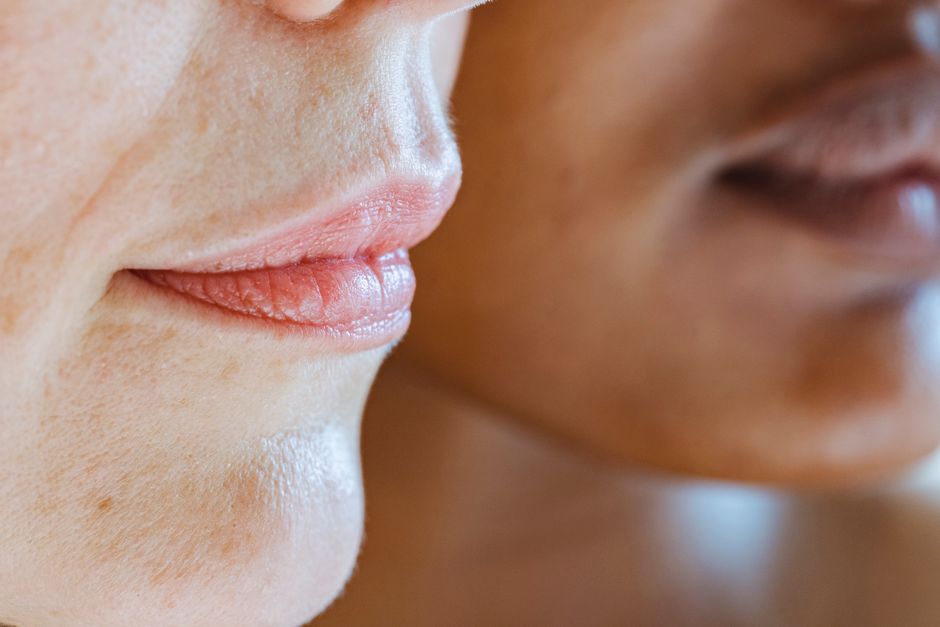
Cracked lips usually come from a mix of dryness, lip licking, cold or windy weather, and the fact that lips have no oil glands to protect themselves. The fix is simpler than most people expect: stop licking, seal in moisture with a plain ointment, and give the skin time to heal. When cracks keep coming back or won’t heal, something else may be going on and it’s worth getting checked.
Why Are My Lips Cracking Causes And How To Fix It
Lips crack because the skin on your lips is built differently from the skin on the rest of your face. The outer layer is much thinner. There are no sweat glands and no oil glands in the lip tissue itself. That means lips cannot moisturize themselves the way your cheeks or hands can.
They depend entirely on moisture from your mouth, the air around you, and whatever you put on them. When that balance tips, the surface dries, loses flexibility, and splits when you talk, smile, or eat.
The most common triggers stack on top of each other:
- Lip licking. This is the single most common cause of chronic chapped lips. Saliva contains digestive enzymes. It feels soothing for a moment, then evaporates and takes your lips’ own moisture with it. The cycle repeats and the cracks get worse.
- Dry or cold air. Low humidity pulls water from the skin. Winter air and indoor heating both do this.
- Sun exposure. Lips have very little melanin protection and burn easily, which dries and damages them.
- Mouth breathing. Breathing through your mouth, especially at night, keeps lips constantly exposed to airflow.
- Harsh products. Some lip balms contain menthol, camphor, phenol, or flavorings that irritate rather than protect. Toothpastes and some cosmetics can do the same.
- Medications. Isotretinoin (Accutane) and some other drugs commonly cause severely dry lips. This is a well-documented side effect.
- Nutritional gaps. Low intake of certain B vitamins or iron can contribute, though this is less common than the everyday causes above.
One thing worth knowing: the tingling, “medicated” feel of some lip balms is often irritation, not healing. People reach for those products because they feel like they’re doing something. They frequently make the problem worse.
What Is the Difference Between Chapped Lips and Cheilitis?
Chapped lips are a temporary dryness problem. Cheilitis is inflammation of the lips, and it has several distinct forms. The difference matters because the treatment is not the same.
Exfoliative cheilitis causes ongoing peeling and crusting, often driven by habitual licking or picking. Angular cheilitis shows up as cracks and soreness at the corners of the mouth. It can involve a yeast or bacterial overgrowth, and it’s more common in people who wear dentures, have deep skin folds at the corners, or have a weakened immune system.
Actinic cheilitis is a sun-damage condition, mostly on the lower lip. It causes persistent dryness, scaling, and sometimes a whitish discoloration. It is considered a precancerous change and needs a doctor’s evaluation, not a lip balm.
Contact cheilitis is an allergic or irritant reaction, often to a lip product, toothpaste, or food. It usually comes with redness and swelling beyond simple dryness.
If your lips are just dry and cracked, you almost certainly have simple chapped lips. If you have sores, deep splits at the corners, bleeding that won’t stop, white patches, or a lip that stays abnormal for weeks, that’s a different conversation with a clinician.
How Do You Treat Cracked Lips at Home?
The core treatment is unglamorous and it works. Stop the damage, then protect the surface while it repairs itself. Lip skin turns over relatively quickly, so consistent care usually shows improvement within days, though badly cracked lips can take a couple of weeks to fully settle.
Here’s what the evidence and clinical practice support:
- Use a plain occlusive ointment. Petroleum jelly is the standard. So are plain mineral oil and thick, fragrance-free ointments. Occlusives don’t add water — they trap what’s already there and block irritants. That’s exactly what cracked lips need.
- Apply it often, especially before bed. Overnight is when lips dry out most. A thick layer before sleep does more than several daytime applications.
- Stop licking and picking. This is the hardest part and the most important. Awareness alone helps many people break the habit.
- Choose a lip balm with sun protection for daytime outdoor use. Sun damage compounds dryness. An SPF lip product is reasonable for prolonged sun exposure.
- Avoid irritating ingredients. Skip balms with menthol, camphor, phenol, and heavy fragrances. Skip lip exfoliating scrubs while lips are cracked — they remove the protective layer you’re trying to rebuild.
- Address the environment. A humidifier in dry months and staying hydrated help the baseline, though drinking water alone won’t fix lips that are being licked raw.
Some clinicians also recommend avoiding toothpastes with strong flavorings or sodium lauryl sulfate if irritation seems linked to them. The evidence for this is not strong, but it’s a low-risk change worth trying if other steps aren’t working.
Which Lip Balm Ingredients Actually Help?
Not all lip products are equal, and the ingredient list tells you most of what you need to know. Occlusives seal moisture in. Humectants pull water toward the skin. Irritants work against both.
| Ingredient type | Examples | What it does |
|---|---|---|
| Occlusive | Petroleum jelly, mineral oil, beeswax, lanolin, dimethicone | Forms a barrier that slows water loss and blocks irritants |
| Humectant | Glycerin, hyaluronic acid | Draws water into the outer skin layer |
| Potential irritant | Menthol, camphor, phenol, strong flavorings, fragrances | Can cause tingling, redness, and worsening dryness |
For cracked lips specifically, occlusives do the heavy lifting. Humectants are helpful in a formula but less essential. A simple petrolatum-based product is often the most reliable choice, and it’s also one of the cheapest.
Lanolin deserves a note. It’s an effective occlusive and a common ingredient in nipple creams and lip products. A small number of people are allergic to it. If a lanolin product makes your lips redder or itchier, that’s a sign to switch.
When Should You See a Doctor About Cracked Lips?
Most cracked lips resolve with basic care. Some don’t, and a few warning signs mean it’s time to get a professional opinion.
See a clinician if:
- Cracks or sores haven’t improved after a few weeks of consistent, gentle care
- You have deep splits, bleeding, or open sores that won’t heal
- Sores at the corners of your mouth persist or keep returning
- You notice white patches, a persistently pale or discolored area, or a lip that feels thickened
- Swelling, significant pain, or signs of infection appear
- Cracked lips came on with a new medication
These signs don’t mean something serious is happening. Most of the time they point to a treatable issue like angular cheilitis or a contact reaction. But a lip change that persists for weeks is exactly the kind of thing that deserves a look rather than another layer of balm.
Can Dry Lips Be a Sign of Something Else?
Sometimes. Persistent dryness that doesn’t respond to good lip care can be a clue to an underlying issue, though everyday causes remain far more common.
Nutritional deficiencies, particularly of certain B vitamins and iron, are associated with cheilitis and cracks at the mouth corners. Thyroid conditions and some autoimmune and skin conditions can also affect the lips. Dehydration plays a role. So can chronic mouth breathing from allergies or a blocked nose.
The key word is persistent. Dry lips that come and go with the weather are ordinary. Lips that stay cracked no matter what you do, or that come with other symptoms like fatigue, mouth sores, or skin changes elsewhere, are worth discussing with a doctor.
One clarification that often gets lost: cracked lips are not usually a sign of serious illness, and most people who search for a hidden cause have simple chapped lips. The habit of licking is the culprit far more often than any vitamin deficiency.
Frequently Asked Questions
Why do my lips keep cracking even when I use lip balm?
Most often the balm contains an irritant like menthol or camphor, or you’re still licking your lips between applications. Switch to a plain petroleum-based ointment and apply it more often, especially before bed.
What vitamin deficiency causes cracked lips?
Low intake of certain B vitamins and iron has been linked to cheilitis and cracks at the mouth corners. However, everyday dryness and lip licking are far more common causes than any deficiency.
Is it bad to lick your lips when they are cracked?
Yes. Saliva contains digestive enzymes and evaporates quickly, which dries the lips further and drives a cycle of worsening cracks. Stopping the habit is one of the most effective steps you can take.
How long does it take for cracked lips to heal?
With consistent gentle care, minor cracks often improve within a few days, and badly cracked lips can take a couple of weeks. Lips that haven’t improved after a few weeks of care should be checked by a doctor.
