
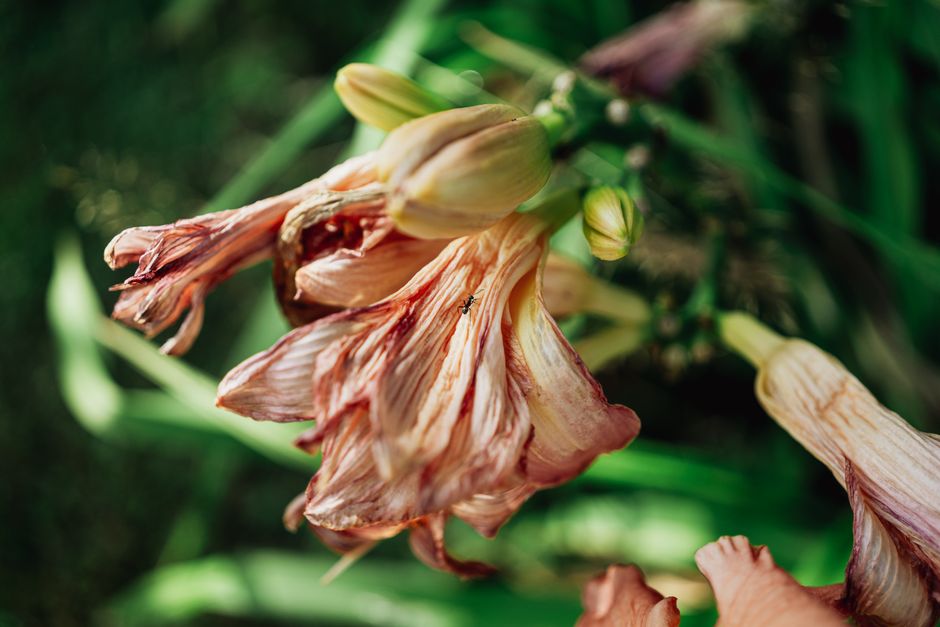
Lilies are supposed to stand tall and proud, but when they flop over and look sad, it is frustrating. Most of the time, wilted lilies are a watering problem—either too much or too little. However, heat stress, root damage, and disease can also cause the same droopy look. The fastest fix is to check the soil moisture first, then look at the roots and stems for signs of rot or damage. Here is how to figure out exactly what is wrong and how to bring your lilies back to life.
Why Are My Lilies Wilted And How Do I Fix Them?
Wilted lilies are almost always a sign that the plant cannot take up enough water to support its leaves and stems. This happens in two main ways: the soil is too dry, or the roots are damaged and cannot absorb water even when it is present.
Start by pushing your finger two inches into the soil near the base of the plant. If the soil is bone dry, your lily is dehydrated and needs a deep watering right away. If the soil is soggy or smells musty, the roots are likely drowning or rotting. In that case, stop watering immediately and let the soil dry out before doing anything else.
Is It Overwatering Or Underwatering?
This is the most common mistake with lilies. Both overwatering and underwatering cause the exact same symptom: limp, drooping leaves.
Underwatering is easy to spot. The soil will be dry to the touch, and the leaves may feel papery or crisp along the edges. The plant simply needs water. Give it a slow, deep soak until water runs out of the drainage holes. In hot weather, potted lilies may need water every day.
Overwatering is more dangerous. When roots sit in waterlogged soil, they cannot get oxygen. The roots start to die, and the plant can no longer take up water even though the soil is wet. This is called root rot. The leaves will look yellow and mushy, and the soil will feel cold and damp. If you suspect root rot, remove the plant from the pot and inspect the roots. Healthy roots are firm and white. Rotted roots are brown, black, or slimy.
Heat Stress And Sun Scorch
Lilies love sun, but they do not love extreme heat. When temperatures climb above 85°F, many lily varieties struggle to keep up with water loss through their leaves.
The plant loses water through its leaves faster than the roots can pull it up from the soil. The leaves wilt as a protective response. This is especially common in the afternoon on hot days. If your lilies perk up in the evening when temperatures cool down, heat stress is the culprit.
To fix this, add a layer of mulch around the base of the plant. Mulch keeps the soil cool and slows water evaporation. Water deeply in the morning so the plant has a full reservoir before the heat of the day hits. Avoid watering in the middle of the day—much of it will evaporate before reaching the roots.





Root Damage From Pests And Disease
Sometimes the problem is not the weather or your watering habits. It is what is happening underground.
Lily beetle larvae are a common pest that chews on leaves and stems, weakening the plant. But the more serious problem is often underground. Bulb mites and nematodes can damage the roots and bulb, preventing the plant from taking up water. If the soil is moist but the plant keeps wilting, dig up the bulb carefully and inspect it. A healthy bulb is firm and plump. A soft, mushy, or hollow bulb is likely diseased.
Viral infections can also cause wilting. Lily mosaic virus causes mottled, streaked leaves and poor growth. There is no cure for viral infections in lilies. The best course of action is to remove the infected plant so the virus does not spread to healthy neighbors.
What About Cut Lilies In A Vase?
Wilted cut lilies are a different problem entirely. The stem has been severed, so it cannot pull water from the soil. Instead, the issue is usually bacterial growth in the vase water or air bubbles trapped in the stem.
To revive cut lilies, recut the stems at a 45-degree angle under running water. This removes any air bubbles and gives the stem a fresh surface for water uptake. Then place them in clean, lukewarm water. Change the water every two days and recut the stems each time. Remove any leaves that sit below the waterline—they rot quickly and feed bacteria that clog the stem.
How To Prevent Wilting In The Future
Prevention is simpler than treatment. Lilies need consistent moisture but excellent drainage. They do not like to sit in wet soil.
Here are the key habits that keep lilies standing tall:
- Plant lilies in well-draining soil. If you have heavy clay, mix in compost or plant in raised beds.
- Water deeply once or twice a week rather than a little bit every day. Deep watering encourages deep root growth.
- Water at the base of the plant, not on the leaves. Wet leaves invite fungal diseases.
- Apply a 2-inch layer of mulch to keep soil moisture steady and roots cool.
- Divide overcrowded bulbs every 3 to 4 years. Crowded bulbs compete for water and nutrients.
- Choose lily varieties suited to your climate. Some hybrids tolerate heat better than others.
Fertilizing helps too, but do not overdo it. A balanced fertilizer applied in early spring gives lilies the nutrients they need. Too much nitrogen produces lush leaves that wilt faster in heat because they lose more water.
When To Give Up On A Wilted Lily
Not every wilted lily can be saved. If the bulb is soft and rotten, the plant will not recover. If the stem is completely brown and crispy, the plant has already died.
If the leaves are wilted but the stems are still green and firm, there is a good chance the plant will bounce back. Cut back any dead or yellowing leaves, fix the watering issue, and give the plant time. Lilies are resilient. A plant that looks hopeless in July can come back strong the following spring if the bulb is healthy.
If the bulb is mushy, dig it up and discard it. Do not compost it—the disease can spread through the compost pile. Plant a fresh bulb in a different spot to avoid the same pathogens.
Frequently Asked Questions
Why are my potted lily leaves turning yellow and drooping?
This is almost always overwatering. Potted lilies need drainage holes and soil that dries out slightly between waterings. If the roots sit in water, they rot and the leaves turn yellow and flop.
Can wilted lilies come back after being dried out?
Yes, if the bulb is still firm and the stems are green. Give the plant a deep soak and keep the soil consistently moist but not soggy. New growth should appear within a week or two.
Should I cut off wilted lily leaves?
Cut off only the leaves that are fully yellow or brown. Green leaves are still photosynthesizing and feeding the bulb for next year’s bloom. Removing them too early weakens the plant.
How often should lilies be watered?
Most lilies need about 1 inch of water per week. In hot weather or in pots, they may need more frequent watering. Always check the soil before watering—if the top two inches are dry, it is time to water.
