
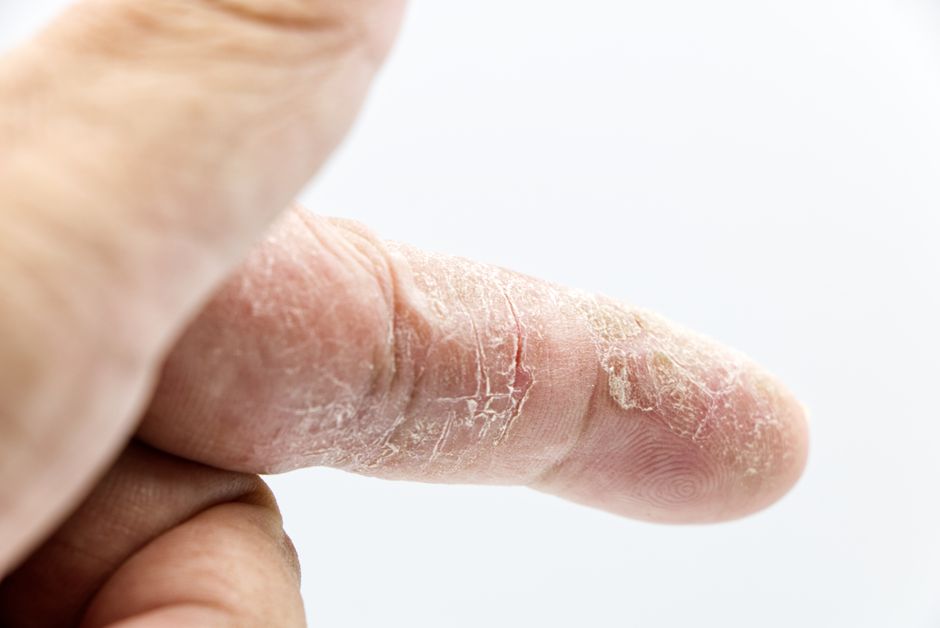
Fingertips crack when the skin loses its ability to bend without breaking. The outer layer of skin, the stratum corneum, normally holds water and stays flexible. When it dries out, loses oils, or is repeatedly stressed by cold, water, or chemicals, it becomes brittle and splits — often at the fingertip pads or along the sides of the nail. The fix depends on the cause, but for most people the first steps are the same: protect the skin barrier, restore moisture, and stop the exposures that keep breaking it down.
Most fingertip cracking is dry skin made worse by cold weather, frequent handwashing, or household chemicals. It usually responds well to consistent moisturizing and barrier protection. Some cases have a medical cause — eczema, psoriasis, fungal infection, or a systemic condition — and those need a different approach. Knowing which situation you are in decides whether home care is enough or whether you should see a clinician.
Why Are My Fingertips Cracking And How Do I Treat It?
The skin on your fingertips is built to withstand a lot. It has a thick outer layer and a high density of sweat glands, but very few oil glands compared with other parts of the body. That matters because oil helps seal in water. Your fingertips rely more on external moisture and on the natural fats between skin cells to stay supple. When those fats are stripped away, water escapes and the skin loses elasticity.
The cracking itself is a mechanical failure. Dry skin is less able to stretch. When you grip, pinch, or press with a fingertip, the surface can split instead of flexing. That is why cracks often appear on the pads and along the nail edges, where the skin is pulled tight over a firm surface.
Several things drive this process:
- Cold, dry air. Low humidity pulls moisture from skin, and indoor heating lowers humidity further.
- Frequent handwashing and sanitizer. Water and alcohol strip oils and can disrupt the skin barrier.
- Chemicals and cleaning products. Detergents, dish soap, and solvents remove natural fats from the skin.
- Wet work. Repeated soaking — washing dishes, food prep, hairdressing — swells and then dries the skin repeatedly.
- Age. Skin loses some of its ability to hold water and repair itself over time.
- Underlying skin conditions. Eczema and psoriasis commonly affect the hands and cause cracking.
Treatment follows the cause. For ordinary dry, cracked fingertips, the core approach is to reduce water loss and give the skin a chance to repair. That means shorter, cooler handwashing, gentle unscented cleansers instead of harsh soaps, and moisturizing immediately after your hands touch water. Thick ointments and creams — not thin lotions — work best because they form a barrier that slows water loss. Applying one before bed and covering the hands can help overnight.
For cracks that are deep or painful, a clinician may suggest a stronger barrier ointment or a protective dressing. If a crack shows signs of infection — spreading redness, warmth, pus, or increasing pain — that needs medical attention rather than home care.
When Is Cracked Fingertips a Sign of Something More?
Ordinary dry skin improves with consistent care within a couple of weeks. Cracking that keeps returning, spreads, or comes with other symptoms may point to a medical cause. The pattern and location often give clues.
Eczema (also called hand dermatitis) is one of the most common causes of persistent hand cracking. It causes dry, itchy, inflamed skin and is often triggered by irritants or allergens. Psoriasis can cause thick, scaly patches that crack, sometimes with small pits in the nails. Fungal infections can cause peeling and cracking, usually between the fingers or on the palm, and often affect one hand more than the other.
Less commonly, cracking and peeling skin can relate to thyroid problems, nutritional deficiencies, or other systemic conditions. These are uncommon causes and are usually accompanied by other signs. A clinician can help sort out which situation applies.
See a clinician if:
- Cracks are deep, bleeding, or very painful
- There are signs of infection — redness spreading, warmth, pus, fever
- Home care for two to three weeks has not helped
- You have diabetes, poor circulation, or a weakened immune system
- The cracking comes with rash, itching, or nail changes
People with diabetes deserve particular caution. Reduced sensation and slower healing mean a small crack can become a more serious wound. Check feet and hands regularly and treat breaks in the skin promptly.
What Actually Repairs Cracked Skin?
Moisturizers work by two mechanisms: adding water to the skin and sealing it in. Both matter, but sealing is where most people fall short. A product that adds water without holding it there will not fix cracking on its own.
Ingredients worth knowing:
- Occlusives like petrolatum and mineral oil form a physical barrier that slows water loss. They are among the most effective for cracked skin.
- Humectants like glycerin draw water into the outer skin layer.
- Emollients soften and smooth the skin surface and help it feel less rough.
- Ceramides are natural fats found between skin cells. Some evidence supports ceramide-containing products for barrier repair, though results vary by product and person.
Urea is sometimes used in hand creams for very dry skin. It can help soften thickened, rough skin at higher concentrations, but it can also sting cracked or broken skin. Start with lower concentrations if you try it.
There is no single product that works for everyone. The general principle — thick, fragrance-free, applied often — matters more than any one ingredient. Fragrance and certain preservatives can irritate already damaged skin, so unscented products are usually the safer choice for cracked hands.
How Do You Prevent Fingertips From Cracking Again?
Prevention is mostly about reducing the exposures that strip and stress the skin, then keeping the barrier intact. Once skin has healed, it still needs consistent protection to stay that way.
Practical steps:
- Wash with lukewarm water and a gentle, fragrance-free cleanser. Hot water strips oils faster.
- Moisturize every time your hands get wet, not just once a day.
- Wear gloves for dishwashing, cleaning, and wet work. Cotton liners under rubber gloves help if you react to rubber.
- Use gloves outdoors in cold weather.
- Keep hand sanitizer for times when soap and water are not available, and follow with moisturizer.
- Choose pump dispensers over bar soap if bar soap leaves skin tight.
One point that surprises people: over-washing is often a bigger problem than under-moisturizing. If you wash your hands many times a day for work or caregiving, the barrier never gets a chance to recover. Building moisturizing into the routine after every wash does more than any single intensive treatment.
For hands that crack every winter, starting a thicker moisturizer before the cold season — rather than waiting for cracks to appear — tends to work better than playing catch-up.
Does Drinking More Water Fix Cracked Fingertips?
No. Drinking water does not directly fix cracked skin in a person who is otherwise well hydrated. The outer skin layer gets its moisture mainly from the tissue beneath it and from what you put on it, not from how much you drink.
Dehydration can affect skin, but this is a whole-body issue, not a fingertip one. The far bigger factor for cracked fingertips is what happens on the surface — how often the skin is washed, what it is exposed to, and whether a moisturizer is sealing in water. This is one of the more persistent myths about dry skin, and it leads people to focus on the wrong fix.
That said, staying adequately hydrated is reasonable for general health. It just is not a treatment for cracked fingertips on its own.
Which Products and Habits Are Worth Trying?
Start simple. A thick, fragrance-free ointment or cream applied after every handwash and before bed covers most cases of ordinary dry, cracked fingertips. Add gloves for wet work and cold weather. Give it two to three weeks of consistency before deciding it is not working.
If that is not enough, a clinician can help identify triggers, rule out eczema or fungal infection, and suggest prescription options when needed. For eczema-related cracking, topical treatments prescribed by a clinician can be more effective than moisturizer alone. For suspected fungal infection, antifungal treatment is needed — moisturizer will not clear it.
Be cautious with home remedies that promise fast repair. Some, like soaking hands in warm oil or applying heavy layers of product, are harmless and may help temporarily. Others, like using harsh exfoliants on cracked skin, can make things worse by removing protective layers.
The bottom line: cracked fingertips are usually a barrier problem, and barrier problems respond to barrier care. Protect, moisturize, and reduce exposure. If it does not improve, get it looked at.
Frequently Asked Questions
Why do my fingertips crack in winter?
Cold air holds less moisture, and indoor heating lowers humidity further, so skin loses water faster and becomes less flexible. The combination of dry air and frequent handwashing in cold season is what drives most winter cracking.
What is the fastest way to heal cracked fingertips?
Apply a thick, fragrance-free ointment immediately after every handwash and before bed, and protect hands from water and cold with gloves. Consistent barrier care over one to two weeks is what allows most cracks to close.
Can cracked fingertips be a sign of a vitamin deficiency?
It is possible but uncommon; deficiencies in certain vitamins and minerals can affect skin, but they usually cause other symptoms too. Persistent cracking is far more often caused by dry skin, irritants, or a skin condition like eczema.
When should I see a doctor for cracked fingertips?
See a clinician if cracks are deep, bleeding, or infected, or if home care for two to three weeks has not helped. People with diabetes or poor circulation should seek care sooner because small breaks in the skin can become more serious.
