
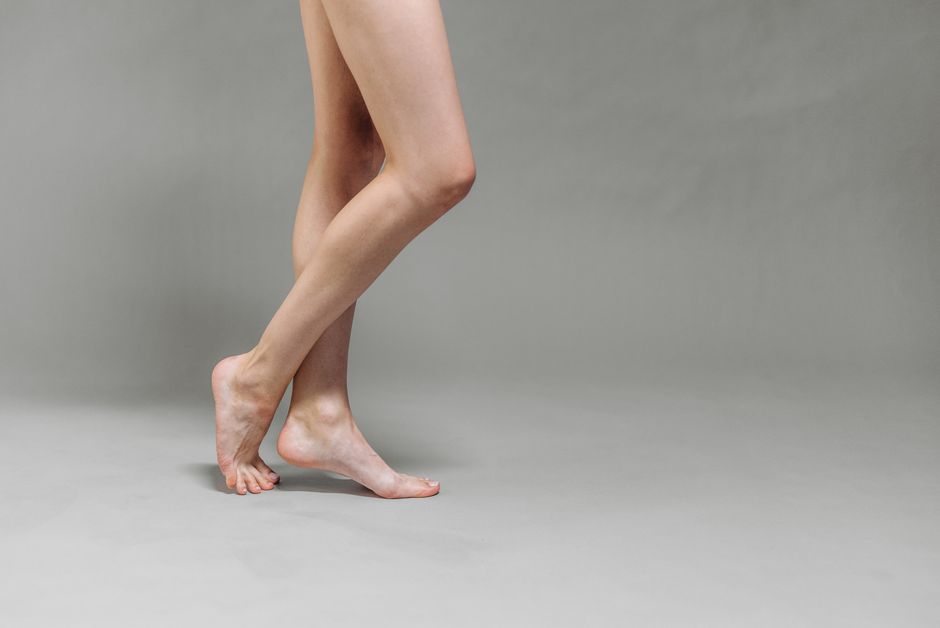
Tight ankles can make walking uncomfortable and limit how you move. The feeling usually comes from stiff joints, tight muscles, or inflammation in the tissues around your ankle. Most cases improve with specific stretches, strengthening exercises, and paying attention to your footwear and daily habits.
What Actually Causes Tight Ankles?
Several things can make your ankles feel tight. The most common cause is simply not moving your ankle through its full range of motion often enough. If you sit at a desk most of the day or wear shoes with a raised heel, your ankle joint stays in a slightly bent position for hours. That shortens the calf muscles and Achilles tendon over time.
Previous injuries are another major cause. Even a mild ankle sprain that healed years ago can leave behind scar tissue and altered movement patterns. The joint may not move as freely as it once did. Research published in the Journal of Orthopaedic & Sports Physical Therapy found that people with a history of ankle sprains often have measurable stiffness in the joint for years after the injury.
Arthritis can also cause tightness. Osteoarthritis wears down cartilage in the joint. Rheumatoid arthritis causes inflammation in the lining of the joint. Both make the ankle feel stiff and tight, especially in the morning or after sitting still for a while.
Less common causes include nerve compression or fluid retention. If your ankles feel tight and look puffy, swelling may be the issue rather than muscle stiffness. That requires a different approach.
How Can You Tell If It Is Muscle Tightness or Joint Stiffness?
This distinction matters because the treatment differs. Muscle tightness usually feels like a pulling sensation in the calf or along the sides of the ankle. It often improves after you warm up or stretch. Joint stiffness feels deeper, inside the ankle itself. It may come with grinding, clicking, or a sensation that the joint simply will not bend as far as it used to.
A simple test can help. Sit on the floor with your legs straight out in front of you. Flex your foot toward your knee as far as you can without pain. Then point your foot away from you. Compare the range of motion between your two ankles. If one side is noticeably less flexible, that points toward a joint issue or past injury on that side.
Another clue is timing. Muscle tightness often feels worst after prolonged sitting or upon waking but loosens up within a few minutes of walking. Joint stiffness from arthritis tends to last longer — sometimes 30 minutes or more before it starts to feel better. The CDC notes that morning stiffness lasting over 30 minutes is a common sign of inflammatory arthritis.
What Are the Best Stretches for Tight Ankles?
Stretching the calf muscles is the most effective way to relieve ankle tightness caused by muscle tension. The gastrocnemius and soleus muscles attach to the heel through the Achilles tendon. When these muscles are tight, they pull on the ankle and limit how much you can bend it.
The standing calf stretch is straightforward. Stand facing a wall with your hands on it at shoulder height. Step one foot back and keep that heel on the floor. Keep the back leg straight and bend the front knee. You should feel a stretch in the middle of your calf. Hold for 30 seconds. Repeat three times on each side.
The soleus stretch targets the deeper calf muscle. It is the same position but with the back knee bent. Keep the heel down. You will feel the stretch lower in the calf, closer to the heel. This stretch is especially important because the soleus is often overlooked.
Ankle circles and alphabet exercises help with joint mobility. Sit with your leg lifted and trace the alphabet with your big toe. This moves the ankle through all its normal directions. Do this once a day. It takes about 60 seconds and keeps the joint fluid moving.





Why Are My Ankles Tight And What Can I Do About It Through Strengthening?
Weak muscles around the ankle can make the joint feel unstable, which your body interprets as tightness. The muscles tighten up to protect the joint from moving into positions it cannot control. Strengthening those muscles often relieves the sensation of tightness better than stretching alone.
The towel scrunch is a simple exercise. Place a small towel on the floor. Sit in a chair with your foot on the towel. Use your toes to scrunch the towel toward you. This strengthens the small muscles in the foot and the front of the ankle. Do 20 scrunches per foot.
Calf raises build strength in the back of the ankle. Stand with your feet hip-width apart. Rise up onto your toes slowly. Hold for two seconds. Lower back down. Start with 10 repetitions. Work up to three sets of 15 as you get stronger. The American Academy of Orthopaedic Surgeons recommends calf raises as a basic exercise for ankle health.
Resistance band work targets the muscles on the outside and inside of the ankle. Sit with your leg straight. Loop a resistance band around your foot. Pull your foot outward against the band. Then pull it inward. This strengthens the peroneal muscles and the posterior tibialis. Both are important for ankle stability.
| Approach | Best For | Example Exercise | Frequency |
|---|---|---|---|
| Stretching | Muscle tightness, reduced flexibility | Standing calf stretch | Daily, 3 reps of 30 seconds |
| Strengthening | Weakness, instability, protective tightness | Calf raises, towel scrunches | Every other day, 2-3 sets |
| Mobility work | Joint stiffness, arthritis | Ankle alphabet, circles | Daily, 1-2 minutes |
What Role Do Shoes and Footwear Play?
Your shoes affect your ankles more than most people realize. Shoes with a raised heel keep your ankle in a slightly pointed position all day. This shortens the calf muscles and Achilles tendon. Over months and years, that makes your ankles feel tighter when you take the shoes off and try to stand flat.
Flat shoes or minimalist footwear can also cause issues if you switch too quickly. Your calves and Achilles need time to adapt to the increased stretch. Going from a heeled shoe to a completely flat shoe overnight can strain the tendon and make tightness worse before it gets better.
The best approach is gradual. If you wear shoes with a heel, switch to a lower heel over several weeks. Do not go straight to zero drop. Stretch your calves after taking off your shoes each evening. This counteracts the time spent with your ankle in a shortened position.
Shoes that are too narrow can compress the foot and limit natural movement. This can create a sensation of tightness that is really about the shoe itself. Make sure your shoes have enough room in the toe box. Your toes should be able to spread out slightly when you stand.
When Should You See a Doctor About Tight Ankles?
Most cases of tight ankles improve with stretching, strengthening, and better footwear. But some situations need medical attention. If your ankle is swollen, warm to the touch, or red, that could mean an infection or inflammatory arthritis. See a doctor promptly.
If the tightness came on suddenly after an injury and you cannot put weight on that foot, you may have a fracture or severe sprain. An X-ray or MRI can determine the cause. The American College of Emergency Physicians recommends seeking care if you cannot take four steps on the injured ankle.
If the tightness is accompanied by numbness, tingling, or a feeling that your foot is falling asleep, nerve compression may be the issue. This can happen with conditions like tarsal tunnel syndrome. A podiatrist or orthopedic specialist can evaluate this with nerve tests.
If you have tried consistent stretching and strengthening for six to eight weeks with no improvement, it is reasonable to see a physical therapist. They can assess your specific movement patterns and identify what you are missing. Sometimes the problem is not in the ankle at all but in the hip or knee, and the ankle is just compensating.
Frequently Asked Questions
Can tight ankles cause knee or hip pain?
Yes. Limited ankle motion changes how you walk, which can put extra stress on your knees and hips. Your body compensates by rotating the leg or shifting your weight differently.
How long does it take to loosen tight ankles?
Most people notice improvement within two to four weeks of daily stretching and strengthening. Chronic tightness from old injuries or arthritis may take longer, sometimes two to three months.
Is it better to stretch tight ankles in the morning or evening?
Light stretching in the morning can help reduce stiffness. Deeper stretching is more effective in the evening when your muscles are warm from daily activity.
Can dehydration make your ankles feel tight?
Dehydration can affect muscle function and make tissues less pliable. Staying well hydrated supports overall muscle and joint health, though it is rarely the sole cause of ankle tightness.
