
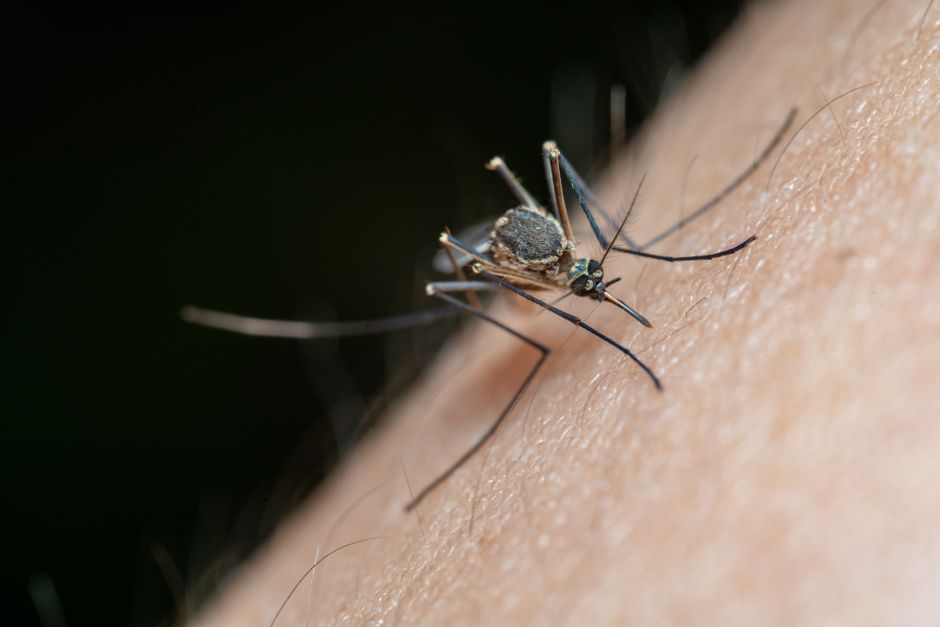
When a mosquito bites you, it isn’t really biting in the way you might picture. It’s probing your skin with a needle-like mouthpart to find a tiny blood vessel, and the itch you feel minutes later is not caused by the bite itself. It’s your own immune system reacting to the mosquito’s saliva.
The itching is an allergic response. When the mosquito injects saliva to keep your blood flowing, your body recognizes proteins in that saliva as foreign and releases histamine and other chemical signals. Those signals widen blood vessels, attract immune cells, and stimulate nerve endings in your skin — and that nerve stimulation is what you experience as itch.
Why Are Mosquito Bites Itchy?
The itch comes from histamine, a compound your immune cells release when they encounter mosquito saliva proteins. Histamine does several things at once in the bitten area. It makes blood vessels dilate and become leaky, which causes the redness and swelling. It also binds to specialized nerve fibers in your skin called itch receptors, sending a signal to your brain that you interpret as the urge to scratch.
This is why mosquito bites are technically a mild allergic reaction. Most people develop sensitivity to mosquito saliva after repeated exposure over a lifetime. The first time a person is bitten by a new species of mosquito, they may have little or no reaction. With repeated bites, the immune response builds and the itch becomes more noticeable.
There is a less obvious point here. People who grow up in areas with heavy mosquito populations often have less intense reactions than visitors to those same areas. Their immune systems have adapted somewhat to the saliva proteins. It doesn’t mean they don’t get bitten — it means their reaction is often milder.
What Happens in Your Skin After a Mosquito Bite?
The sequence starts the moment the mosquito inserts its proboscis. It injects saliva containing anticoagulants and proteins that help it feed without your blood clotting. Your body detects those proteins within seconds to minutes and begins releasing histamine from mast cells in your skin.
The visible result is a raised, red, itchy bump called a wheal. It typically appears within minutes and may grow for a short time before settling. The redness and swelling are from increased blood flow and fluid leaking into surrounding tissue — part of the inflammatory response.
Some people develop a larger, harder swelling called a papule that can last for days. A smaller number of people have more intense reactions with significant swelling, sometimes called skeeter syndrome. That is still an allergic response, not an infection, though it can look alarming.
If you scratch the bite, you can break the skin and introduce bacteria. That is when a simple itchy bump can become a skin infection. The itch itself is not dangerous. The scratching can be.
Why Do Some People React More Than Others?
Reaction intensity varies widely from person to person, and the reasons are not fully understood. Several factors appear to play a role.
- Immune sensitivity: People with more reactive immune systems tend to have stronger responses to mosquito saliva.
- Prior exposure: Repeated bites over time can either increase sensitivity or, in some people, lead to a form of tolerance.
- Age: Young children often have more pronounced reactions than adults, though this varies.
- Genetics: Some evidence suggests a genetic component to how strongly someone reacts.
- Mosquito species: Different species have different saliva proteins, and your reaction may vary depending on which one bites you.
What does not appear to matter much is blood type, despite popular claims. Some studies have suggested mosquitoes may land more often on people with certain blood types, but the evidence is not strong enough to say this is a major factor in who gets bitten or how badly they react.





Does Scratching Make Mosquito Bites Worse?
Yes. Scratching temporarily relieves the itch by overriding the sensation with pain signals, but it also triggers more histamine release and increases inflammation. That is why a bite often itches more after you scratch it.
Scratching also damages the skin barrier. Bacteria from your fingernails or from the environment can enter the broken skin and cause a secondary infection. Signs of infection include increasing redness, warmth, pain, pus, or red streaks spreading from the bite. If you see these, see a doctor.
For most people, the best approach is to avoid scratching and use measures that calm the histamine response rather than aggravate it.
What Actually Helps Stop the Itch?
Several approaches can reduce mosquito bite itch, though none works perfectly for everyone. The evidence for some is stronger than for others.
Oral antihistamines are among the most reliable options. They block histamine receptors throughout the body and can reduce both itch and swelling. Non-sedating antihistamines are generally preferred for daytime use. Topical antihistamines are available but can sometimes cause allergic reactions in the skin themselves, so they are not always the best first choice.
Calamine lotion and colloidal oatmeal baths can soothe irritated skin, though their effect is mainly symptomatic and short-lived. Cold compresses reduce blood flow to the area and can temporarily numb nerve endings. A hydrocortisone cream may help with inflammation, but it should not be used on broken skin or for prolonged periods without medical advice.
Some clinicians recommend oral antihistamines taken before bed to reduce nighttime itching and scratching. This is common practice, though it has not been extensively studied specifically for mosquito bites.
What does not have strong evidence: applying toothpaste, baking soda paste, or other home remedies. These may feel soothing because of the cooling sensation, but no clinical trials confirm they reduce histamine-driven itch.
Can You Prevent Mosquito Bites in the First Place?
Prevention is more effective than treatment. The Centers for Disease Control and Prevention recommends EPA-registered insect repellents, which have been evaluated for safety and effectiveness. Products containing DEET, picaridin, IR3535, or oil of lemon eucalyptus are among the options that meet this standard.
Clothing matters too. Long sleeves and pants reduce exposed skin, though mosquitoes can bite through thin fabric. Permethrin-treated clothing is another option and is recommended in some high-risk settings.
Removing standing water around your home reduces mosquito breeding sites. Mosquitoes lay eggs in small amounts of water — a bottle cap can be enough for some species. This is one of the few environmental measures with clear evidence behind it.
What about mosquito coils, citronella candles, and ultrasonic devices? The evidence for these is mixed or weak. Some may offer limited protection in specific conditions, but they are not a substitute for proven repellents.
When Should You Worry About a Mosquito Bite?
Most mosquito bites are harmless and resolve within a few days. The main concern is not the bite itself but what the mosquito may have transmitted.
In the United States, mosquitoes can carry West Nile virus, and in some regions, other viruses such as Eastern equine encephalitis or dengue. The risk varies by location, season, and mosquito species. Most people infected with these viruses have no symptoms or mild flu-like illness. A small number develop severe disease.
Seek medical attention if you develop a high fever, severe headache, confusion, muscle weakness, or other neurological symptoms after being bitten in an area with known mosquito-borne disease. These are not typical mosquito bite reactions and warrant evaluation.
Signs of a skin infection at the bite site — spreading redness, warmth, increasing pain, or pus — also warrant medical attention. These are not caused by the mosquito saliva itself but by bacteria introduced through scratching.
For the vast majority of people, a mosquito bite is an itchy nuisance that fades in a few days. Understanding why it itches can help you resist the urge to scratch and choose treatments that actually address the cause.
Frequently Asked Questions
Why do mosquito bites itch more at night?
Itch perception can feel stronger at night because distractions are fewer and your body’s cortisol levels are lower, which may allow inflammatory signals to feel more intense. This is a general pattern seen with many types of itch, not something specific to mosquito bites.
Do mosquito bites itch immediately?
Most people notice itching within minutes, but some reactions are delayed by hours or even a day, especially with a new mosquito species. The timing depends on how quickly your immune system responds to the saliva proteins.
Does everyone react to mosquito bites?
No. People without prior exposure to a particular mosquito species may have little or no reaction at first. Sensitivity typically develops after repeated bites over time.
Can mosquito bites make you sick?
The bite itself does not cause illness, but mosquitoes can transmit viruses and parasites in some regions. If you develop fever, severe headache, or neurological symptoms after being bitten, seek medical care.
