
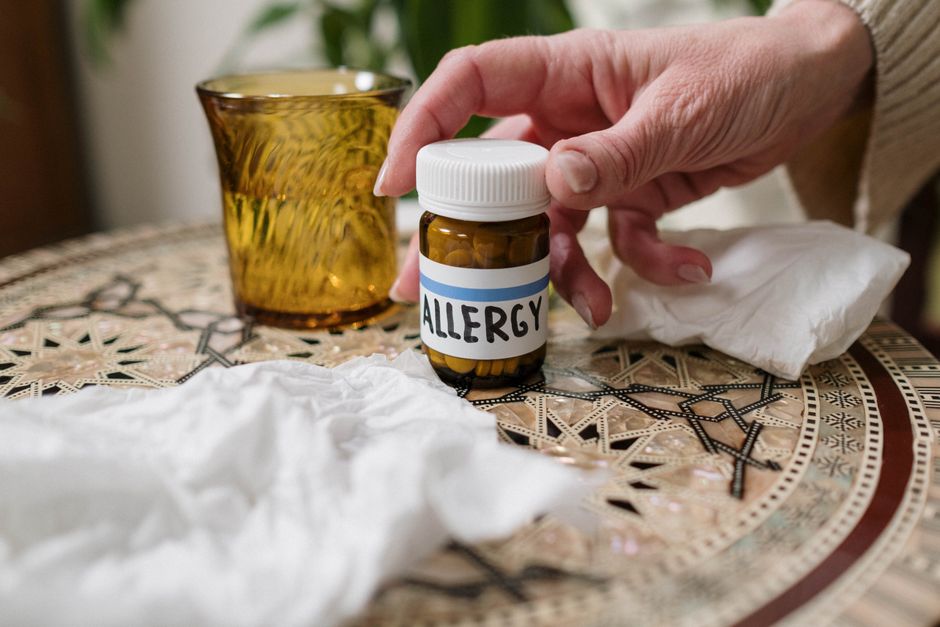
Allergy drops, also known as sublingual immunotherapy (SLIT), are a popular alternative to allergy shots. Many patients prefer them because they can be taken at home without needles. Yet most health insurance plans do not cover them, even when the same insurance fully covers allergy shots. The reason comes down to how the FDA regulates the products, how doctors prescribe them, and how insurers evaluate cost-effectiveness. Simply put, allergy drops are used “off-label” in the United States because no FDA-approved tablet or drop matches the exact extract a doctor mixes for you, and insurers rarely pay for off-label treatments when a covered alternative exists.
What Are Allergy Drops and How Do They Work?
Allergy drops work on the same principle as allergy shots. Both are forms of immunotherapy. The goal is to expose your immune system to small amounts of the thing you are allergic to—like pollen, dust mites, or pet dander—so it eventually stops overreacting.
With shots, the allergen extract is injected under the skin. With drops, the extract is placed under the tongue and held there for a minute or two before swallowing. The under-the-tongue area is rich in immune cells that absorb the allergen and train the immune system to tolerate it over time.
Clinical studies show that sublingual immunotherapy can reduce allergy symptoms and medication use. It is a legitimate treatment with published evidence behind it. The issue is not whether it works. The issue is how it is packaged and regulated in the United States.
The FDA Approval Gap: Why Your Extract Is “Off-Label”
In the United States, the FDA has approved a small number of allergy drop products. These are specific tablets for specific allergens, such as grass pollen, ragweed, and dust mites. These tablets are covered by many insurance plans, just like other prescription drugs.
However, most allergy drops are not these tablets. Most are liquid extracts mixed by a pharmacy or an allergist’s office. A doctor selects individual allergen extracts and combines them into a custom bottle for your specific allergies. This is called a “multi-allergen” or “custom” formulation.
The FDA has not approved these custom liquid formulations. No manufacturer has submitted them for approval. That means when your doctor prescribes them, the prescription is technically off-label. Insurance companies routinely deny coverage for off-label drug use when a covered, FDA-approved alternative exists. Allergy shots are that covered alternative. So the insurer’s logic is straightforward: we will pay for the FDA-approved delivery method, but we will not pay for a custom, unapproved version of the same treatment.
Why Don’t Manufacturers Seek FDA Approval for Allergy Drops?
Getting FDA approval is expensive and time-consuming. A manufacturer must run large clinical trials, prove safety and effectiveness, and then continue monitoring the product after it hits the market. This process can cost hundreds of millions of dollars.
For allergy drops, there is a bigger problem. Custom multi-allergen formulas are hard to standardize. Every patient gets a different mix. You might be allergic to oak, ragweed, and dust mites. Another patient might be allergic to cat dander and Alternaria mold. The FDA approves one specific product with one specific formula. It cannot approve an infinite number of combinations.
Some manufacturers have chosen to pursue approval for single-allergen tablets instead. That is why we have FDA-approved tablets for grass, ragweed, and dust mites, but not for custom mixtures. The economics make sense for the manufacturer. The custom drop market simply does not fit the FDA’s approval model.





How Insurance Companies Decide What to Cover
Insurance companies make coverage decisions based on two main factors: whether a treatment is FDA-approved for your condition, and whether the evidence shows it is worth the cost compared to alternatives.
For allergy drops, the first factor fails for custom formulations. The second factor also works against them. Allergy shots have decades of safety and effectiveness data. They are inexpensive to produce. The extract vials are cheap, and the cost is mostly the nurse’s time for each injection visit.
Allergy drops require the patient to buy the extract and pay for the doctor’s time to prepare it. The drug cost is often higher than shots. Studies comparing the two are limited, and results are mixed. Some research suggests drops work well for nasal allergies, but the evidence for multi-allergen drops is less robust than for single-allergen shots or tablets.
Insurers look at that mixed evidence and see a more expensive treatment with less proven benefit. They deny coverage. This is not a conspiracy against allergy drops. It is standard insurance behavior for any treatment that is off-label, more expensive, and not clearly superior to the covered option.
What About the FDA-Approved Allergy Tablets?
FDA-approved allergy tablets are a different story. These are single-allergen tablets placed under the tongue. They have gone through the full FDA review process, and they are covered by many insurance plans.
There are important limitations. The approved tablets cover only a few allergens: certain grass pollens, ragweed, and dust mites. If you are allergic to cats, dogs, molds, or trees, there is no FDA-approved tablet for you. Your only sublingual option is the custom liquid drops, which are not covered.
Even when a tablet matches your allergy, your doctor may prefer drops. Some patients need multiple allergens treated at once. The tablets treat one allergen each. Taking three different tablets daily is possible but expensive and clunky. Many doctors believe multi-allergen drops are more practical for patients with multiple allergies, even though the evidence for multi-allergen drops is less established.
Does Your Insurance Ever Cover Allergy Drops?
Coverage varies widely by plan. Some insurers cover sublingual immunotherapy as a benefit even if the specific extract is off-label. This is more common in certain states or with certain employers. It is worth checking your specific policy rather than assuming denial.
Here are the situations where coverage is more likely:
- Your plan explicitly lists sublingual immunotherapy as a covered benefit.
- You have tried allergy shots and could not tolerate them due to severe reactions.
- You live far from an allergist’s office and cannot attend weekly injection visits.
- Your doctor submits a prior authorization with strong justification.
- You live in a state that has passed laws requiring insurers to cover sublingual immunotherapy.
A prior authorization is not a guarantee. Insurers deny these requests often. But a detailed letter from your doctor explaining why shots are not feasible for you can sometimes change the decision. Some patients win on appeal.
How Much Do Allergy Drops Cost Without Insurance?
Without insurance, the cost of allergy drops varies significantly. You are paying for the doctor’s evaluation, the skin testing, the extract preparation, and the follow-up visits. The extract itself is the main recurring cost.
Most patients can expect to pay several hundred dollars for the initial testing and preparation. After that, each refill of extract typically costs between $100 and $300. This refill lasts about three months. Over a year, the total cost often lands between $800 and $2,000, depending on your region and your doctor’s pricing.
Compare that to allergy shots. The shots themselves are cheap. The extract costs the clinic pennies per dose. The main cost is the injection visit, which is usually covered by insurance as an office visit. For an insured patient, shots are almost always cheaper out-of-pocket than drops.
Some patients find that the convenience of drops justifies the cost. No weekly trips to the clinic. No needles. No time off work. For those patients, the out-of-pocket expense is a trade-off they accept willingly. Others find the cost prohibitive and stick with shots or symptomatic medications.
Are Allergy Drops Worth the Out-of-Pocket Cost?
This depends on your situation. If you have severe allergies that do not respond to antihistamines or nasal sprays, immunotherapy is the most durable treatment option. It does not just suppress symptoms. It changes your immune response over time.
The evidence for sublingual immunotherapy is strongest for allergic rhinitis caused by pollen and dust mites. The evidence for multi-allergen drops is less strong. Some studies show benefit. Others show less effect than single-allergen treatment. The research is genuinely mixed, and your doctor’s opinion matters more than any general statement.
If you are needle-averse, drops may be the only immunotherapy you will actually stick with. A treatment you complete is more effective than a treatment you abandon. If the cost is manageable, that is a legitimate reason to choose drops.
If you are primarily concerned about cost, shots are the more evidence-backed and insurance-covered option. Discuss both with your allergist. Ask about the specific evidence for your allergy profile. Ask what the total annual cost would be. Then decide based on your budget and your tolerance for needles.
Frequently Asked Questions
Can I get insurance to cover allergy drops if I appeal?
Yes, some patients win appeals, but it is not common. Your doctor must provide strong medical justification, such as a documented inability to tolerate shots or a geographic barrier to clinic visits.
Are allergy drops as effective as allergy shots?
For nasal allergies, the evidence suggests drops are comparable to shots for many patients. For multi-allergen custom drops, the evidence is less robust, and results vary between studies.
Why are allergy shots covered but not allergy drops?
Allergy shots use FDA-approved extracts administered in a clinical setting, while most allergy drops are custom off-label formulations. Insurers typically cover FDA-approved treatments and deny coverage for unapproved alternatives.
Do Medicare or Medicaid cover allergy drops?
Medicare generally does not cover sublingual immunotherapy drops, and Medicaid coverage varies by state. Check your specific plan, as some state Medicaid programs have started covering them in recent years.
