
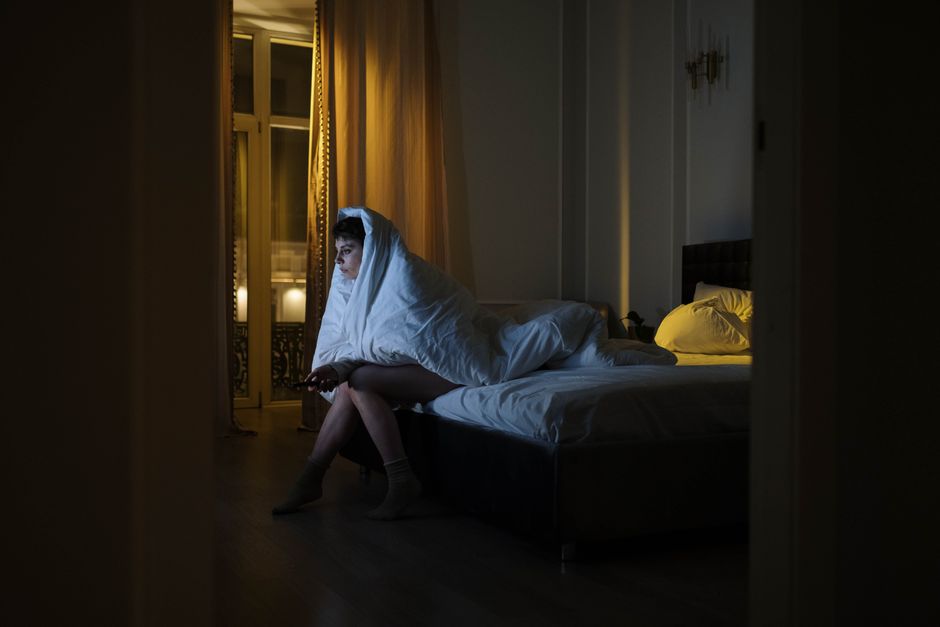
You lie down exhausted, ready for sleep, and your mind immediately starts replaying every worry you have. That is not a personal failing or a sign that something is wrong with you. Anxiety often peaks at night because the distractions that keep worry at bay during the day disappear, and the body’s stress response can become more noticeable in a quiet, dark room. Understanding why this happens is the first step toward calming it.
Why Anxiety Gets So Bad At Night And How To Calm It
During the day, your attention is pulled in many directions. Work, conversations, errands, and screens all compete for mental space. At night, those distractions vanish. What remains is silence and your own thoughts.
This shift matters more than most people realize. The brain does not simply “turn off” at bedtime. It continues processing worries, unresolved problems, and emotional material. Without external input to compete with, those thoughts become louder.
There is also a biological layer. The stress response involves cortisol, a hormone that follows a daily rhythm. In healthy sleepers, cortisol tends to be lowest around midnight and rises gradually toward morning. In people with chronic worry or insomnia, this pattern can shift. Some research suggests that people with anxiety disorders may show altered cortisol rhythms, though findings vary across studies and the relationship is not fully understood.
What is well established is this: the nervous system does not automatically downshift just because you are lying down. If you are carrying tension, it comes with you.
What Happens in Your Brain When the Lights Go Out
The brain’s threat-detection system does not require a real threat to activate. It responds to perceived danger, including worry about the future.
A region called the amygdala plays a central role in detecting threats and triggering fear responses. The prefrontal cortex, which helps regulate emotional reactions and reason through problems, is involved in keeping that fear response in check. When you are tired, the prefrontal cortex does not function as well. Emotional regulation becomes harder.
This helps explain why the same worry that felt manageable at 2 p.m. can feel overwhelming at 11 p.m. You are not weaker at night. Your brain is simply less equipped to talk itself down.
Sleep pressure also plays a role. As the evening progresses, the drive to sleep builds. But anxiety can activate the nervous system in ways that work against that drive. The result is a frustrating standoff: you are tired enough to sleep, but too alert to actually do it.
Why Your Body Feels Anxious Even When Your Mind Is Quiet
Not everyone with nighttime anxiety has racing thoughts. Some people notice physical symptoms instead. A pounding heart. Tight chest. Restless legs. A sense of unease without a clear cause.
This happens because anxiety is not only a mental experience. The autonomic nervous system controls involuntary functions like heart rate, breathing, and digestion. When it shifts into a sympathetic (fight-or-flight) state, those functions change whether or not you are consciously worried.
Lying still in a dark room can make these physical sensations more noticeable. Without other input, your attention turns inward. A slightly elevated heart rate that you would ignore during the day becomes impossible to miss at night.
This is sometimes called interoception, the perception of internal body signals. Some research suggests that people with anxiety disorders tend to be more sensitive to these signals. That sensitivity can create a feedback loop: noticing a physical sensation triggers more anxiety, which amplifies the sensation.
How Poor Sleep and Anxiety Feed Each Other
The relationship between anxiety and sleep runs in both directions. Anxiety makes it harder to fall asleep. Poor sleep makes anxiety worse the next day.
This cycle is well documented. Sleep deprivation affects mood regulation, increases reactivity to stress, and reduces the cognitive resources needed to manage worry. Research consistently shows that people with insomnia have higher rates of anxiety disorders, and people with anxiety disorders have higher rates of insomnia.
The cycle is not unbreakable, but it does explain why nighttime anxiety can feel like it is getting worse over time. Each poor night makes the next evening harder.
What Actually Helps Calm Nighttime Anxiety
No single technique works for everyone. What follows are approaches with reasonable evidence behind them or that are widely used in clinical settings. None of these replace professional care if anxiety is significantly affecting your life.
Slow Your Breathing
Breathing exercises can influence the autonomic nervous system. Slow, diaphragmatic breathing activates the parasympathetic branch, which supports a calmer state. A common approach is to breathe in for a count of four and out for a count of six. The exact numbers matter less than the pattern: slow, steady, and comfortable.
This is not a cure for an anxiety disorder. It is a tool that can reduce physical arousal enough to make sleep more likely.
Get Out of Bed If You Are Not Sleeping
Staying in bed while anxious can teach your brain to associate the bed with worry. Sleep clinicians often recommend getting up after a period of being awake and doing something quiet and non-stimulating in dim light until you feel sleepy again.
This approach is part of cognitive behavioral therapy for insomnia (CBT-I), which is considered a first-line treatment for chronic insomnia by major clinical guidelines. It is not a quick fix, but the evidence for CBT-I is stronger than for most sleep medications over the long term.
Write Down What Is on Your Mind
Some studies suggest that briefly writing about worries or tasks before bed can reduce the time it takes to fall asleep. The idea is to externalize the thoughts so the brain does not feel the need to keep them active.
Keep it short. A few minutes is enough. This is not journaling for insight. It is offloading.
Limit Stimulants and Alcohol in the Evening
Caffeine has a half-life of several hours. For most adults, a significant portion of afternoon caffeine is still in the bloodstream at bedtime. Alcohol can make you feel sleepy at first, but it disrupts sleep architecture later in the night and can increase anxiety as it wears off.
Consider When Anxiety Is More Than a Bad Night
Occasional nighttime worry is common. But if anxiety is interfering with sleep most nights, affecting your ability to function during the day, or causing significant distress, that warrants a conversation with a healthcare provider.
Generalized anxiety disorder, panic disorder, and other anxiety conditions are treatable. Effective options include therapy, medication, or both. No clinical guidelines recommend self-management alone for moderate to severe anxiety disorders.
When to Seek Professional Support
It can be hard to know when normal worry crosses into something that needs treatment. Some signs that it may be time to talk to a professional:
- You dread going to bed because of how you feel at night
- Anxiety is affecting your work, relationships, or daily functioning
- You are relying on alcohol or other substances to fall asleep
- You have panic attacks or physical symptoms that scare you
- You have been struggling for weeks or months without improvement
Mental health professionals can assess whether what you are experiencing meets criteria for an anxiety disorder and discuss treatment options. This is not a sign of weakness. It is the same as seeing a doctor for any other health issue that is not resolving on its own.
Frequently Asked Questions
Why does anxiety get worse at night?
At night, distractions disappear and your attention turns inward, making worries and physical sensations more noticeable. Tiredness also reduces the prefrontal cortex’s ability to regulate emotional reactions.
Is it normal to feel anxious before bed every night?
Occasional nighttime anxiety is common, but anxiety that interferes with sleep most nights or affects daytime functioning is not something you have to accept. It may be worth discussing with a healthcare provider.
Can breathing exercises actually calm anxiety at night?
Slow, diaphragmatic breathing can activate the parasympathetic nervous system, which supports a calmer physical state. It is a useful tool but not a substitute for treatment if you have an anxiety disorder.
When should I see a doctor about nighttime anxiety?
If anxiety is disrupting your sleep regularly, affecting your daily life, or causing significant distress, it is reasonable to seek professional support. Effective treatments are available.
