
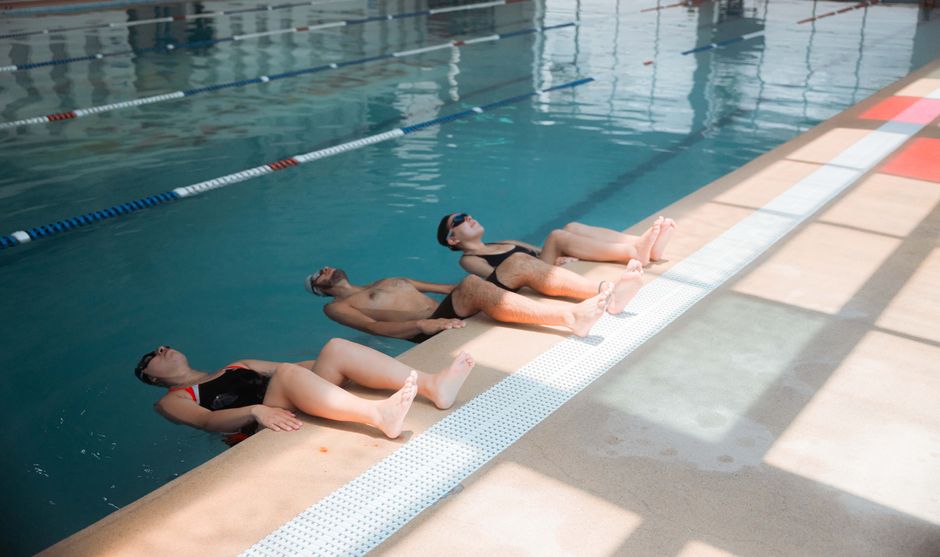
You finish a swim, towel off, and suddenly you could eat everything in the kitchen. That hunger is real, and it has a clear physiological explanation. Swimming pulls heat out of your body faster than air does, and your body responds by spending energy to stay warm. That extra energy cost, plus the way swimming is often less weight-bearing than running, can leave you hungrier than you expected.
Why Am I So Hungry After Swimming The Science?
Water conducts heat away from your body roughly 20 to 25 times faster than air at the same temperature. That number comes from standard physics of thermal conductivity, and it is the foundation of the whole story.
When you swim in cool water, your core temperature starts to drift down. Your body does not sit back and let that happen. It ramps up heat production, mostly by shivering and by increasing metabolic rate. Burning fuel to make heat costs calories. So a swim can create an energy demand that your conscious mind never really registered, because you were busy counting laps, not shivering.
There is a second layer. Cold water exposure can increase appetite through pathways involving the nervous system and hormones that regulate hunger. Some research suggests cold exposure influences ghrelin, a hormone that stimulates appetite, and leptin, which signals fullness. The findings here are not perfectly consistent across studies. But the general direction — that cold stress can nudge hunger upward — is supported by a reasonable body of work.
Put those two things together and you get a swim session that quietly burns more fuel than the same time spent on a treadmill, while also triggering hunger signals that a warm-weather workout might not. That is the core of why you walk out of the pool ravenous.
Does Swimming Burn More Calories Than Running?
Not automatically. It depends on how hard you swim and how hard you run.
Calorie burn is driven mainly by intensity, duration, body weight, and efficiency. A leisurely breaststroke is not going to out-burn a hard run. A vigorous freestyle session at high effort can match or exceed running for the same amount of time, especially in cold water where your body is also paying a heating bill.
The variable most people miss is water temperature. Swim in water around 78 to 82 degrees Fahrenheit — a common range for recreational and competitive pools — and your body spends relatively little energy on heating. Swim in noticeably colder water, and that cost climbs. Open water swimming in the 60s can add a meaningful energy demand just to keep your core temperature stable.
So the honest answer is: swimming can burn a lot of calories, but it is not inherently superior to running. The pool just happens to combine movement with a thermal challenge that running does not.
Why Does Cold Water Make You Hungrier?
Your body treats cold exposure as a stressor, and one of the ways it responds to stress is by adjusting appetite signals.
When your core temperature drops, the hypothalamus — the brain region that manages temperature, hunger, and energy balance — coordinates a response. Part of that response is to encourage you to eat, because eating provides fuel for heat production. This is not a flaw in your willpower. It is your physiology doing exactly what it evolved to do.
There is also a practical angle. Cool water can blunt your perception of effort. You may feel like you are working less hard than you actually are, because the water supports your body and carries heat away. That mismatch means you can finish a swim feeling only mildly tired while having burned a substantial number of calories. Your appetite, however, is responding to the actual energy deficit, not your perception of it.
One clarification worth making: the idea that cold water “boosts metabolism” in a way that leads to lasting weight loss is not well supported. Cold exposure does increase energy expenditure during and shortly after the exposure. Whether that translates into meaningful fat loss over weeks and months is a different question, and the evidence there is limited.





Is It Just the Cold, or Is Something Else Going On?
Cold is a major factor, but it is not the only one.
Swimming is a full-body activity. Your arms, shoulders, back, core, and legs are all working, often against water resistance that is far greater than air resistance. That means more muscle mass is engaged than in many land-based activities. More working muscle generally means more energy used.
Dehydration can also masquerade as hunger. You do not notice sweat in the pool the way you do on land, because the water washes it away and keeps you cool. But you are still losing fluid, especially during hard swimming. Mild dehydration can produce symptoms that feel like hunger or low energy. Some people eat when they are actually thirsty.
Then there is the psychological piece. Swimming often feels refreshing rather than draining, so you may not mentally register it as “exercise that earns food.” That gap between perceived effort and actual energy expenditure can lead to eating more than you intended.
Should You Eat Right After Swimming?
For most recreational swimmers, eating after a swim is fine and often sensible. Your body has used fuel, and replacing some of it supports recovery.
What you eat matters more than whether you eat. A mix of carbohydrate and protein is a reasonable choice after a moderate or hard swim. Carbohydrates help restore muscle glycogen, and protein supports muscle repair. That is general sports nutrition guidance, and it is not specific to swimming.
If your goal is weight management, the challenge is not the hunger itself. It is that post-swim hunger can easily lead to eating more calories than the swim burned. Being aware of that tendency is the first step. Some people find it helpful to have a planned snack ready rather than arriving at the kitchen with no plan.
For competitive swimmers or people doing long open-water sessions, the energy deficit can be large, and eating afterward is not optional. It is part of training.
Does Swimming Make You Eat More Than Other Workouts?
This is where the evidence gets interesting and a little mixed.
Some studies have found that people report greater appetite after swimming in cold water compared to exercising in warmer conditions. Other studies have not found a clear difference. The results vary depending on water temperature, exercise intensity, duration, and how appetite was measured.
What seems reasonably consistent is that cold-water exercise can increase energy intake afterward in some people. But it is not universal. Individual responses vary a lot. Some swimmers finish a session and feel normal hunger. Others feel like they could eat a horse.
If you notice you consistently overeat after swimming, the water temperature is worth checking. A warmer pool may reduce the effect for you. So might eating a small snack before you swim, which can take the edge off afterward.
What Can You Do About Post-Swim Hunger?
You cannot switch off your appetite, and you should not try. Hunger is a signal, not a problem to eliminate. But you can work with it.
- Swim in warmer water if you have the option and you find cold water drives your hunger up.
- Have a balanced snack ready for after your swim so you are not making decisions while ravenous.
- Drink water during and after swimming. Thirst can feel like hunger.
- Notice whether your hunger matches the effort you actually put in. A gentle 20-minute swim does not require a large meal.
- If you are swimming for weight loss, track your intake for a week or two. Post-swim eating is a common place where a calorie deficit quietly disappears.
None of this is about fighting your body. It is about understanding why the signal is there and responding to it in a way that matches your goals.
Frequently Asked Questions
Why am I so hungry after swimming?
Swimming in cool water pulls heat from your body, and your body burns extra energy to stay warm. That energy cost, plus cold-related appetite signals, can leave you hungrier than land exercise would.
Does swimming burn more calories than running?
Not always. It depends on intensity, duration, body weight, and water temperature. A hard swim can match a hard run, but a gentle swim will not.
Does cold water really make you hungrier?
Some studies suggest cold-water exercise can increase appetite and food intake afterward, but results are mixed and individual responses vary. The effect is real for some people and minimal for others.
Should I eat after swimming to lose weight?
You should eat if you are hungry, but be aware that post-swim hunger can lead to eating more than the swim burned. A planned, balanced snack tends to work better than an unplanned large meal.
